Surrender of Belgian King Leopold III to German Forces on May 28, 1940
1940 · Brussels, Belgium
Belgian King Leopold III surrenders to German forces during World War II, leading to the occupation of Belgium.
May 17, 1940
The Nazi German army reached Brussels, Belgium, during the Western campaign of World War II, marking the beginning of a rapid advance through Belgium and France.
Brussels, Belgium | Nazi Germany
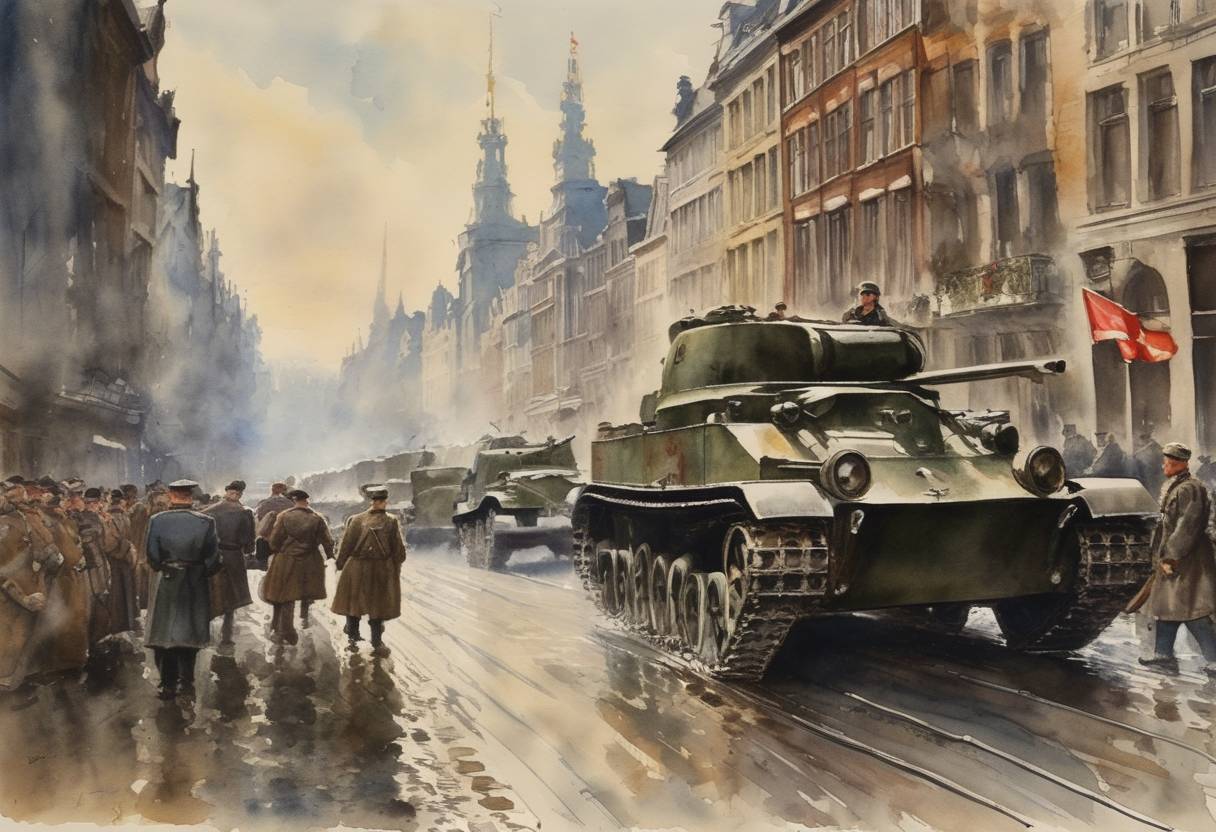
On May 17, 1940, during the Western campaign of World War II, Nazi German forces reached Brussels, the capital of Belgium. This event was a part of the broader German military strategy known as the Blitzkrieg, which emphasized rapid, concentrated attacks using a combination of armored and air forces.
The German invasion of Belgium, known as the Battle of Belgium, began on May 10, 1940, during the early stages of the German Campaign in the West, or Case Yellow (“Fall Gelb”). The goal of the Germans was to bypass the heavily fortified French frontier along the Maginot Line by advancing through Belgium, the Netherlands, and Luxembourg — a tactic also used in World War I.
After crossing the defensive positions of the Belgian Army, notably at Fort Eben-Emael, German panzer divisions made their way westward. Their advance was facilitated by the Allies’ decision to move into Belgium to meet them, which the Germans had anticipated. By May 17, after less than a week of fighting, German forces entered Brussels virtually unopposed, as the Belgian government had declared Brussels an open city to avoid its destruction.
The capture of Brussels was instrumental in the German strategy, as it allowed them to continue their push into France more effectively, obscuring their actual target — a swift movement towards the English Channel. The rapid fall of the Belgian capital demoralized Allied forces, contributing to their eventual encirclement and the subsequent evacuation at Dunkirk.
The fall of Brussels marked a critical juncture in the early stages of the Western Front of World War II. The rapid German advance through Belgium underscored the effectiveness of the Blitzkrieg tactics and set the stage for further German victories in France. On May 28, Belgium officially surrendered, further solidifying German control over the region and paving the way for the ensuing Battle of France.
The German occupation of Brussels continued until its liberation by Allied forces on September 3, 1944. The events of May 17, 1940, demonstrated the vulnerability of Western Europe to the swift and brutal German military strategies early in the war.
Source: www.history.com