Mars 2 Lander: The First Human-Made Object on Mars
1971 · Mars, Soviet Union
The Soviet space program's Mars 2 lander became the first human-made object to reach the surface of Mars, although it crash-landed.
March 1, 1966
The Soviet space probe Venera 3 impacted Venus, becoming the first human-made object to reach another planet's surface, although it failed to return data.
Surface of Venus, Soviet Union | Soviet space program
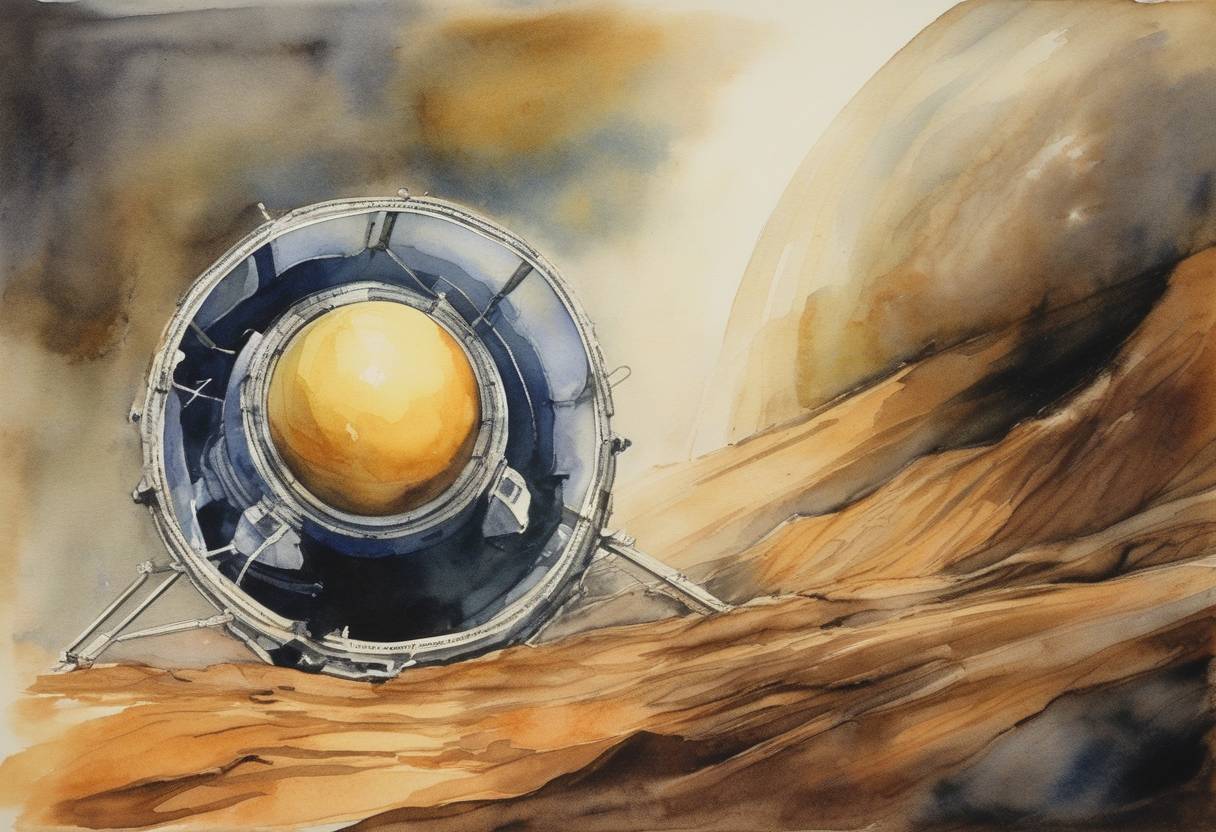
On March 1, 1966, the Soviet space probe Venera 3 made history by becoming the first human-made object to reach the surface of another planet, specifically Venus. Venera 3 was part of the Soviet Union’s ambitious Venera program, which aimed to explore Venus, one of Earth’s nearest planetary neighbors.
The Venera program was initiated by the Soviet Union in the early 1960s to investigate Venus’ atmosphere and surface conditions. The program was a cornerstone of Soviet space exploration, marking key achievements amidst the Space Race with the United States.
Venera 3 was launched on November 16, 1965, from the Baikonur Cosmodrome aboard a Molniya rocket. The primary objectives of the mission included delivering scientific instruments to the surface of Venus to return data about the planet’s atmospheric conditions, temperature, and surface composition.
Despite successfully reaching Venus and impacting its surface on March 1, 1966, Venera 3 failed to send any data back to Earth. The probe’s radio communications system malfunctioned prior to impact, preventing the transmission of valuable scientific information. The harsh environmental conditions of Venus, including extremely high temperatures and acidic clouds, posed substantial challenges to spacecraft electronics.
Venera 3’s impact on Venus marked a significant achievement in space exploration. Despite its lack of data return, the mission paved the way for future interplanetary missions by demonstrating that reaching another planet was feasible. The Venera program continued to evolve, leading to subsequent missions that eventually succeeded in transmitting data back from Venus’ surface.
The Venera 3 mission is celebrated as a milestone in human space exploration. It underscored the technical challenges associated with interplanetary missions and initiated a series of increasingly sophisticated attempts to explore Venus and other planets. The Venera program eventually led to successful missions such as Venera 7, which transmitted data after landing on Venus in 1970.
By pioneering the journey to another planet, Venera 3 left a lasting legacy, shaping the path for space exploration efforts and deepening the understanding of our solar system.
Source: solarsystem.nasa.gov