Voyager 1's Closest Approach to Jupiter - March 5, 1979
1979 · Pasadena, United States
Voyager 1 makes its closest approach to Jupiter, providing detailed images and data about the planet and its moons.
July 4, 2016
NASA's Juno spacecraft successfully entered orbit around Jupiter, beginning a mission to study the planet's composition and magnetic field.
Pasadena, United States | NASA
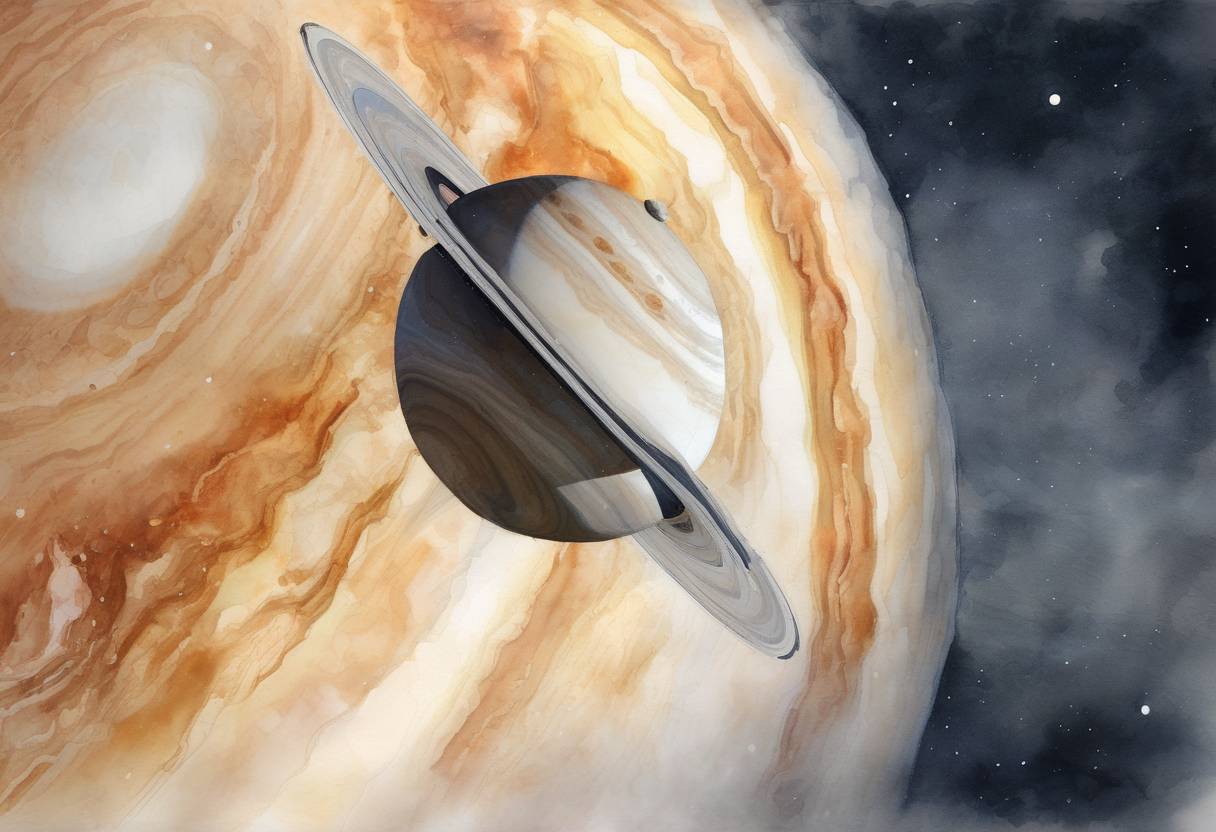
On July 4, 2016, NASA’s Juno spacecraft successfully entered orbit around Jupiter, marking a significant milestone in space exploration. This event was the culmination of a nearly five-year journey through space, following Juno’s launch on August 5, 2011, from Cape Canaveral Air Force Station in Florida.
Juno’s mission was designed to study Jupiter’s composition, gravity field, magnetic field, and polar magnetosphere. The spacecraft aimed to provide insights into the planet’s formation and evolution, which could, in turn, enhance our understanding of the solar system’s history. Key objectives included:
Juno’s successful orbit insertion was a testament to human ingenuity and the advancement of space exploration technology. The mission provided unprecedented data about Jupiter, challenging existing theories about the planet’s formation and offering new insights into its complex weather systems and magnetic environment.
Following its arrival, Juno began transmitting data back to Earth, leading to several groundbreaking discoveries:
Juno’s mission continues to enhance our understanding of Jupiter, contributing valuable knowledge to planetary science and the study of gas giants both within and beyond our solar system.
Source: www.nasa.gov