1360 · Brétigny, Kingdom of France
The Treaty of Brétigny is ratified as a treaty during the Hundred Years' War, marking a temporary resumption of peace between England and France.
August 20, 1363
The Treaty of Brétigny was agreed upon between England and France, temporarily halting the Hundred Years' War.
Brétigny, France | Kingdom of England, Kingdom of France
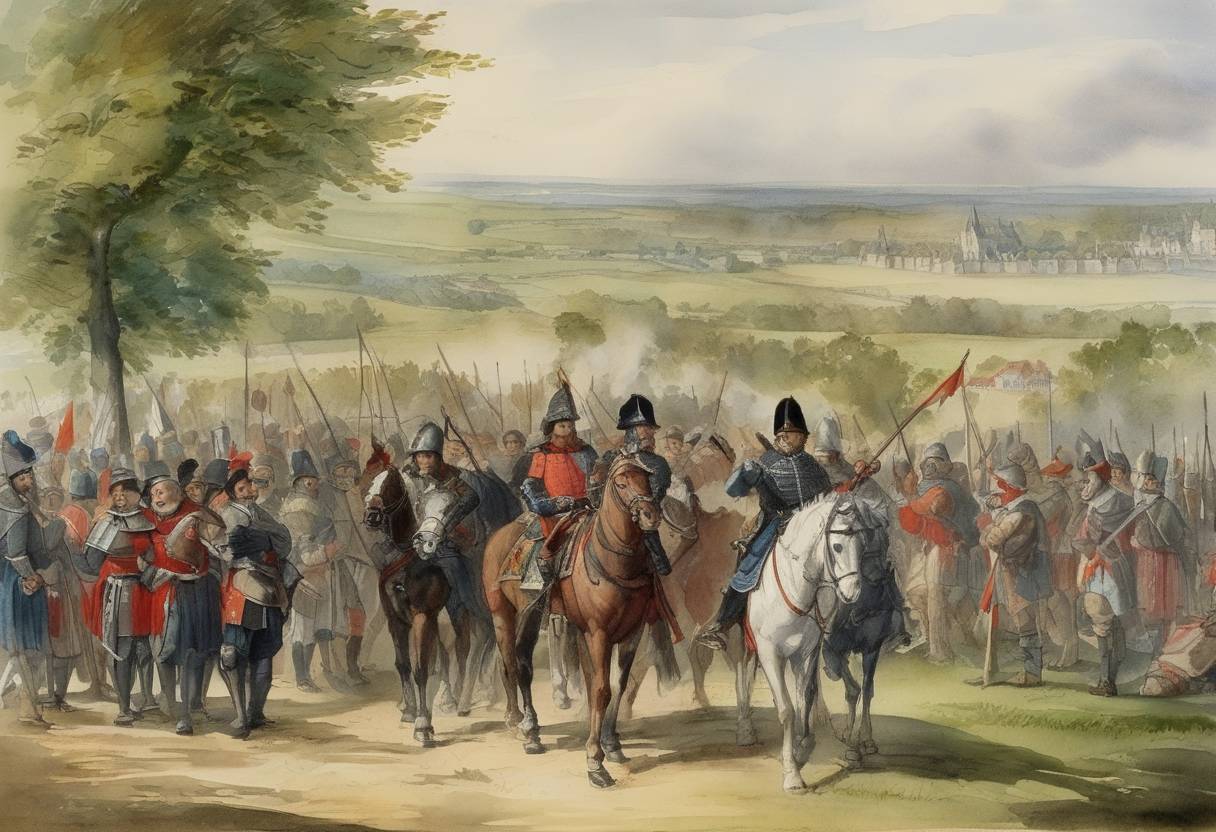
The Treaty of Brétigny, a pivotal accord in the midst of the Hundred Years’ War between England and France, was not agreed upon on August 20, 1363. Instead, it was signed on May 8, 1360. This treaty marked a temporary cessation of hostilities between the two rival monarchies. Below is a detailed account of the treaty’s context, terms, and impact:
The Hundred Years’ War, which spanned from 1337 to 1453, was a series of conflicts waged between the Kingdom of England and the Kingdom of France. The war was rooted in territorial disputes and claims to the French throne. By the late 1350s, both sides had suffered tremendously from the protracted warfare, prompting a need for negotiation and respite.
The Treaty of Brétigny had several key provisions:
Although the Treaty of Brétigny was intended to bring about a lasting peace, it ultimately provided only a brief interlude in the ongoing conflict. The accord did not address underlying tensions and mutual distrust, and hostilities resumed in 1369. The territorial adjustments made by the treaty remained a contentious issue, as both countries continued to vie for dominance in the region.
The Treaty of Brétigny highlighted the complexities of medieval diplomacy and warfare. It showcased how temporary truces were often used as strategies by monarchies to regroup and refocus their efforts for future campaigns. The treaty was a pertinent example of the ebb and flow of power during the Hundred Years’ War, which had lasting effects on both English and French national identities.
In conclusion, while the Treaty of Brétigny itself was a significant milestone, with short-term benefits for both parties, it served to illustrate the enduring nature of the conflict and the intricate geopolitical landscape of medieval Europe.
Source: en.wikipedia.org