North Korea's First Successful ICBM Test on July 4, 2017
2017 · Pyongyang, North Korea
North Korea conducted its first successful test of an intercontinental ballistic missile (ICBM), claiming it could reach the United States.
March 6, 2016
North Korea conducted a test-firing of short-range missiles as a response to the annual US-South Korea military drills, escalating tensions in the region. This missile test was part of North Korea's ongoing development of its ballistic missile and nuclear programs.
Pyongyang, North Korea | North Korean Government
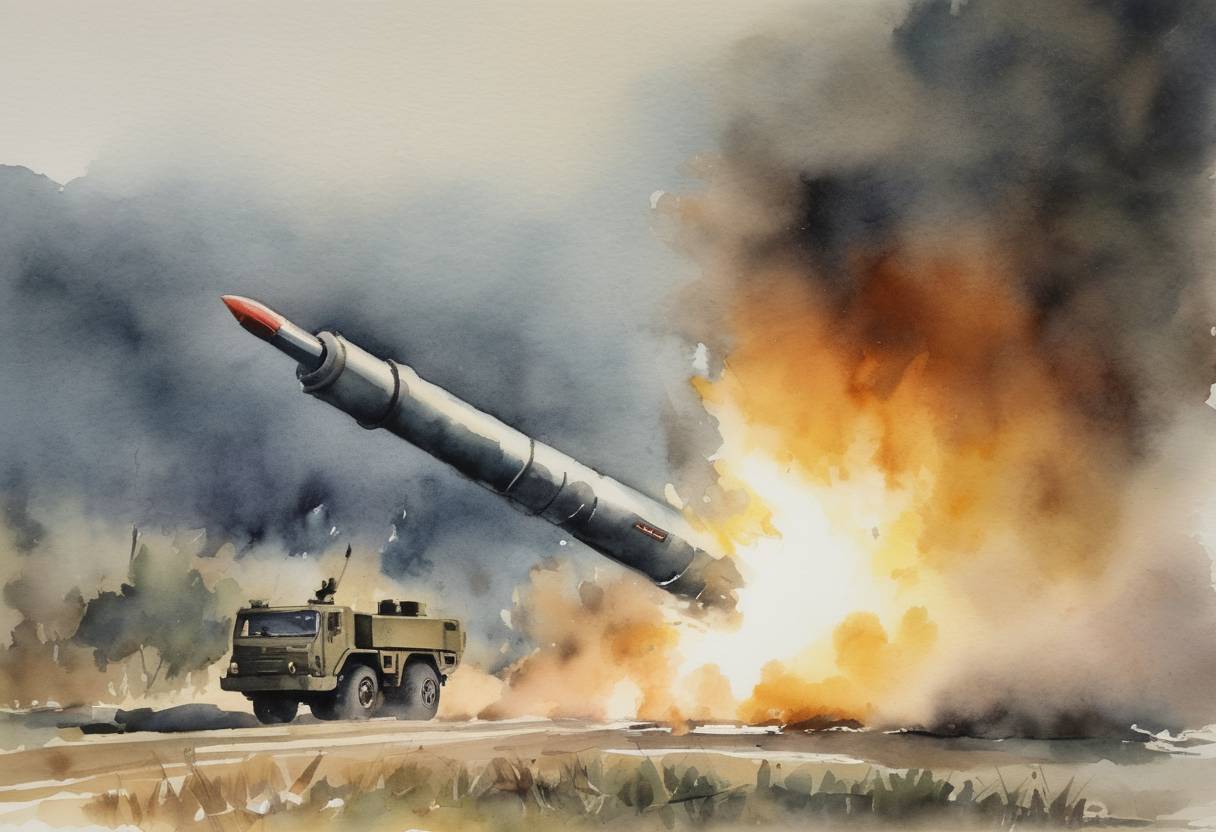
On March 6, 2016, North Korea conducted a test-firing of several short-range missiles, a provocative act that heightened tensions in the region. This military activity came as a direct response to the annual military drills held by the United States and South Korea, which North Korea perceives as a threat to its sovereignty and security. The tests were also part of North Korea’s pattern of weapon demonstrations coinciding with these drills, which it routinely condemns as rehearsals for invasion.
The annual joint military exercises between the United States and South Korea, known as “Foal Eagle” and “Key Resolve,” are designed to enhance defense readiness and interoperability between the US and South Korean forces. The drills often involve tens of thousands of troops and extensive military hardware, which North Korea regularly condemns.
At this time, North Korea was actively expanding its ballistic missile and nuclear capabilities, with its leadership under Kim Jong-un committed to showcasing its growing military prowess. 2016 saw several missile tests by North Korea to validate and demonstrate its military advancements, further underscoring the regime’s defiance of international mandates prohibiting such activities.
The missile tests conducted on March 6, 2016, involved short-range projectiles, which were launched from North Korea’s eastern coast. The missiles traveled approximately 500 kilometers before landing in the Sea of Japan (also referred to as the East Sea). This test not only underscored North Korea’s willingness to leverage its military capabilities but also highlighted its strategy of using such demonstrations to gain political leverage on the international stage.
North Korea’s missile launch on this date contributed to escalated military readiness in both South Korea and Japan and prompted strong reactions from the international community, particularly the United States. The act was condemned by several countries and heightened discussions on how to curb North Korea’s weapons programs.
Shortly before this test, in response to North Korea’s earlier nuclear test and long-range rocket launch, the United Nations Security Council had adopted a resolution to impose harsher sanctions aimed at curtailing North Korea’s nuclear ambitions. However, as evidenced on March 6, these efforts did not deter further missile tests, illustrating the ongoing challenge in managing North Korea’s military provocations.
This missile test was part of a series of military demonstrations by North Korea throughout 2016, a year marked by significant advancements in their missile and nuclear capabilities. The events prompted renewed debate on the efficacy of international sanctions and the geopolitical strategies employed by the United States and South Korea regarding the Korean Peninsula. The persistent cycle of military demonstrations and sanctions underscored the complexities of achieving a peaceful resolution to the tensions in the region.
In summary, the missile test on March 6, 2016, illustrated North Korea’s continued defiance of international norms and the difficulties faced by the global community in curbing the nation’s nuclear ambitions. As a part of its broader strategy, this test contributed to a period of heightened tensions in Northeast Asia.
Source: www.reuters.com