Italian Constitutional Referendum of June 2, 1946
1946 · Rome, Italy
Italians voted in a referendum to abolish the monarchy in favor of establishing a republic, leading to King Umberto II's exile.
January 9, 1878
Umberto I is crowned King of Italy.
Rome, Italy | Monarchy of Italy
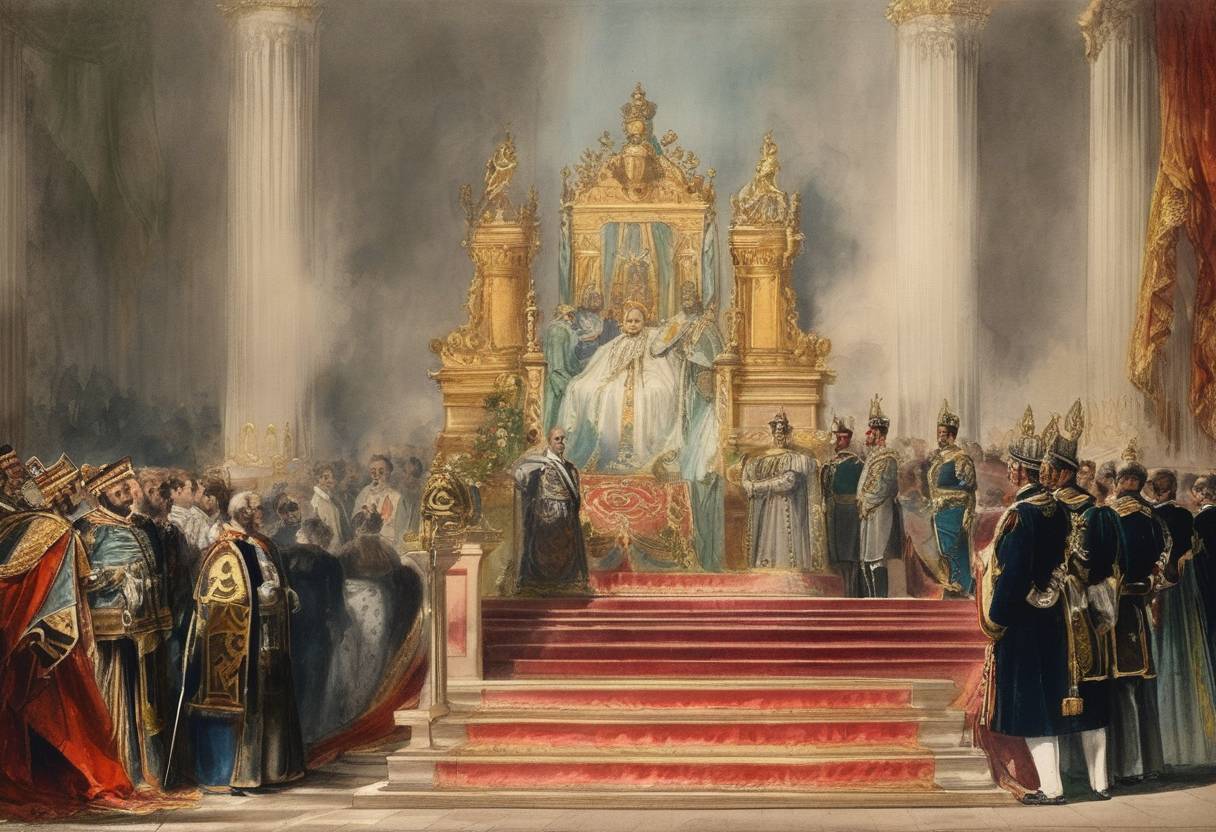
On January 9, 1878, Umberto I ascended to the throne as King of Italy, following the death of his father, King Victor Emmanuel II. This monumental event marks a significant moment in Italian history, as Umberto I became the second king of a unified Italy, continuing the legacy of the Italian unification known as the Risorgimento.
Italian Unification: The unification of Italy was a complex process involving wars, political maneuvering, and the efforts of key figures such as Giuseppe Garibaldi, Count Camillo di Cavour, and King Victor Emmanuel II. By 1871, most of the Italian peninsula was consolidated under the rule of the House of Savoy.
Predecessor’s Reign: Victor Emmanuel II was instrumental in the unification process, serving as the symbol of a unified Italy. His reign was marked by efforts to incorporate the various Italian states and struggles against the Papal States for control.
Coronation: Umberto’s coronation signified a continuation of the constitutional monarchy that had started under his father. It also hinted at potential tensions and expectations regarding Italy’s role on the broader European stage.
Domestic and Foreign Policy: Umberto I’s reign was marked by economic modernization, industrialization, and a shift towards colonial expansion. His policies were sometimes controversial and would later contribute to domestic unrest and political divide.
Social and Economic Challenges: Italy faced significant internal divisions and challenges, including regional disparities, economic hardships, and a growing call for social reforms.
Assassination: Umberto I’s reign ended tragically when he was assassinated in 1900 by an anarchist, Gaetano Bresci. The motivation behind the assassination was partly fueled by dissatisfaction with social inequality and the king’s support of repressive measures.
Historical Significance: Umberto I’s time on the throne represents a period of transition for Italy, from its newly unified status to a nation grappling with modernization. His reign set the stage for further developments in the early 20th century as Italy navigated its identity and role in European politics.
This coronation was an important chapter in Italy’s national history, reflecting the ongoing challenges of consolidating a unified state and navigating the turbulent environment of 19th-century Europe.
Source: www.britannica.com