The Battle of Pliska and the Death of Emperor Nikephoros I
810 · Pliska, Bulgaria
The Byzantine emperor Nikephoros I was killed in the Battle of Pliska against the Bulgarians, marking a significant defeat for the Byzantine Empire.
July 26, 0811
The Battle of Pliska takes place where the Bulgarian forces under Khan Krum defeat the Byzantines led by Emperor Nicephorus I, who was killed in the battle.
Pliska, Bulgaria | Byzantine Empire
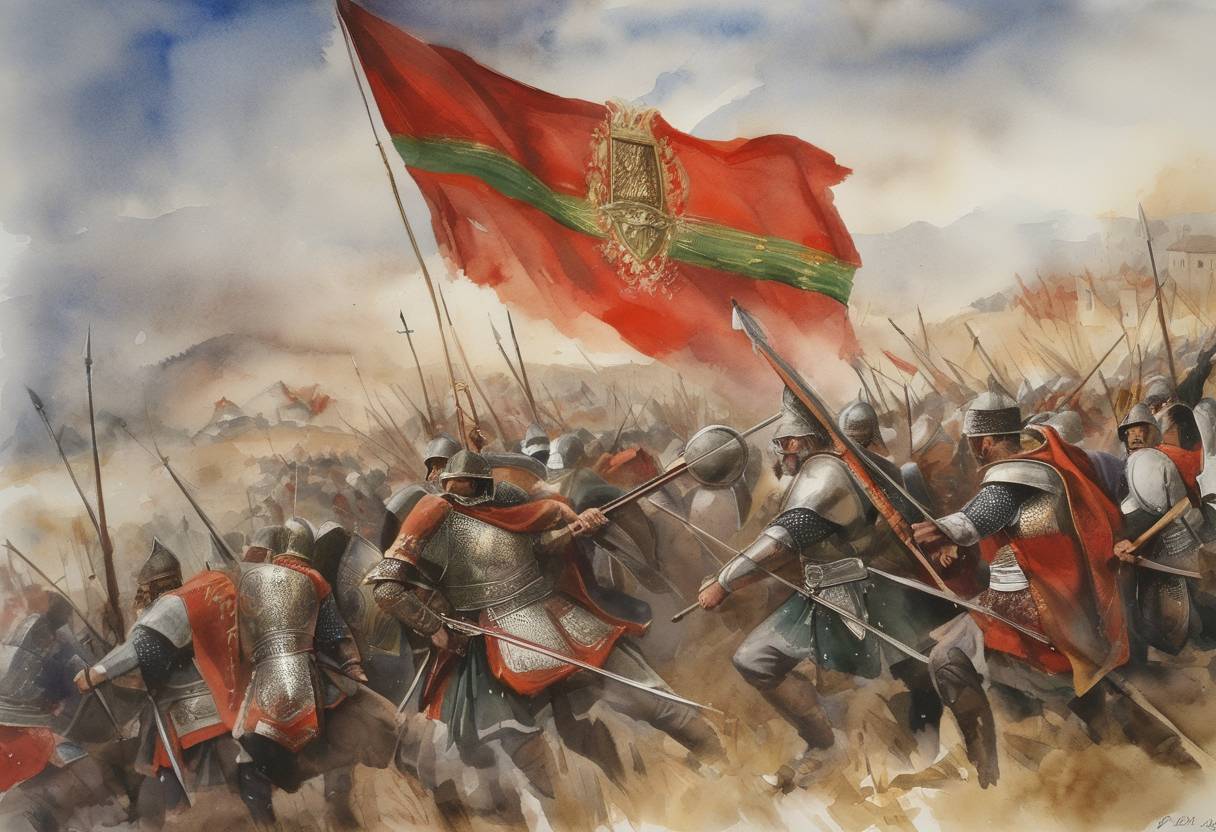
The Battle of Pliska, also known as the Battle of the Varbitsa Pass, was a significant military confrontation between the Byzantine Empire and the First Bulgarian Empire on July 26, 811. This encounter resulted in a catastrophic defeat for the Byzantines and marked a crucial moment in the Byzantine-Bulgarian Wars.
In the early 9th century, the Byzantine Empire sought to reassert control over the Balkan territories, which had seen periods of instability and incursions by neighboring powers, including the Bulgarians. Emperor Nicephorus I launched a punitive expedition against the Bulgarian Khanate in 811, intending to reinforce Byzantine influence over the area.
Emperor Nicephorus I amassed a large army and advanced into Bulgarian territory with the strategic goal of capturing Pliska, the Bulgarian capital. The campaign initially appeared successful as the Byzantines sacked Pliska, causing substantial devastation.
Khan Krum, the ruler of Bulgaria, skillfully orchestrated a trap for the overconfident Byzantine forces as they retreated. Krum utilized the Varbitsa Pass—a narrow and mountainous area offering a strategic advantage to defenders—to ambush the Byzantines. On July 26, 811, the Byzantine army, led by Emperor Nicephorus I, was decisively defeated. The Byzantine forces were unable to overcome the ambush and were routed, leading to a slaughter where many soldiers, including the emperor himself, were killed.
The death of Emperor Nicephorus I was a significant blow to the Byzantine Empire, resulting in a period of political instability and crisis. His son, Staurakios, was severely wounded in the battle and took over but was soon forced to abdicate due to his injuries. Krum’s victory bolstered the prestige and power of the Bulgarian state, deterring further Byzantine campaigns in the region for some time.
The Battle of Pliska stands as a testament to the strategic military leadership of Khan Krum and highlights the vulnerabilities of the Byzantine Empire during this period.
Source: en.wikipedia.org