The Mexican-American War: April 24, 1846
The Mexican-American War’s origins can be traced to a significant event on April 24, 1846, when Mexican forces engaged U.S. troops in a contested area between the Rio Grande and Nueces River. This confrontation sparked a major conflict between the United States and Mexico, ultimately resulting in notable territorial changes in North America.
Context and Causes
The conflict was rooted in the 1845 annexation of Texas by the United States, which Mexico did not recognize due to its previous claim over the territory. The U.S. government, under President James K. Polk, was eager to expand westward and saw Texas as a critical part of its Manifest Destiny ideology. Tensions escalated over the boundary dispute; the U.S. considered the Rio Grande the border, while Mexico recognized the Nueces River as the northern boundary of its territory.
April 24, 1846: The Skirmish
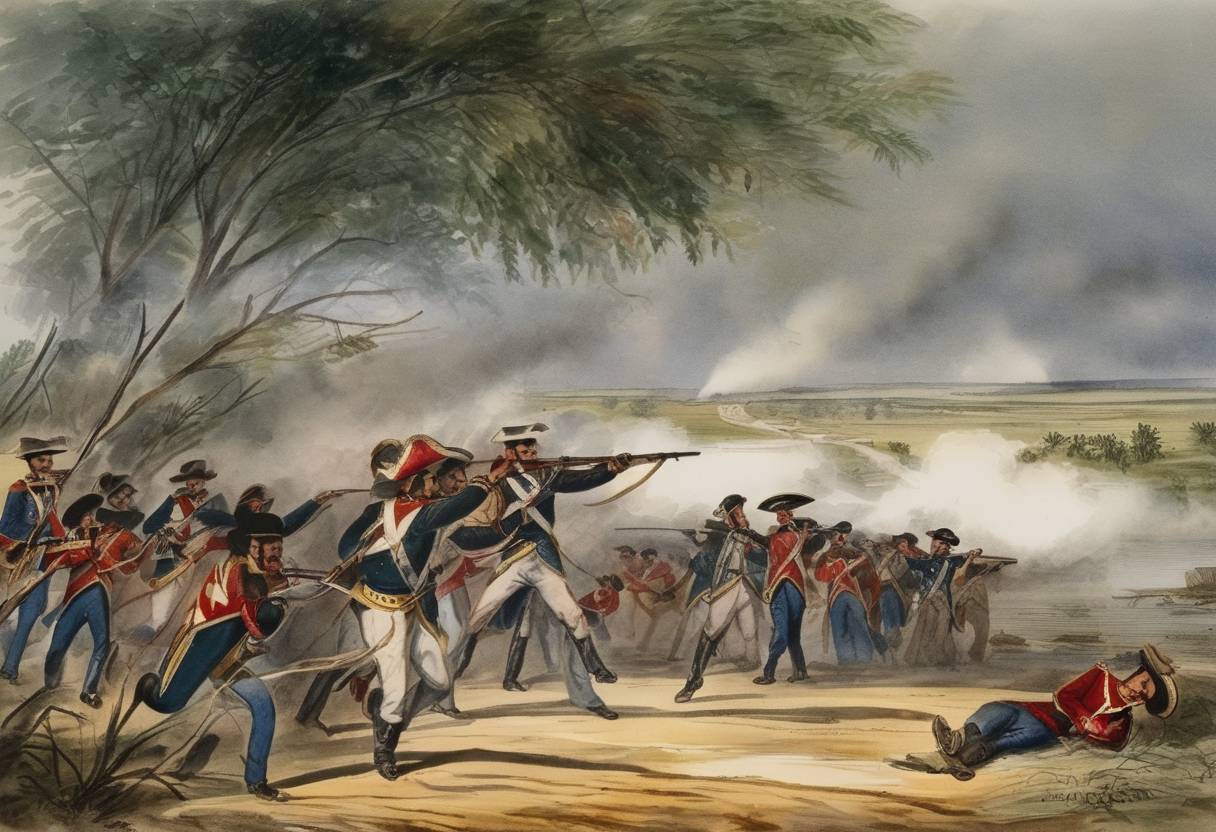
On April 24, General Mariano Arista, commanding Mexican troops, encountered a U.S. detachment led by Captain Seth Thornton in the disputed zone. The Mexican forces attacked the American troops, resulting in what became known as the Thornton Affair. This engagement resulted in heavy casualties for the U.S., heightening tensions and prompting calls for action.
The Aftermath and War Declaration
President Polk used the skirmish to rally public and congressional support, famously declaring that Mexico had “shed American blood upon the American soil.” This assertion, combined with inflammatory rhetoric, led to the U.S. Congress declaring war on Mexico on May 13, 1846.
The War’s Significance
The Mexican-American War lasted until 1848, concluding with the Treaty of Guadalupe Hidalgo. The treaty resulted in significant territorial gains for the United States, including present-day California, Nevada, Utah, Arizona, and parts of Colorado, Wyoming, New Mexico, and Texas. This territorial expansion significantly influenced the shaping of the modern U.S. and intensified debates over slavery, contributing to the sectional conflicts leading to the American Civil War.
The clash on April 24, 1846, between Mexican and American forces played a pivotal role in triggering this broader conflict, marking a turning point in North American history. The event is remembered for its profound impact on U.S.-Mexico relations and its lasting effects on the geopolitical landscape of the continent.