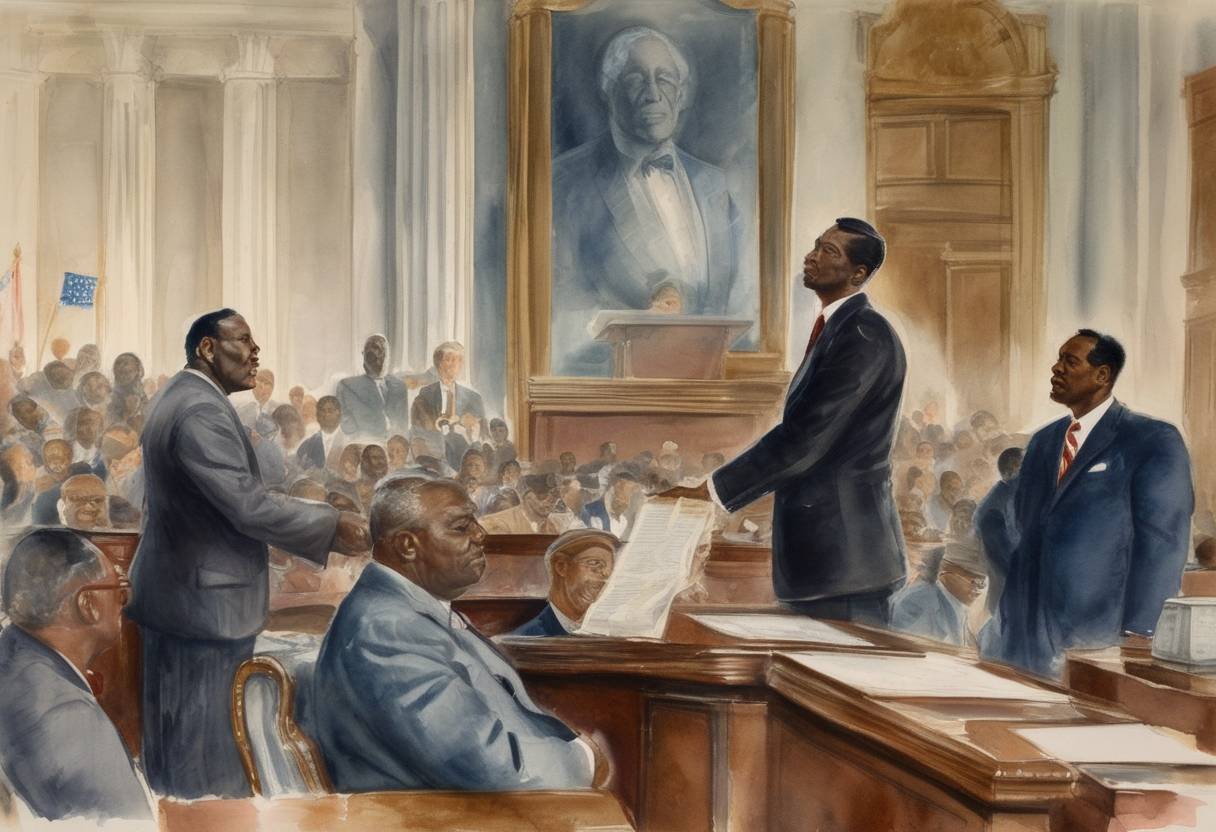
Civil Rights Act of 1957: Passage by U.S. Congress
On August 29, 1957, the United States Congress passed the Civil Rights Act of 1957, marking a significant legislative achievement in the American Civil Rights Movement. This act was the first federal civil rights legislation enacted after Reconstruction, aiming to address and combat racial discrimination, particularly in the realm of voting rights for African Americans.
Background
Prior to the passage of this act, African American voter registration in the Southern states faced numerous obstacles, such as literacy tests, poll taxes, and other discriminatory practices designed to disenfranchise black voters. These practices were often enforced with intimidation and violence, deterring many from exercising their constitutional right to vote.
The Civil Rights Movement throughout the 1950s, led by African American activists and organizations, increased pressure on the federal government to take action against racial discrimination. The landmark Supreme Court case Brown v. Board of Education (1954), which declared segregated schools unconstitutional, further set the stage for legislative reforms.
Provisions of the Act
The Civil Rights Act of 1957 had several key components:
Voting Rights: The act aimed to protect African Americans’ right to vote by making it a federal crime to interfere with a person’s right to vote. This tackled some of the most egregious forms of voter suppression.
Civil Rights Division: The Act established the Civil Rights Division within the Department of Justice. This division was tasked with enforcing civil rights laws, particularly those related to voting and racial discrimination.
Civil Rights Commission: A new Civil Rights Commission was created, responsible for investigating and addressing issues regarding civil rights violations. The commission had the authority to collect evidence and study discrimination, as well as to report on its findings and make recommendations to the President and Congress.
Significance and Impact
Although the Civil Rights Act of 1957 was a moderate success in terms of enforcement due to its limited immediate impact, it nonetheless represented an essential shift in federal recognition of civil rights issues. It paved the way for more comprehensive civil rights legislation in the 1960s, such as the Civil Rights Act of 1964 and the Voting Rights Act of 1965.
The passage of this act illustrated a growing federal commitment to civil rights under the Eisenhower Administration, despite resistance from Southern Democrats who opposed desegregation and civil rights legislation. It marked a pivotal moment where the legislative foundation for civil rights was being laid, contributing to the momentum of the Civil Rights Movement.