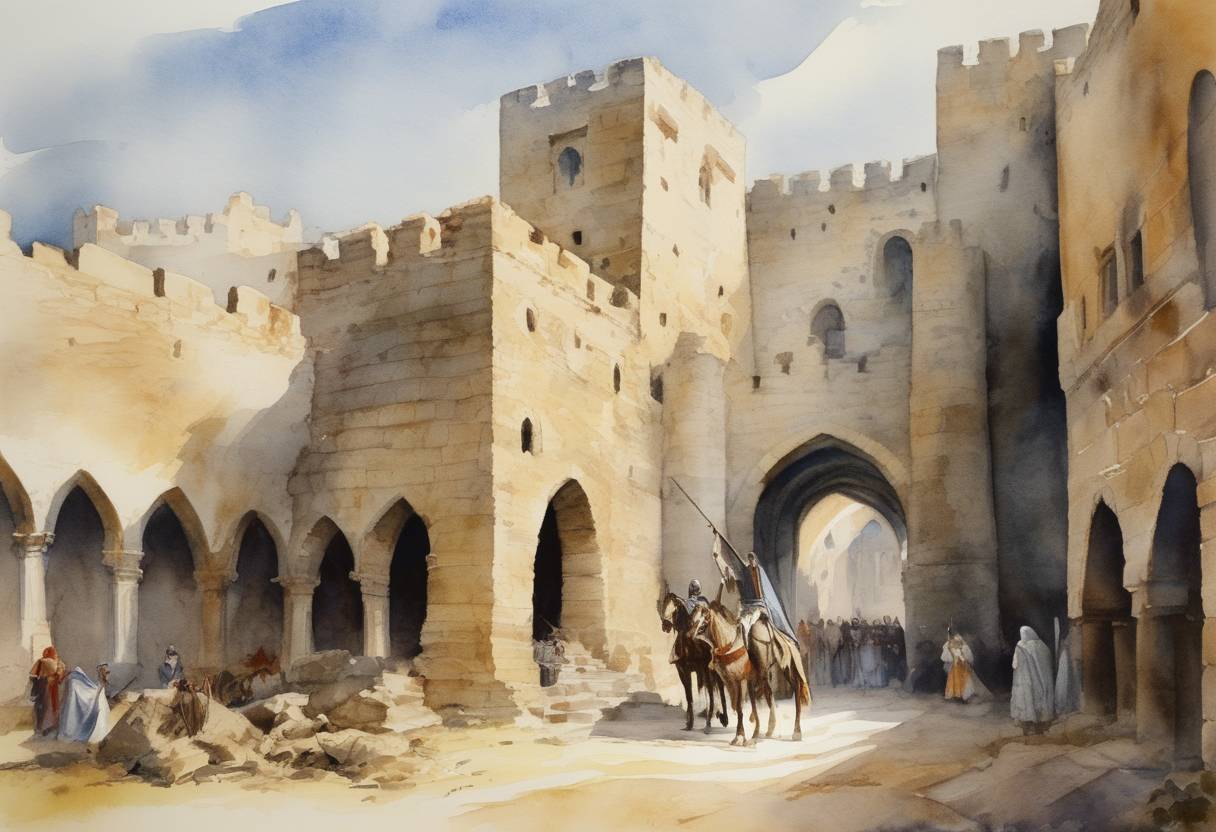
Gerard de Ridefort’s Death at the Siege of Acre - October 1, 1189
Gerard de Ridefort, the Grand Master of the Knights Templar, met his end on October 1, 1189, during the pivotal Siege of Acre, part of the Third Crusade. His death marked a significant moment in the Crusader efforts to capture key strategic locations in the Holy Land from Muslim control.
Background
Gerard de Ridefort was a prominent and controversial figure known for his fervent leadership and involvement in key events during the Crusader period. He rose to the position of Grand Master of the Knights Templar around 1184, a time when the Crusader states were facing increasing pressure from the forces of Saladin, the sultan of Egypt and Syria.
Siege of Acre
The Siege of Acre was a crucial military engagement during the Third Crusade, as control of Acre was vital for maintaining Christian influence in the region. The siege began in August 1189 when Crusader forces attempted to wrest the city back from Saladin’s troops.
Gerard de Ridefort’s Role and Death
As Grand Master of the Templars, Gerard de Ridefort played a key role in mobilizing and directing the Templar forces during this siege. His leadership had been instrumental in organizing the defense and assaults throughout the Crusades. However, on October 1, 1189, during a crucial moment in the siege, Gerard was killed, a blow to the fragmented Crusader forces.
Aftermath
Gerard’s death signified not only the loss of a significant leader but also highlighted the volatility and peril of the Crusades. The siege of Acre would eventually become one of the longest in medieval history, lasting until July 1191 when the city finally capitulated to the Crusaders. The fall of Acre was a major turning point in the Third Crusade, providing the Crusaders with a crucial foothold in the region.
Broader Historical Significance
Gerard de Ridefort’s leadership and death are often studied to understand the internal dynamics of the Crusader states and the pressures they faced. His tenure as Grand Master continued to influence the strategic and military decisions of the Knights Templar, whose role was pivotal in the larger context of the Crusades. The events at Acre underscored the ongoing struggle for power in the Holy Land and the high human cost of the Crusades.