Henry VIII's Coronation: June 24, 1509
1509 · London, England
Henry VIII was crowned King of England at Westminster Abbey, marking the beginning of a reign that would include significant religious and political changes.
September 4, 1189
Richard I of England is crowned King of England at Westminster Abbey, marking the beginning of his reign.
London, England | English Monarchy
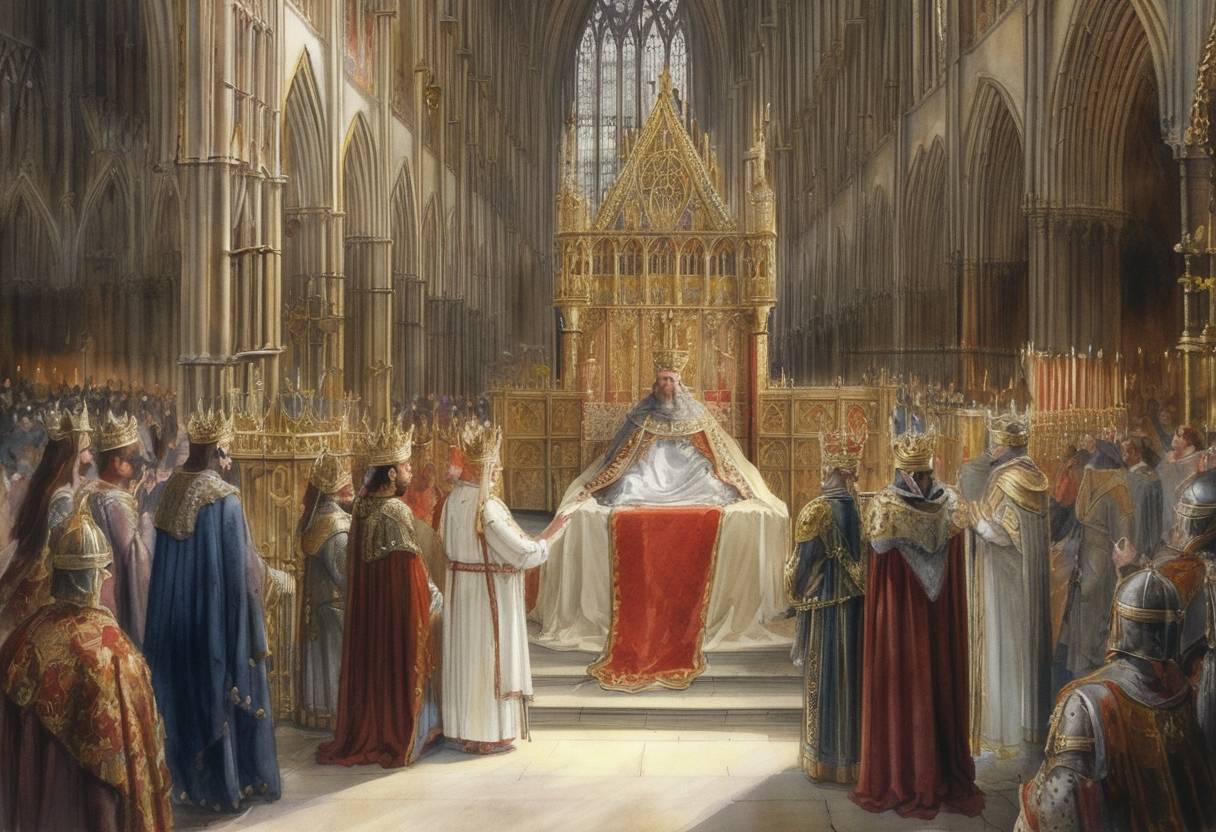
On September 4, 1189, Richard I, also known as Richard the Lionheart, was crowned King of England at Westminster Abbey. This ceremony marked the formal beginning of his reign, succeeding his father, King Henry II.
Richard was the third legitimate son of Henry II and Eleanor of Aquitaine. Despite his position in the line of succession, Richard was designated as the heir after the deaths of his elder brothers. Richard’s reputation had already been established as a formidable military leader, notably in the context of the territorial disputes in France and in his efforts to consolidate power as Duke of Aquitaine.
The coronation was a significant event, attracting magnates and nobility from across the realm. The ceremony was conducted following the customs and rituals of the time, which included oaths of fealty from barons and ceremonial anointments signaling the divine right of kings. The Archbishop of Canterbury presided over the ceremony, a traditional role for the leading ecclesiastical authority in England.
Richard’s coronation was notable for its lavishness and the declaration of new policies. However, it was also marred by anti-Semitic violence. A rumour that Richard had prohibited Jews from attending the coronation led to a massacre in London and other parts of England, highlighting the deep-rooted tensions and prejudices within society at the time.
Richard’s reign, lasting from 1189 to 1199, was largely defined by his military ambitions, particularly his role in the Third Crusade. His absence from England during most of his reign, as he pursued his crusading goals, left the kingdom under the stewardship of others, including his mother Eleanor and appointed officials.
Richard’s legacy is a blend of admiration for his martial prowess and criticism for his neglect of England’s domestic affairs. His focus on the Crusades drained the royal treasury, contributing to future fiscal challenges for the kingdom.
The coronation of Richard I was a pivotal event that initiated a decade of rule marked by significant military engagements and political dynamics. His reign remains a subject of interest, both for its legendary aspects and the complex realities of his governance.
Source: en.wikipedia.org