The End of the Salem Witch Trials: October 12, 1692
1692 · Salem, United States
The Salem witch trials are ended by a letter from Massachusetts Governor William Phips.
September 19, 1692
Giles Corey, accused of witchcraft, dies after being pressed with heavy stones during the Salem witch trials.
Salem, United States | Salem witch trials authorities
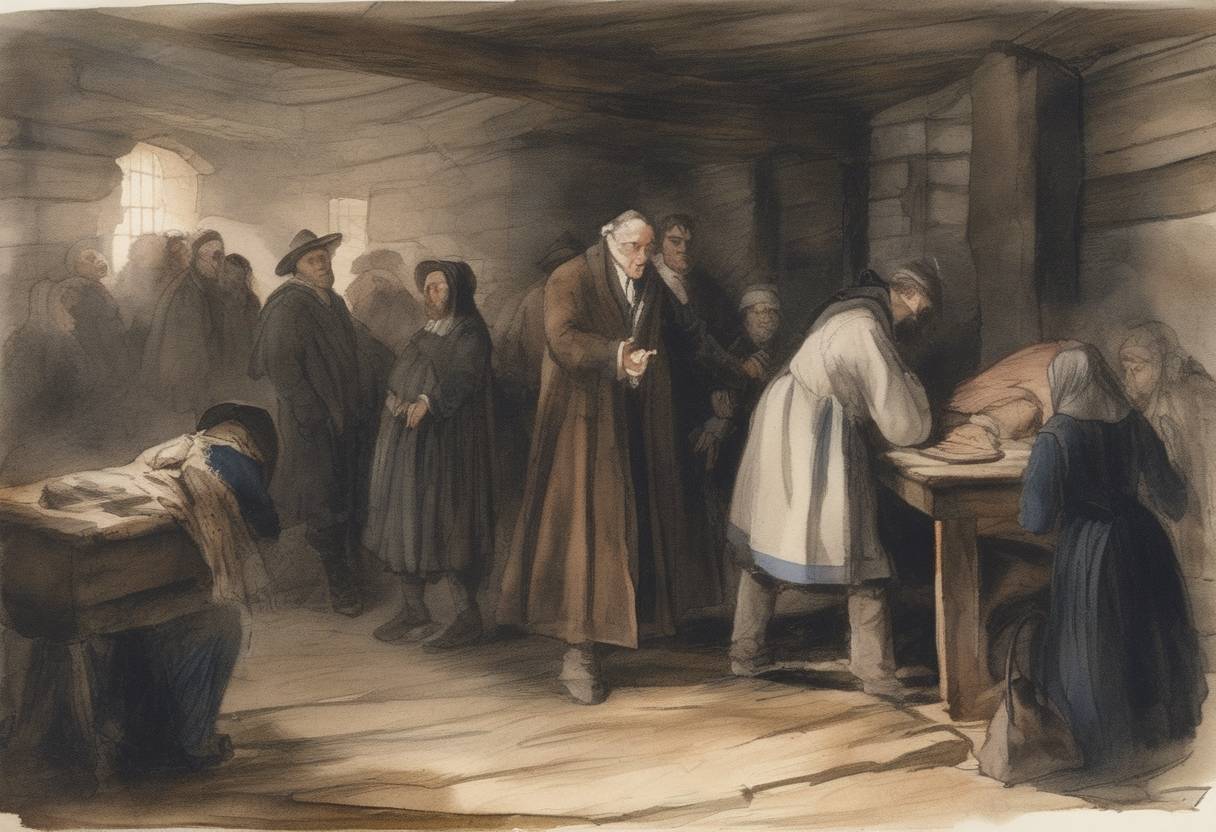
On September 19, 1692, Giles Corey, an elderly farmer in Salem Village (present-day Danvers, Massachusetts), died under a form of torture known as “pressing,” after refusing to enter a plea in the witchcraft accusations brought against him during the Salem witch trials.
The Salem witch trials began in early 1692 amidst a climate of fear and superstition. A series of trials and mass hysteria led to the accusation of over 200 people in the Massachusetts Bay Colony, ultimately resulting in 20 executions. Accusations often stemmed from personal vendettas and societal tensions within the Puritan community.
Giles Corey was a prosperous farmer in his early 80s who had settled in Salem Village with his third wife, Martha Corey. Both Martha and Giles were skeptical of the witch trials, and Martha’s outspoken criticism led to her being accused of witchcraft in March 1692. Despite initially standing by his wife’s innocence, Giles later accused her of witchcraft when examined by officials, likely under duress.
However, Giles himself was soon accused. During his trial, Corey refused to plead either guilty or innocent—a strategic decision intended to prevent the seizure of his estate by the state upon a guilty verdict. At the time, English law dictated that a plea must be entered for the trial to proceed.
To coerce a plea from Corey, authorities used “peine forte et dure,” a brutal method involving the placement of heavy stones on the accused’s body. Over a period of two days, Corey suffered this excruciating torture but remained steadfast, reportedly responding with nothing more than the demand for “more weight.”
On September 19, 1692, Giles Corey succumbed to the immense pressure and died. His death marked a turning point in public sentiment towards the trials, stirring doubt and increasing criticism over the legal proceedings and their morality.
Giles Corey’s steadfastness during his ordeal helped galvanize opposition to the trials. Within months, the hysteria waned, and by May 1693, the remaining accused were freed. In 1711, the Massachusetts Bay Colony passed legislation restoring rights and good names to the accused, including compensation to their heirs.
Giles Corey’s story has become a symbol of courage and resistance against unjust persecution and is often highlighted in discussions concerning due process and the preservation of justice in legal systems.
Source: en.wikipedia.org