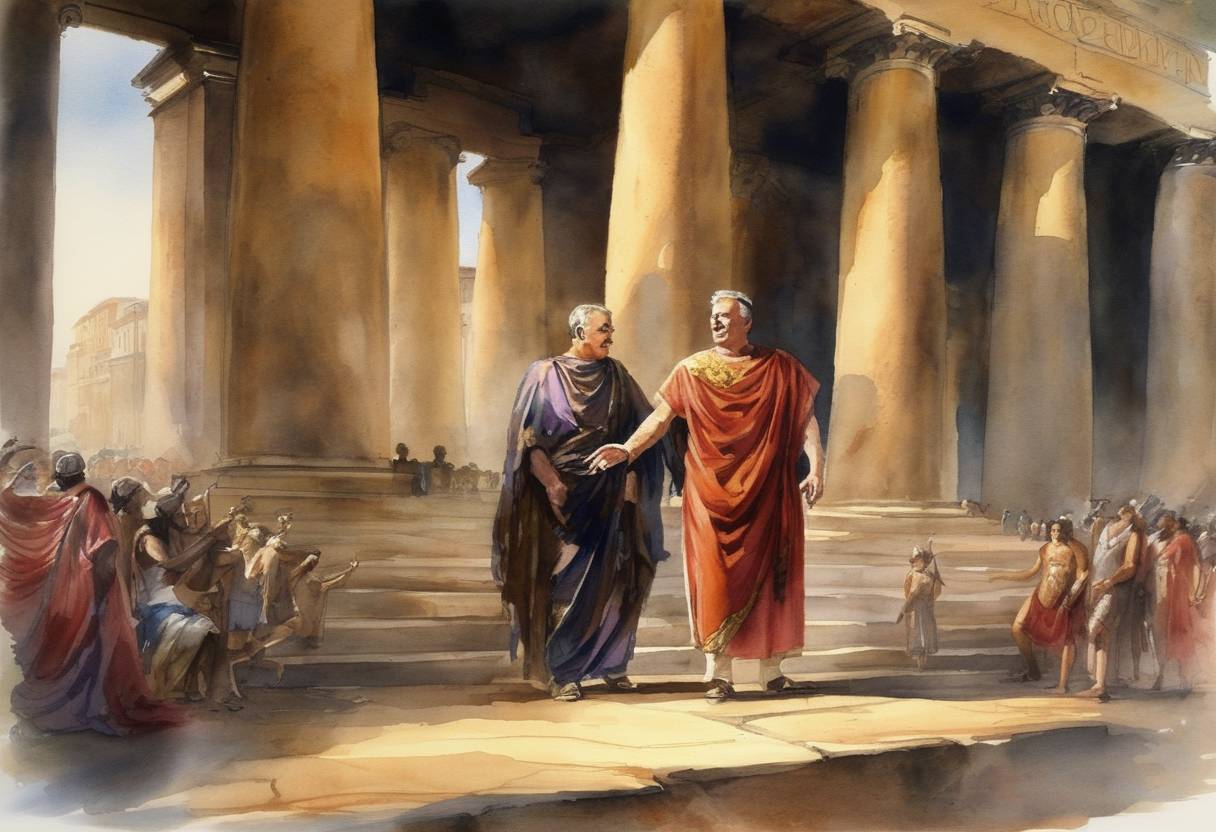
Vespasian Enters Rome as Emperor - December 20, 69 CE
On December 20, 69 CE, Vespasian, a Roman general from the equestrian order, entered Rome and was formally recognized as Emperor of the Roman Empire, marking the conclusion of the tumultuous Year of the Four Emperors. This year saw a rapid succession of rulers, including Galba, Otho, Vitellius, and finally Vespasian, as civil strife and political instability plagued the empire following the death of Emperor Nero.
Background
- Context: The Year of the Four Emperors was a period of civil war and unrest in the Roman Empire, triggered by the suicide of Emperor Nero in 68 CE. The power struggle resulted in a rapid shift in leadership as various factions and legions declared support for different claimants to the throne.
- Vespasian’s Rise: A respected military leader with a distinguished career, Vespasian gained prominence through his command during the Roman conquest of Britain and his successful campaigns in Judea during the First Jewish–Roman War. His first-hand experience and support from the eastern legions bolstered his claim to the throne.
Events Leading Up to Vespasian’s Entrance
- Vitellius’ Downfall: Vespasian was proclaimed emperor by his troops on July 1, 69 CE. Meanwhile, Vitellius, then ruling in Rome, faced declining support as Vespasian’s forces, led by General Antonius Primus, moved towards the capital.
- Battle of Bedriacum: Primus defeated Vitellian forces in a decisive battle at Bedriacum, paving the way for Vespasian’s ascent to power.
- Capture of Rome: Despite Vitellius’ resistance, supporters of Vespasian stormed Rome. On December 20, 69 CE, Vespasian was formally recognized as emperor, marking the end of Vitellius’ short and unpopular reign.
Consequences and Significance
- Stabilization of the Empire: Vespasian’s rule marked the beginning of the Flavian dynasty, bringing a much-needed stability to the empire after a chaotic year. His pragmatic and effective governance restored confidence in the imperial leadership.
- Reforms and Legacy: Vespasian focused on financial recovery by imposing taxes and reforming public finances. He is also renowned for initiating ambitious architectural projects, most notably the construction of the Flavian Amphitheatre, known today as the Colosseum.
Vespasian’s entry into Rome as emperor was a pivotal moment for the Roman Empire, setting the stage for a period of consolidation and relative peace under his leadership and that of his successors, the Flavian dynasty. His reign laid the groundwork for a revival of imperial stability that would last for several decades.