Adoption of the Gregorian Calendar
1582 · Rome, Italy
The Gregorian calendar was adopted by Pope Gregory XIII, replacing the Julian calendar. This day was followed by October 15, 1582, in countries that adopted the new calendar immediately.
October 12, 1582
The Gregorian calendar is introduced in Italy, Spain, Portugal, and the Polish-Lithuanian Commonwealth as the day after October 4 is counted as October 15 to adjust the discrepancy in the Julian calendar.
Rome, Italy | Catholic Church
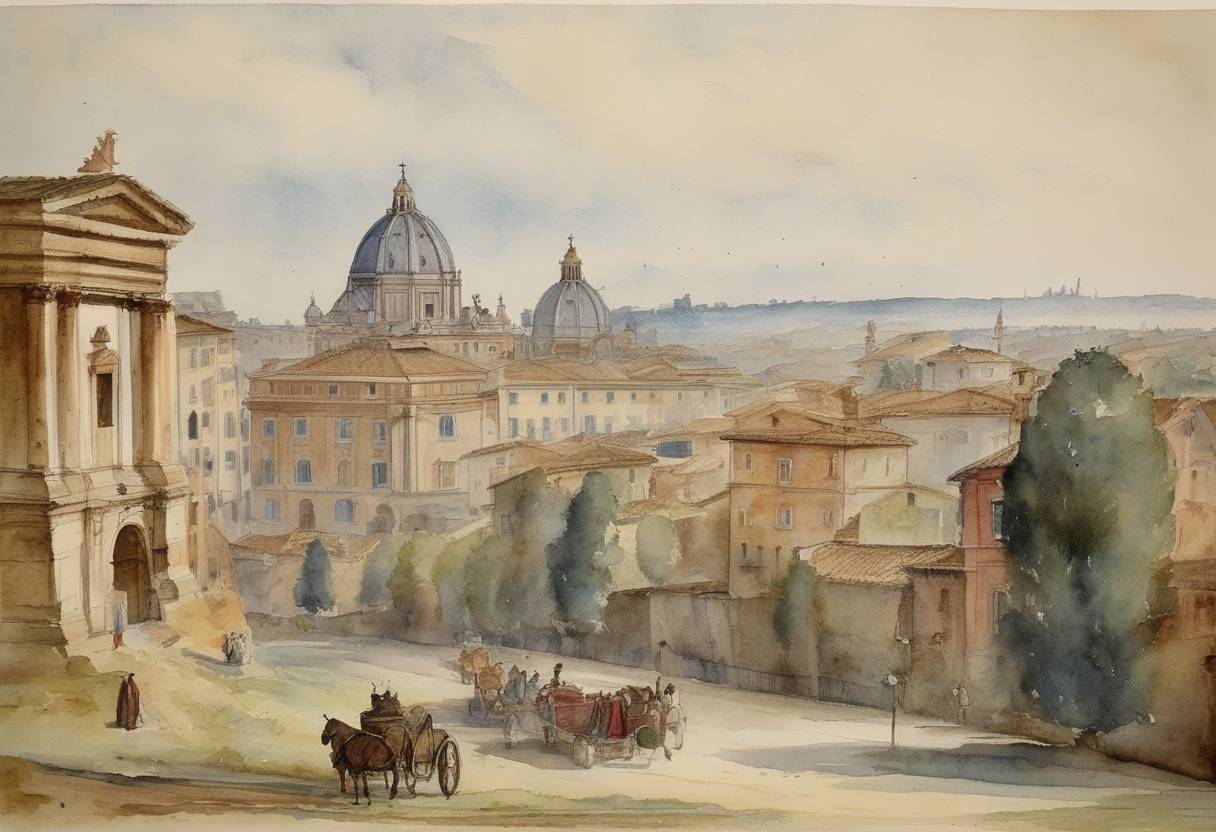
On October 4, 1582, a significant reform in timekeeping occurred as Italy, Spain, Portugal, and the Polish-Lithuanian Commonwealth adopted the Gregorian calendar. The following day was recognized as October 15, 1582, effectively eliminating ten days from the calendar. This adjustment was a corrective measure to address inaccuracies in the older Julian calendar.
The Julian calendar, introduced by Julius Caesar in 45 BCE, had a small discrepancy in the calculation of the solar year. It miscalculated the length of the solar year by 11 minutes each year, leading to a cumulative error over the centuries. By the 16th century, the vernal equinox was occurring around March 11 instead of March 21, causing complications with the calculation of the date of Easter, which was traditionally tied to the equinox.
Pope Gregory XIII, seeking to correct this drift, commissioned a reform led by the Italian scientist Aloysius Lilius and subsequently implemented by the Jesuit priest and astronomer Christopher Clavius. The goal was to realign the calendar with the seasons and the church’s schedule for Easter.
The adoption of the Gregorian calendar represented a crucial moment in calendar reform, widely affecting religious, civil, and agricultural planning. It underscored the importance of scientific observation in governance and was a harbinger of future astronomical discoveries.
While initially accepted by Catholic-majority countries, Protestant and Eastern Orthodox countries were slower to adopt the reform due to religious and political resistance. However, gradually, the Gregorian calendar became the internationally accepted civil calendar, a process that spanned several centuries.
This significant calendrical adjustment exemplified the intersection of science and religion during the Renaissance. It marked an important historical moment when a universal system was established, which continues to influence global timekeeping today.
Source: en.wikipedia.org