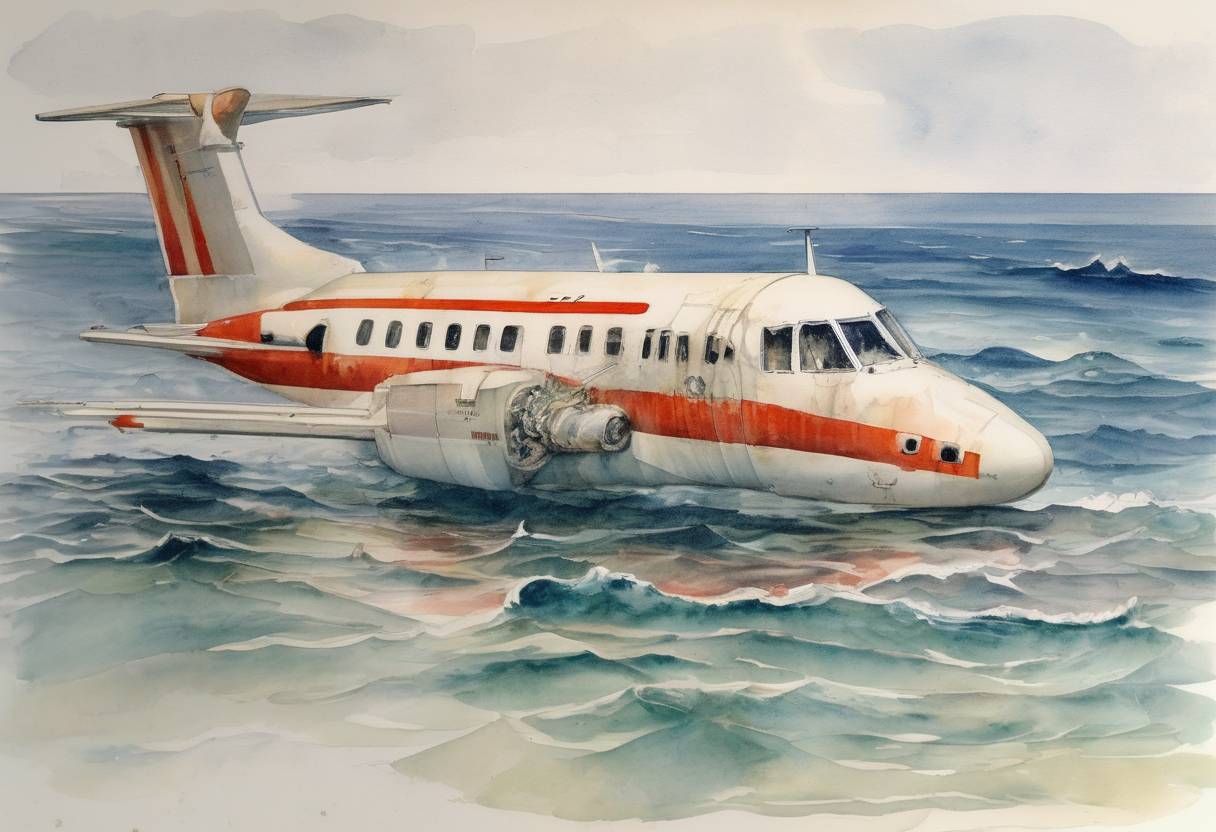
The Crash of Aerolinee Itavia Flight 870
On June 27, 1980, Aerolinee Itavia Flight 870, a domestic passenger flight from Bologna to Palermo, tragically crashed into the Tyrrhenian Sea near the island of Ustica, Italy. This catastrophic event resulted in the loss of all 81 people on board, including passengers and crew, and led to one of the most complex and controversial aviation disaster investigations in Italian history.
Background
- Flight Details: The aircraft involved was a McDonnell Douglas DC-9-15, operated by the Italian airline Aerolinee Itavia. It was a routine domestic flight, carrying 77 passengers and 4 crew members.
- Route: The flight departed from Bologna’s Guglielmo Marconi Airport and was en route to Palermo’s Punta Raisi Airport.
The Crash
- Time of Incident: The aircraft disappeared from radar screens at approximately 8:59 PM local time.
- Location: The crash occurred over the Tyrrhenian Sea, near the island of Ustica.
- Immediate Aftermath: Search and rescue operations were launched, but there were no survivors. Debris and bodies were recovered from the sea over the following days.
Investigation and Theories
The investigation into the crash of Flight 870 was fraught with difficulties and controversies, leading to several theories about the cause:
Structural Failure: Initial theories suggested a possible structural failure of the aircraft. However, this was later deemed unlikely due to the aircraft’s maintenance history and the nature of the debris.
Mid-Air Explosion: Evidence pointed towards an explosion, but the cause was disputed. Theories included:
- Missile Strike: One of the most prominent theories was that the aircraft was accidentally shot down by a missile during a military exercise or conflict involving NATO forces. This theory gained traction due to the presence of military activity in the area at the time.
- Bomb: Another theory proposed that a bomb had been placed on board, though no definitive evidence was found to support this.
Military Involvement: The investigation was complicated by allegations of military involvement and cover-ups. Over the years, various court cases and inquiries have suggested that military forces may have been involved in the incident, either directly or indirectly.
Aftermath and Legacy
- Legal Proceedings: The investigation led to numerous legal proceedings, including trials and appeals. In 2013, Italy’s highest court ruled that the Italian government was responsible for failing to protect the flight and ordered compensation to the victims’ families.
- Public Impact: The disaster had a significant impact on Italian public opinion and led to increased scrutiny of military activities and air safety regulations.
- Memorials: Memorials have been established to honor the victims, including a museum in Bologna dedicated to preserving the memory of those who perished.
Conclusion
The crash of Aerolinee Itavia Flight 870 remains one of Italy’s most enduring aviation mysteries. Despite extensive investigations and legal battles, the exact cause of the disaster has never been conclusively determined, leaving it a poignant reminder of the complexities and challenges in aviation safety and international military operations.