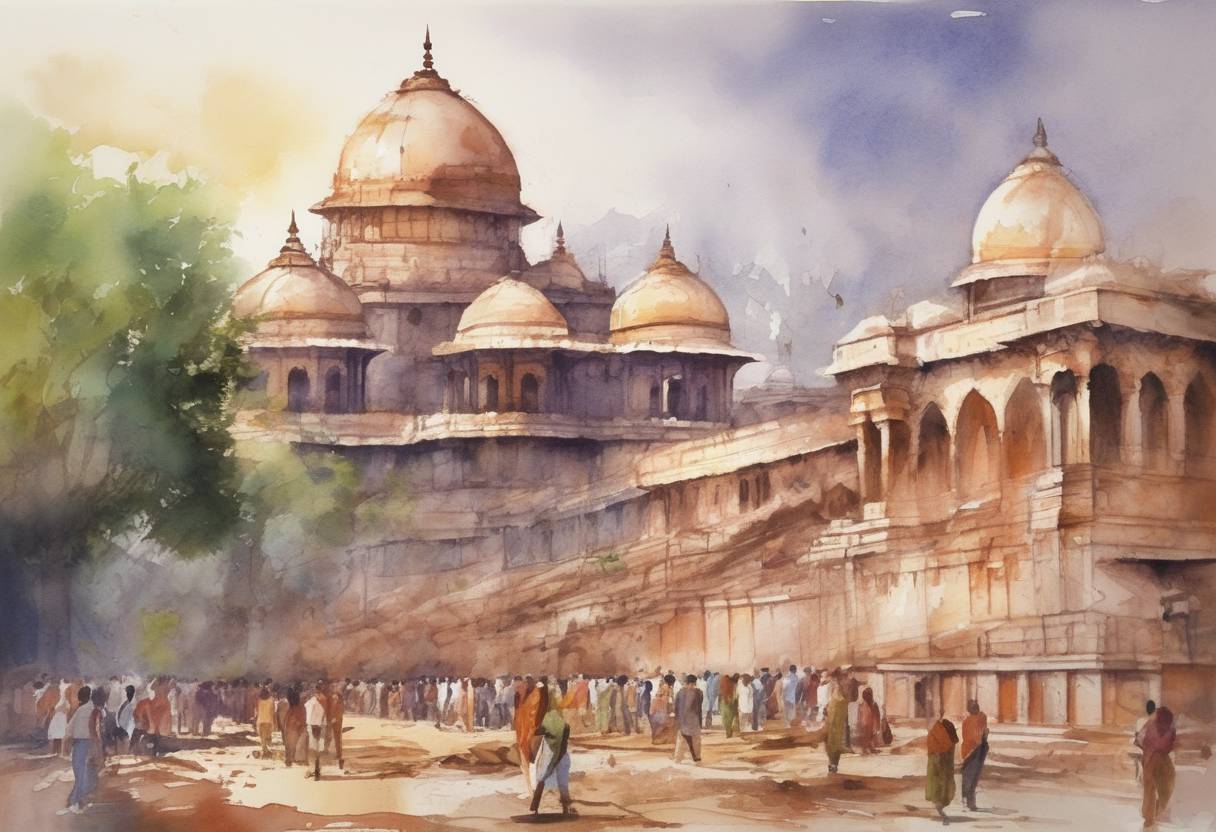
The Demolition of the Babri Masjid on December 6, 1992
On December 6, 1992, a significant and controversial event occurred in Ayodhya, India, when the Babri Masjid, a 16th-century mosque, was demolished by a large group of Hindu nationalists. This incident marked a pivotal moment in India’s modern history, leading to widespread communal riots and long-lasting political and social repercussions.
Historical Context
- The Babri Masjid: Built in 1528–29 by Mir Baqi, a general of the Mughal emperor Babur, the mosque was located in Ayodhya, a city revered by Hindus as the birthplace of Lord Rama, a major deity in Hinduism.
- The Dispute: The site had been a point of contention for decades, with Hindu groups claiming it was the birthplace of Lord Rama and that a temple had been destroyed to build the mosque. This claim was central to the dispute and fueled tensions between Hindu and Muslim communities.
Events Leading to the Demolition
- Political Mobilization: In the late 1980s and early 1990s, the Bharatiya Janata Party (BJP) and other Hindu nationalist organizations, such as the Vishva Hindu Parishad (VHP), intensified their campaign to build a Ram temple at the site. This movement gained significant political momentum.
- Rath Yatra: In 1990, BJP leader L.K. Advani embarked on a nationwide “Rath Yatra” (chariot journey) to garner support for the temple movement, which significantly polarized communities.
The Demolition
- December 6, 1992: Tens of thousands of activists, known as “kar sevaks,” gathered in Ayodhya for a rally organized by the VHP and other Hindu nationalist groups. Despite assurances to the contrary, the crowd overwhelmed security forces and demolished the mosque using hammers, pickaxes, and their bare hands.
- Immediate Aftermath: The demolition led to widespread communal riots across India, resulting in the deaths of over 2,000 people, predominantly from the Muslim community. The violence spread to major cities, including Mumbai, Delhi, and Bhopal.
Consequences and Aftermath
- Political Impact: The incident significantly altered India’s political landscape, bolstering the BJP’s rise as a major political force while deepening communal divides.
- Legal and Judicial Proceedings: The demolition led to numerous legal battles and investigations. In 2010, the Allahabad High Court ruled that the disputed land should be divided among Hindu and Muslim parties. However, in 2019, the Supreme Court of India awarded the entire site to the Hindu claimants, allowing for the construction of a Ram temple, while ordering a separate plot of land to be given to Muslims for a mosque.
- Social and Cultural Impact: The event remains a sensitive and polarizing issue in India, symbolizing the ongoing struggle between secularism and religious nationalism.
The demolition of the Babri Masjid was not just a physical act but a catalyst for profound changes in India’s socio-political fabric, with effects that continue to resonate in the country’s discourse on religion, politics, and identity.