Adolf Hitler Becomes Supreme Commander-in-Chief of the German Army
1941 · Berlin, Germany
Adolf Hitler became Supreme Commander-in-Chief of the German Army, consolidating his control over the military during World War II.
July 19, 1940
Adolf Hitler ordered the postponement of the invasion of Great Britain, known as Operation Sea Lion, during World War II.
Berlin, Germany | Nazi Germany
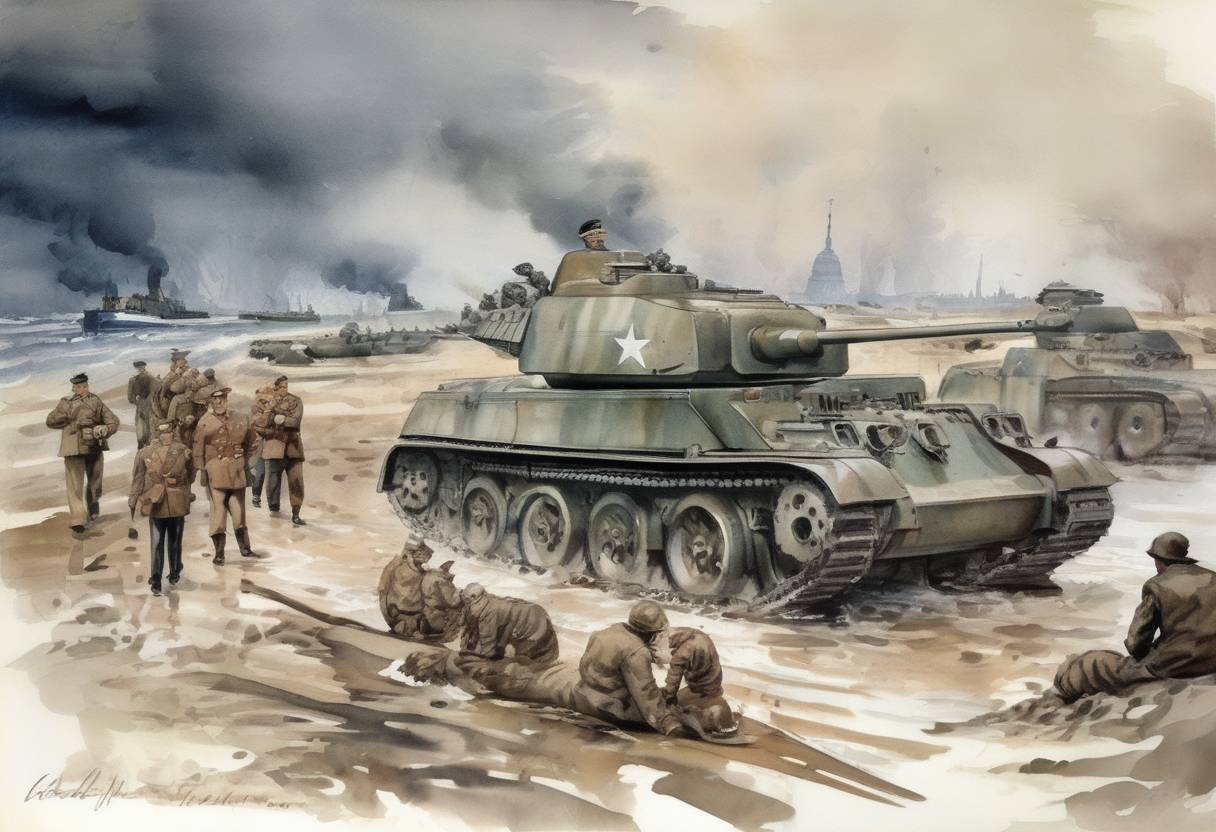
On July 19, 1940, Adolf Hitler ordered the postponement of Operation Sea Lion, the planned German invasion of Great Britain during World War II. This decision was a pivotal moment in the conflict, reflecting the strategic challenges faced by Nazi Germany in its efforts to subdue Britain.
Fall of France: By June 1940, Nazi Germany had successfully invaded and occupied France, leaving Britain to stand alone against the Axis powers in Western Europe. The rapid fall of France had initially emboldened Hitler to consider an invasion of Britain.
Operation Sea Lion: This was the codename for the planned amphibious and airborne invasion of Great Britain. The operation aimed to achieve German dominance over the British Isles, which was seen as crucial for securing Nazi control over Western Europe.
Battle of Britain: Before launching a full-scale invasion, the German military recognized the need to establish air superiority over the Royal Air Force (RAF). The Luftwaffe began a sustained aerial campaign against Britain in what became known as the Battle of Britain.
Air Superiority: The Luftwaffe struggled to gain the upper hand against the RAF. British radar technology and effective fighter tactics, particularly those involving the Spitfire and Hurricane aircraft, thwarted German efforts to dominate the skies.
Naval Challenges: The German Kriegsmarine (Navy) was not adequately prepared for a cross-channel invasion. The Royal Navy’s strength posed a significant threat to any attempted amphibious assault.
Logistical Difficulties: Planning and executing an invasion of Britain required extensive logistical support, which Germany was not fully prepared to provide at the time. The complexities of coordinating land, sea, and air forces presented significant challenges.
Prolonged Conflict: The postponement of Operation Sea Lion marked a turning point in World War II, as it allowed Britain to remain a formidable opponent against Nazi Germany. The failure to invade Britain meant that Germany had to fight a prolonged war on multiple fronts.
Boost to British Morale: The successful defense against the Luftwaffe during the Battle of Britain and the postponement of the invasion bolstered British morale and solidified Winston Churchill’s leadership.
Strategic Shift: With the invasion postponed indefinitely, Hitler turned his attention eastward, eventually leading to the invasion of the Soviet Union in June 1941, known as Operation Barbarossa.
In summary, the postponement of Operation Sea Lion on July 19, 1940, was a critical decision influenced by Germany’s inability to secure air and naval superiority. This decision had lasting implications for the course of World War II, allowing Britain to continue its resistance and altering the strategic landscape of the conflict.
Source: en.wikipedia.org