Pastoralis Praeeminentiae: The Papal Bull Issued by Pope Clement V
1307 · Poitiers, France
Pope Clement V issued a papal bull Pastoralis Praeeminentiae, instructing all Christian monarchs in Europe to arrest all Templars and seize their assets.
January 1, 0990
The Peace of God, a movement led by the Church to limit violence among feudal lords, was formally recognized in France, marking an early attempt at establishing peace and order in medieval Europe.
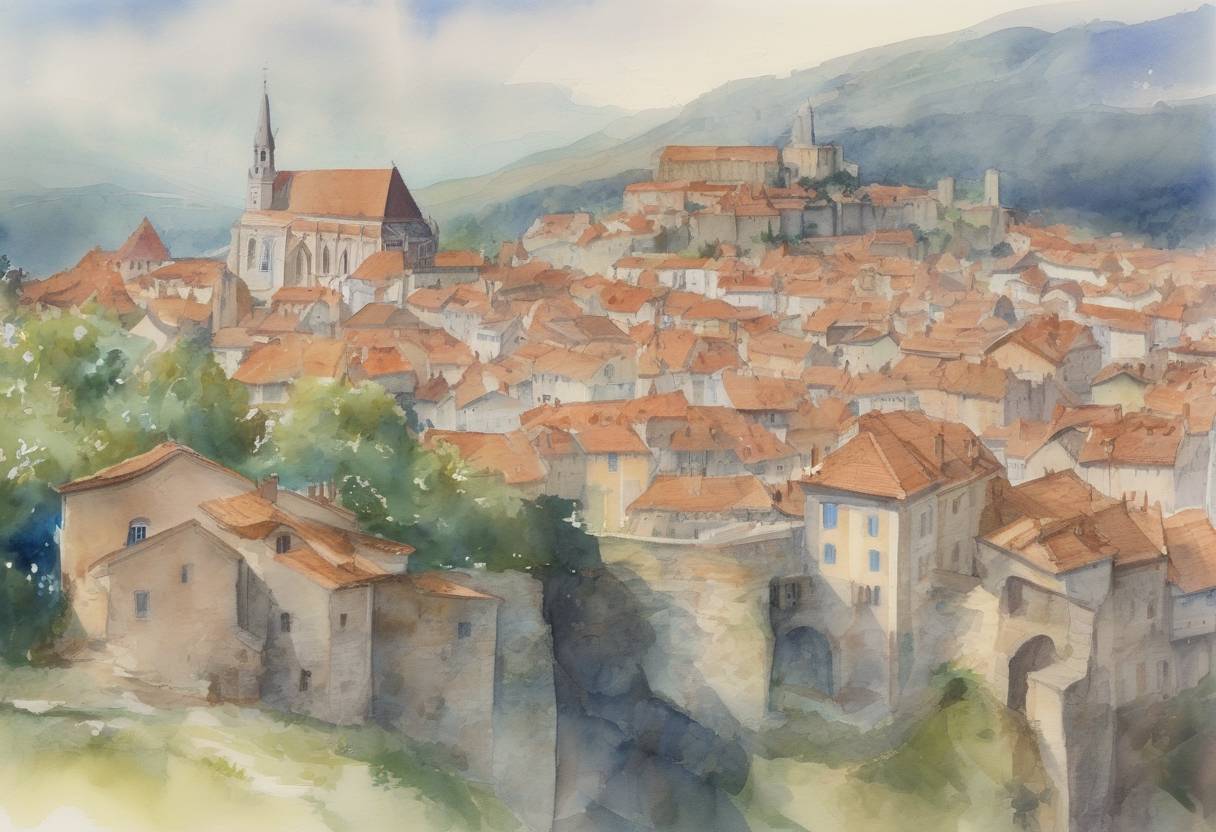
Le Puy, France | Catholic Church
The Peace of God (Pax Dei) was a significant ecclesiastical initiative in medieval Europe aimed at curbing the rampant violence that characterized the feudal era. Although the exact date of its formal recognition is not definitively recorded as January 1, 990, the movement began to take shape in the late 10th century, with its roots deeply embedded in the socio-political landscape of the time.
During the 10th century, Europe was a patchwork of feudal territories, where local lords wielded considerable power. This period was marked by frequent conflicts, as these lords often engaged in violent disputes over land and resources. The Church, seeking to mitigate the chaos and protect non-combatants, initiated the Peace of God movement.
Protection of Non-Combatants: The movement sought to protect vulnerable groups such as peasants, clergy, women, and children from the violence of feudal warfare. It declared that these groups should not be targeted during conflicts.
Sanctity of Sacred Places: Churches and other holy sites were to be respected as sanctuaries, where violence was prohibited.
Oaths and Assemblies: The Church organized councils and assemblies where lords were encouraged or compelled to swear oaths to uphold the Peace of God. These gatherings were often accompanied by religious ceremonies to reinforce the sanctity of the commitments made.
Council of Charroux (c. 989): One of the earliest and most significant councils associated with the Peace of God was held at Charroux in Aquitaine. Here, bishops and clergy gathered to issue decrees that laid the groundwork for the movement, emphasizing the protection of non-combatants and sacred sites.
Expansion and Influence: The movement spread throughout France and into other parts of Europe, evolving into the Truce of God (Treuga Dei), which further restricted warfare by prohibiting combat on certain days of the week and during religious seasons.
The Peace of God movement represents one of the earliest organized attempts to impose moral and ethical constraints on warfare in medieval Europe. It reflects the growing influence of the Church in secular matters and its role as a mediator in feudal society. While not always successful in curbing violence, the movement laid the groundwork for later developments in international law and the concept of just war.
The Peace of God was a pivotal movement in medieval history, illustrating the Church’s efforts to bring order and humanity to a turbulent era. Its legacy can be seen in the evolving relationship between religious and secular authorities and the ongoing quest for peace and justice in human societies.
Source: en.wikipedia.org