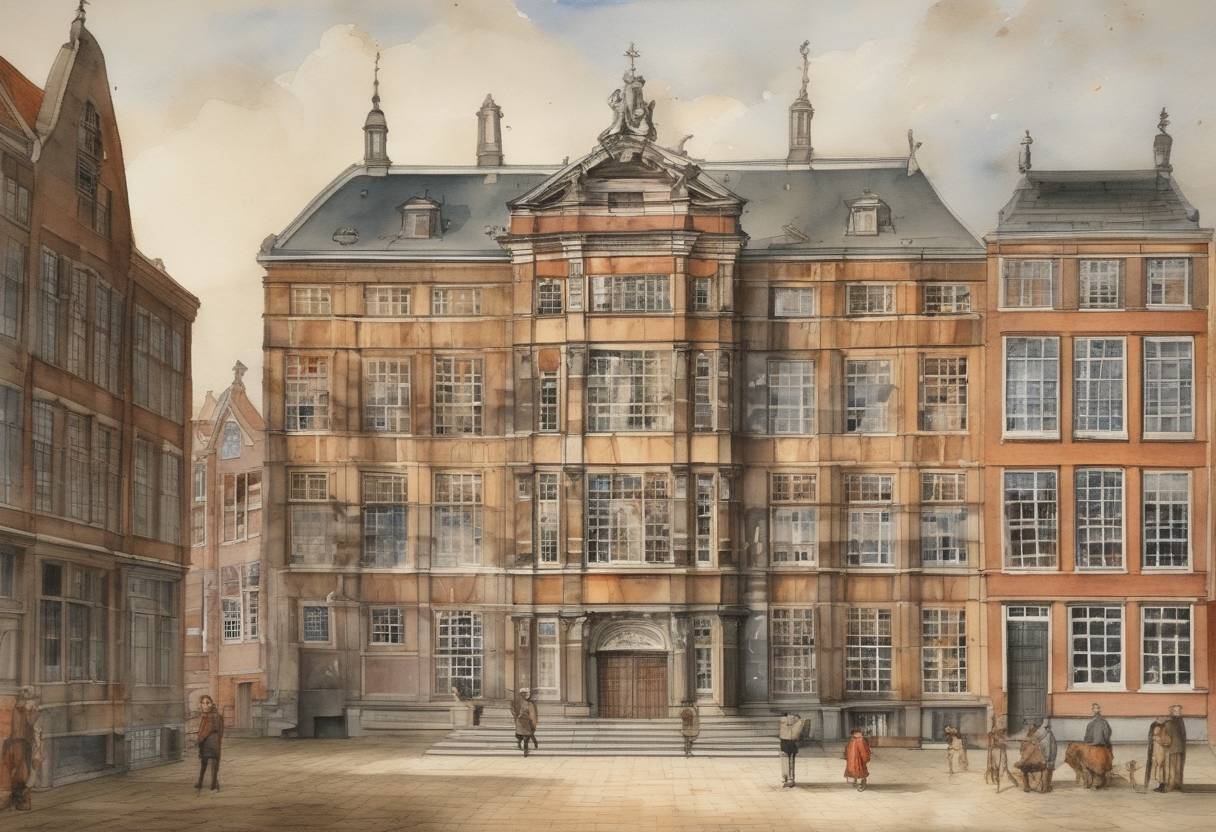
The Founding of the Gymnasium Illustre in Amsterdam
On September 15, 1616, the Gymnasium Illustre was established in Amsterdam, marking a significant milestone in the history of education in Europe. This institution was notable for being the first non-aristocratic, free public school on the continent, reflecting the progressive educational and social values of the Dutch Republic during the early 17th century.
Historical Context
The early 1600s were a period of remarkable growth and change in the Dutch Republic. The region was experiencing the Dutch Golden Age, characterized by economic prosperity, cultural flourishing, and advancements in science and education. Amsterdam, in particular, emerged as a major center of trade, finance, and intellectual activity.
Establishment of the Gymnasium Illustre
The Gymnasium Illustre was founded to provide higher education to the citizens of Amsterdam, regardless of their social class. Unlike many educational institutions of the time, which were often reserved for the aristocracy or clergy, the Gymnasium Illustre was accessible to a broader segment of the population. This inclusivity was a reflection of the egalitarian ideals that were gaining traction in the Dutch Republic.
Curriculum and Influence
The curriculum of the Gymnasium Illustre was designed to offer a comprehensive education in the liberal arts and sciences. It included subjects such as philosophy, theology, law, and the natural sciences. The school attracted prominent scholars and educators, contributing to its reputation as a center of learning and intellectual exchange.
The establishment of the Gymnasium Illustre played a crucial role in the democratization of education in Europe. It set a precedent for the development of public education systems that would later spread across the continent.
Aftermath and Legacy
The Gymnasium Illustre eventually evolved into the University of Amsterdam, one of the leading research universities in the world today. Its founding principles of accessibility and academic excellence continue to influence educational practices and policies.
The creation of the Gymnasium Illustre was a testament to the progressive spirit of the Dutch Republic and its commitment to fostering knowledge and learning. It laid the groundwork for the modern concept of public education and underscored the importance of education as a tool for social mobility and empowerment.
In summary, the founding of the Gymnasium Illustre on September 15, 1616, was a landmark event in the history of education, reflecting the transformative social and intellectual currents of the time. Its legacy endures in the continued emphasis on accessible and high-quality education for all.