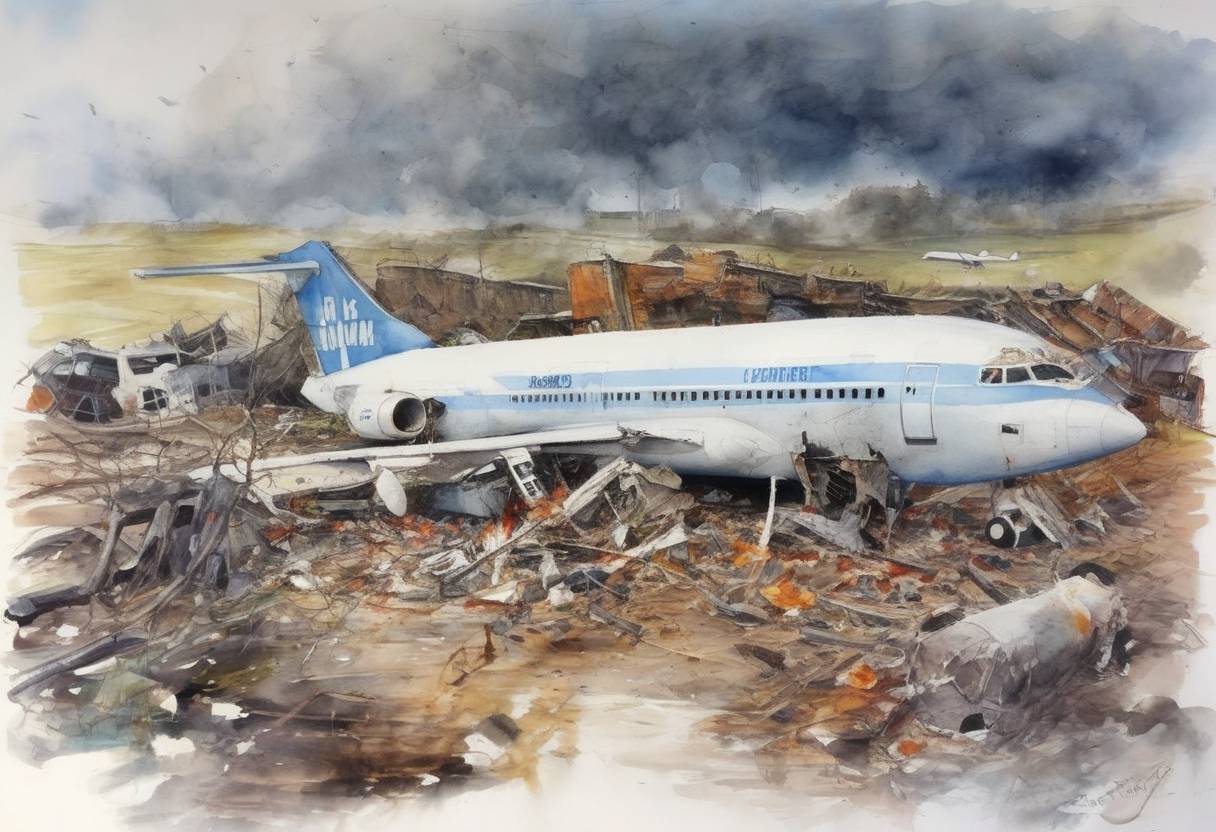
Pan Am Flight 103: The Lockerbie Bombing
Overview
On December 21, 1988, Pan Am Flight 103, a transatlantic flight from Frankfurt to Detroit via London and New York, was destroyed by a terrorist bomb over the town of Lockerbie, Scotland. The tragic event resulted in the deaths of all 259 passengers and crew on board, as well as 11 residents of Lockerbie, marking it as one of the deadliest terrorist attacks involving an aircraft.
The Event
- Flight Details: Pan Am Flight 103 was a regularly scheduled flight operated by Pan American World Airways. On this fateful day, the aircraft was a Boeing 747-121 named “Clipper Maid of the Seas.”
- Explosion: At approximately 7:03 PM GMT, the aircraft exploded at an altitude of 31,000 feet. The explosion was caused by a bomb placed inside a cassette player, which had been packed in a suitcase in the cargo hold.
- Impact on Lockerbie: Debris from the explosion rained down on Lockerbie, causing significant damage to the town and resulting in the deaths of 11 residents.
Investigation
- Initial Response: The immediate aftermath saw a massive response from emergency services and investigators. The scale of the disaster prompted a comprehensive investigation led by the Dumfries and Galloway Constabulary, with assistance from international agencies.
- Forensic Analysis: Investigators meticulously pieced together debris from the crash site, eventually determining that a bomb had been the cause. The explosive device was traced back to a suitcase that had been loaded onto the plane in Frankfurt.
- International Cooperation: The investigation involved cooperation between the UK, the United States, and other international partners. It was one of the largest and most complex criminal investigations ever conducted.
Consequences and Aftermath
- Legal Proceedings: After years of investigation, two Libyan nationals, Abdelbaset al-Megrahi and Lamin Khalifah Fhimah, were accused of carrying out the bombing. In 2001, al-Megrahi was convicted by a Scottish court sitting in the Netherlands, while Fhimah was acquitted.
- Sanctions and Diplomatic Tensions: The attack led to significant diplomatic tensions, particularly between Libya and Western nations. The United Nations imposed sanctions on Libya, which were eventually lifted in 2003 after Libya accepted responsibility for the bombing and agreed to compensate the victims’ families.
- Legacy: The Lockerbie bombing had lasting impacts on international aviation security, leading to stricter regulations and improved security measures at airports worldwide.
Broader Historical Significance
The destruction of Pan Am Flight 103 remains a pivotal moment in the history of aviation and international terrorism. It highlighted vulnerabilities in aviation security and underscored the need for international cooperation in combating terrorism. The event also had profound effects on the families of the victims and the community of Lockerbie, fostering a legacy of remembrance and resilience.
The Lockerbie bombing continues to be a subject of legal and historical scrutiny, with ongoing debates about the investigation and the individuals involved. It serves as a somber reminder of the global impact of terrorism and the importance of vigilance and justice.