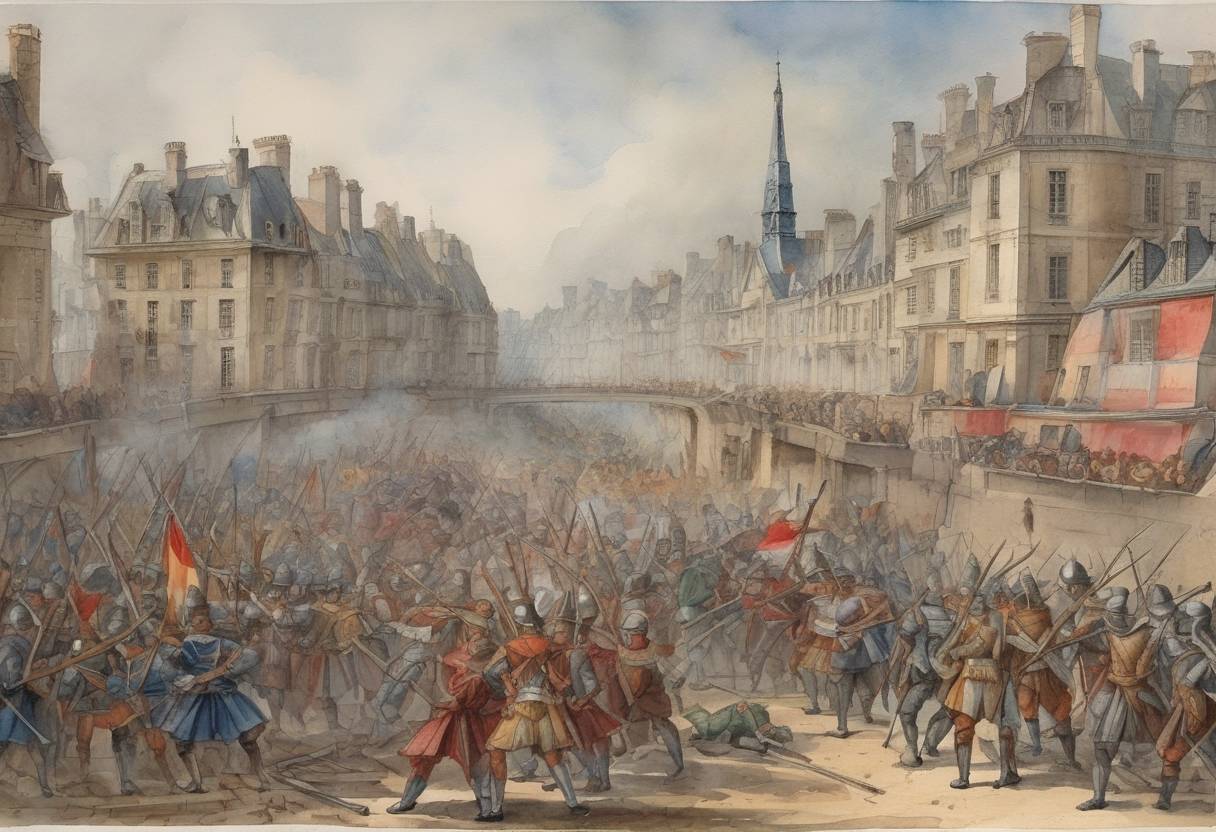
The Day of the Barricades: May 12, 1588
The Day of the Barricades, which occurred on May 12, 1588, was a pivotal event during the French Wars of Religion, a series of conflicts primarily fought between Catholics and Huguenots (French Protestants) from 1562 to 1598. This particular day marked a significant turning point in the struggle for power within France, highlighting the tensions between the Catholic League and King Henry III.
Context Leading Up to the Event
The French Wars of Religion were characterized by a complex interplay of religious, political, and social factors. By the late 1580s, the Catholic League, led by Henry of Guise, had gained substantial influence and sought to prevent the Protestant Henry of Navarre from ascending to the French throne. King Henry III, a Catholic himself, was caught in a precarious position, trying to maintain his authority while balancing the demands of both Catholic and Protestant factions.
Key Events of May 12, 1588
Rising Tensions: In the days leading up to May 12, tensions in Paris were escalating. The Catholic League, with strong support from the Parisian populace, was increasingly dissatisfied with King Henry III’s policies, which they perceived as too conciliatory towards Protestants.
The Barricades Erected: On May 12, Parisians, incited by the Catholic League, erected barricades throughout the city. This spontaneous uprising effectively cut off the king’s forces and demonstrated the League’s control over the capital.
King Henry III’s Response: Faced with overwhelming opposition, King Henry III was forced to flee Paris. This retreat marked a significant loss of royal authority and underscored the power of the Catholic League.
Aftermath and Consequences
Strengthening of the Catholic League: The Day of the Barricades significantly bolstered the Catholic League’s position, allowing them to exert greater influence over French politics.
Assassination of Henry of Guise: In December 1588, King Henry III, seeking to regain control, orchestrated the assassination of Henry of Guise. This act further inflamed tensions and led to his own assassination in 1589.
Henry of Navarre’s Ascension: The events set the stage for Henry of Navarre’s eventual conversion to Catholicism and his acceptance as King Henry IV, which ultimately led to the end of the Wars of Religion with the Edict of Nantes in 1598, granting religious tolerance to Huguenots.
Historical Significance
The Day of the Barricades was a crucial moment in the French Wars of Religion, illustrating the deep divisions within France and the challenges faced by the monarchy in maintaining control. It highlighted the power of popular uprisings and the significant influence of religious factions in shaping the political landscape of the time. The events of May 12, 1588, set in motion a series of developments that would eventually lead to the stabilization of France under Henry IV and the establishment of relative religious peace.