Adolf Hitler Becomes Supreme Commander-in-Chief of the German Army
1941 · Berlin, Germany
Adolf Hitler became Supreme Commander-in-Chief of the German Army, consolidating his control over the military during World War II.
September 8, 1941
The Siege of Leningrad by German forces begins during World War II.
Leningrad (now Saint Petersburg), Russia | Nazi Germany
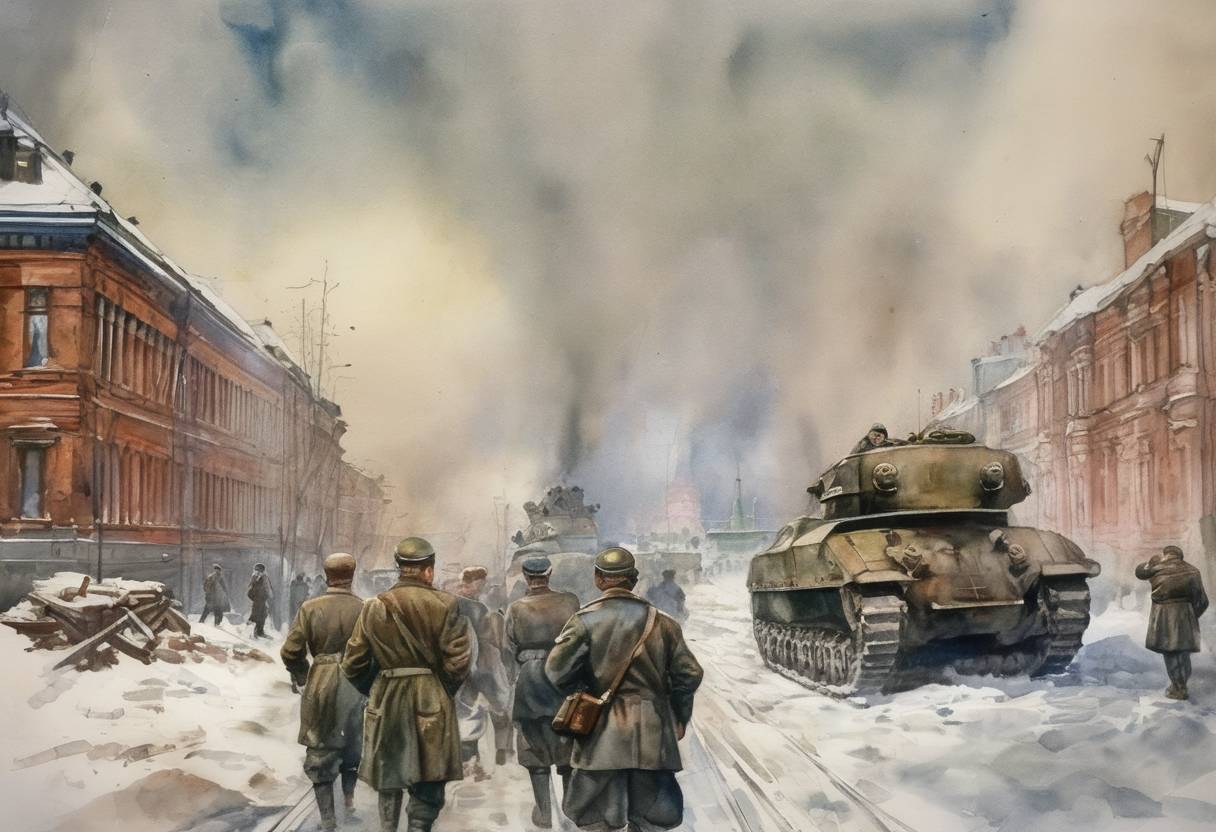
The Siege of Leningrad, one of the most harrowing events of World War II, commenced on September 8, 1941, when German forces completed their encirclement of the city. This marked the beginning of a brutal blockade that lasted for 872 days, until January 27, 1944.
Operation Barbarossa: The siege was part of Operation Barbarossa, Nazi Germany’s invasion of the Soviet Union, which began on June 22, 1941. The operation aimed to quickly defeat the Soviet Union through a series of rapid and decisive battles.
Strategic Importance: Leningrad (now Saint Petersburg) was a significant industrial center and a symbol of Soviet resistance. Its capture was crucial for the Germans to secure the northern front and cut off Soviet access to the Baltic Sea.
German Strategy: Led by Field Marshal Wilhelm Ritter von Leeb, Army Group North advanced towards Leningrad, intending to encircle and starve the city into submission rather than engage in costly urban warfare.
Encirclement: By September 8, 1941, German and Finnish forces had surrounded Leningrad, cutting off all land routes to the city. This effectively isolated its population of approximately 2.5 million people, including civilians and military personnel.
Conditions: The siege resulted in extreme shortages of food, fuel, and other essential supplies. The harsh winters exacerbated the suffering, with temperatures plummeting and fuel supplies dwindling, leading to widespread starvation and cold-related deaths.
Civilian Suffering: The civilian population endured severe hardships. Rationing was implemented, but food supplies were grossly inadequate. It is estimated that over a million people died during the siege, primarily from starvation, exposure, and bombardment.
Defensive Efforts: Despite the dire conditions, the Soviet defenders, including both military personnel and civilians, mounted a determined resistance. The city’s factories continued to produce arms and supplies for the war effort.
The Road of Life: During the winter months, the frozen Lake Ladoga served as a vital supply route, known as the “Road of Life.” Trucks transported food and supplies into the city and evacuated civilians.
Lifting the Siege: The siege was finally lifted on January 27, 1944, following a successful Soviet offensive that pushed German forces away from the city. This marked a significant turning point on the Eastern Front.
Legacy: The Siege of Leningrad is remembered as a testament to human endurance and resilience. It highlighted the brutal nature of the Eastern Front and the immense suffering endured by civilians during wartime.
Historical Impact: The siege had a profound impact on Soviet society and contributed to the resolve of the Soviet Union to defeat Nazi Germany. It remains a symbol of national pride and sacrifice in Russia.
The Siege of Leningrad stands as one of the longest and most devastating sieges in history, leaving an indelible mark on the collective memory of World War II.
Source: en.wikipedia.org