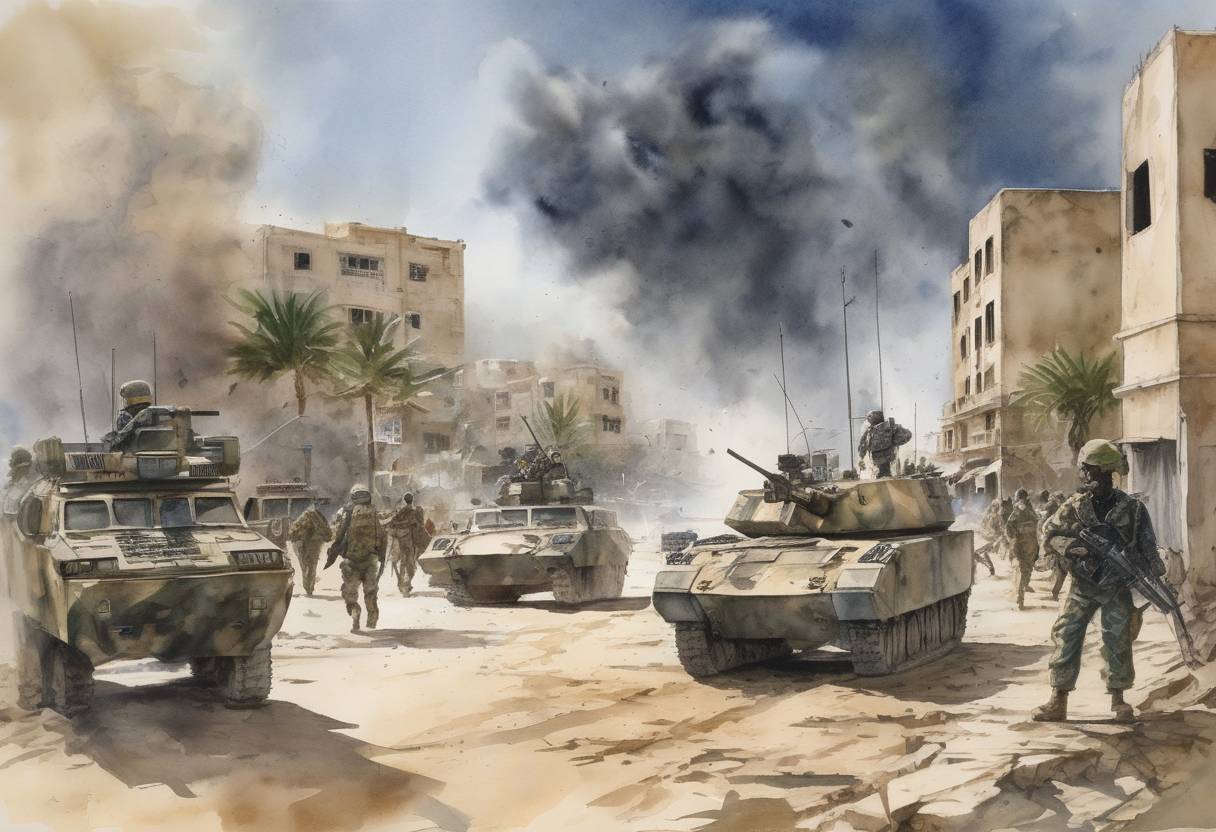
The Battle of Mogadishu: October 3, 1993
The Battle of Mogadishu, which began on October 3, 1993, was a significant military engagement involving United States forces as part of Operation Gothic Serpent in Somalia. This operation aimed to capture key lieutenants of Somali warlord Mohamed Farrah Aidid, whose forces were destabilizing the region and obstructing humanitarian efforts during the Somali Civil War.
Context Leading Up to the Battle
- Somali Civil War: The early 1990s saw Somalia embroiled in a civil war following the collapse of the Siad Barre regime in 1991. The power vacuum led to widespread violence and famine.
- UN Intervention: In response to the humanitarian crisis, the United Nations launched Operation Restore Hope in December 1992, with U.S. forces leading efforts to secure food distribution routes.
- Operation Gothic Serpent: Initiated in August 1993, this operation aimed to capture Aidid, whose militia was responsible for attacks on UN forces, including the killing of 24 Pakistani peacekeepers in June 1993.
Key Events of the Battle
- Objective: The mission on October 3 was to capture two of Aidid’s top lieutenants during a meeting in the heart of Mogadishu.
- Forces Involved: The operation involved elite U.S. Army Rangers and Delta Force operators, supported by helicopters and armored vehicles.
- Initial Success: The raid initially succeeded in capturing the targets, but the situation quickly deteriorated when Somali militia forces shot down two Black Hawk helicopters.
- Urban Combat: The downing of the helicopters led to a prolonged firefight in the city streets, with U.S. forces facing intense resistance from heavily armed Somali fighters.
- Casualties and Rescue: The battle lasted approximately 18 hours, resulting in 18 U.S. soldiers killed and 73 wounded. Estimates of Somali casualties vary widely, with hundreds killed or wounded.
Aftermath and Consequences
- Public Reaction: Graphic images of the battle, particularly of a U.S. soldier’s body being dragged through the streets, shocked the American public and led to widespread criticism of U.S. involvement.
- Policy Shift: The battle prompted a reevaluation of U.S. foreign policy, leading to the withdrawal of American troops from Somalia by March 1994.
- Long-term Impact: The events in Mogadishu influenced U.S. military strategy and engagement rules, contributing to a more cautious approach in future humanitarian interventions.
Broader Historical Significance
The Battle of Mogadishu highlighted the complexities and dangers of urban warfare and peacekeeping missions in volatile regions. It underscored the challenges of international intervention in civil conflicts and had lasting implications for U.S. military and foreign policy, shaping the discourse around humanitarian intervention and military engagement in the post-Cold War era.