Construction Begins on the Gateway Arch
1963 · St. Louis, United States
Construction begins on the Gateway Arch in St. Louis.
September 17, 1961
The world's first retractable dome stadium, the Civic Arena, opens in Pittsburgh, Pennsylvania.
Pittsburgh, United States | City of Pittsburgh
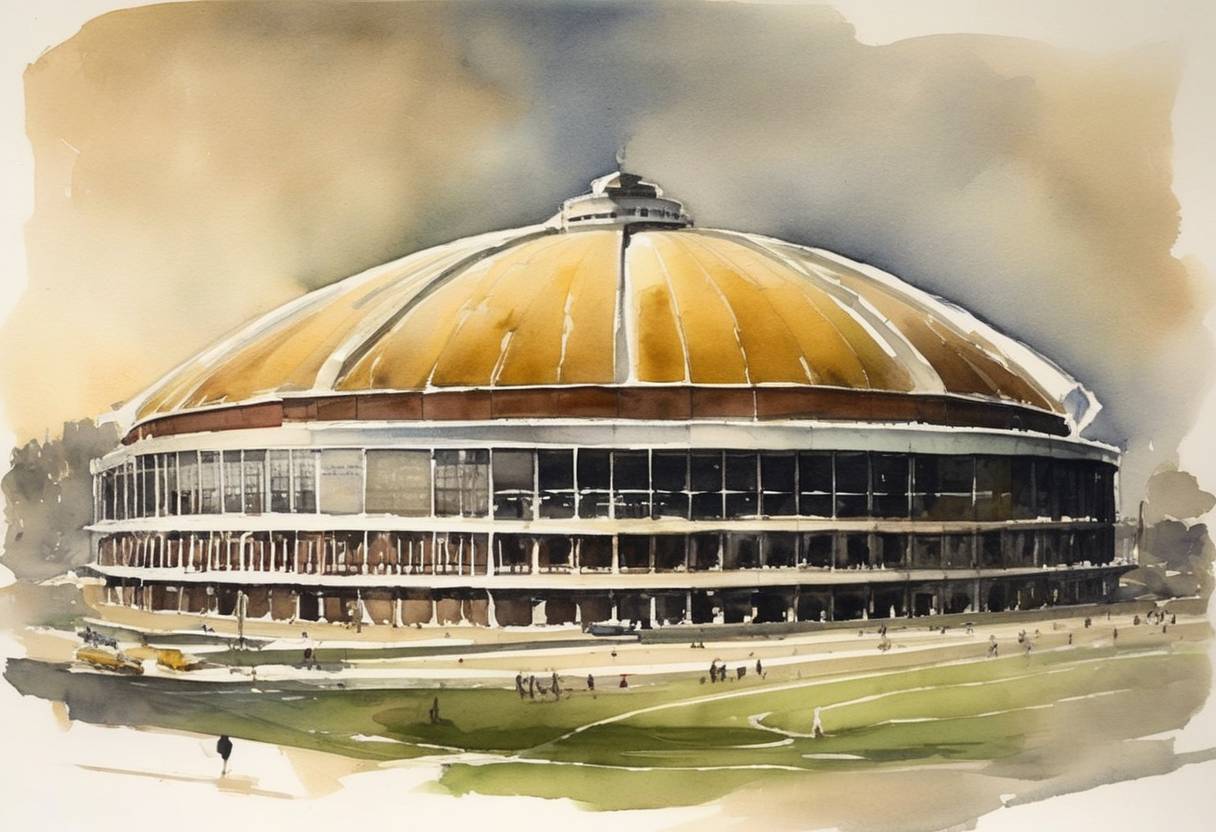
On September 17, 1961, the Civic Arena, located in Pittsburgh, Pennsylvania, opened its doors to the public. This groundbreaking structure was renowned for being the world’s first retractable dome stadium, a significant innovation in architectural design and engineering at the time.
Designed by the architectural firm Mitchell & Ritchey, with engineering spearheaded by the company of Dr. J.V. Thompson, the arena featured a dome that spanned over 415 feet with a retractable roof made of eight stainless steel sections, with six of these able to retract and create an open-air environment for various events. This advanced mechanization allowed the dome to be fully open in just under three minutes, a marvel that showcased the engineering ingenuity of the era.
Originally intended as the home for the Pittsburgh Civic Light Opera, the arena quickly became a versatile venue. Although it was designed primarily for cultural and musical events, it soon hosted sports events and became notably associated with the Pittsburgh Penguins, serving as their home from 1967 until 2010. It was also the setting for numerous concerts, political rallies, and entertainment spectacles over its extensive operational lifespan.
The Civic Arena symbolized a convergence of modern design with practical utility, paving the way for future stadiums and arenas to incorporate retractable features, combining comfort with context-sensitive adaptability. Its opening represented a milestone in the architectural world, influencing future projects in terms of flexible space utilization.
The grand opening of the Civic Arena was celebrated with a concert featuring the Civic Light Opera, highlighted by performances from esteemed artists like Margaret Truman, a noted American soprano and daughter of former President Harry S. Truman. This event set the tone for the diverse array of performances and activities that the venue would host throughout its history.
The arena became an integral part of Pittsburgh’s cultural and historical fabric, hosting countless events that contributed to its legacy. However, by the late 20th and early 21st centuries, advances in design and the demands of modern audiences led to discussions about the building’s future. The venue was closed in 2010, and despite preservation efforts, the iconic structure was demolished in 2012.
The Civic Arena remains a foundational reference point in architectural history as a pioneer of the retractable roof design and as a symbol of Pittsburgh’s industrial and cultural evolution during the mid-20th century.
Source: historicalmarkerproject.com