Rouen Surrenders to Henry V of England: January 19, 1419
1419 · Rouen, France
Rouen surrendered to Henry V of England, completing his conquest of Normandy.
October 7, 1360
A major storm forces the English army, led by King Edward III, to abandon its siege of Paris and retreat to the safety of the English-held territory of Calais.
Paris, France | Kingdom of England
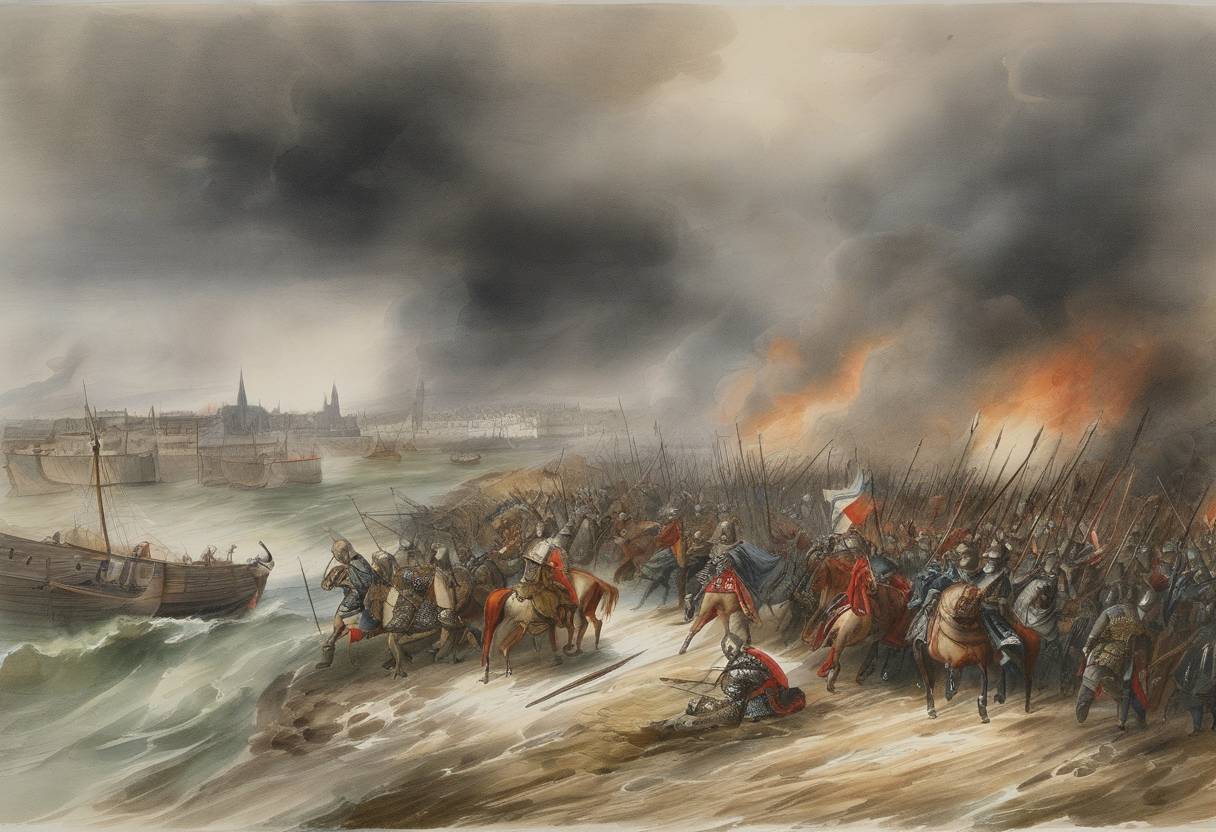
On October 7, 1360, a significant storm compelled the English forces, under the leadership of King Edward III, to abandon their siege of Paris. This event took place during the latter stages of the Hundred Years’ War, a protracted conflict spanning from 1337 to 1453, which was primarily fought between the Kingdom of England and the Kingdom of France over claims to the French throne.
The siege of Paris was part of Edward III’s Rheims campaign, initiated in 1359. The aim was to pressure the French by capturing strategic areas and thereby force a favorable end to hostilities. Prior to targeting Paris, Edward’s armies had embarked on a path of devastation, striking major towns and forte cities, demoralizing French defenses, and attempting to crumble the support for King John II of France, who was in captivity after the Battle of Poitiers in 1356.
As Edward III concentrated his forces around Paris, the sudden and severe change in weather conditions rendered prolonged military operations infeasible. The storm, recorded for its intensity, unleashed torrential rains and cold temperatures that resulted in harsh living conditions for the besieging army. The unexpected deluge was so severe that it compromised the supply lines and the morale of the English troops.
With his army’s operational capabilities severely hampered by the weather, King Edward III made the decision to retreat. The English forces withdrew towards Calais, a strategic port city under English control since 1347. This retreat marked an abrupt end to the English offensive against Paris and reflected the tactical challenges posed by unpredictable climatic conditions during medieval military campaigns.
The withdrawal exemplified the broader issues within the Hundred Years’ War concerning logistics, resource management, and the influence of nature on medieval warfare. Following this failed siege, the two warring nations would soon enter negotiations that culminated in the Treaty of Brétigny in 1360, which temporarily halted hostilities and marked a peak in English territorial gains in France.
The storm-induced abandonment of the Paris siege underscored the vulnerability of even the most formidable armies to environmental factors, influencing military strategy in ways that shaped future engagements within the context of the protracted conflict between England and France.
Source: en.wikipedia.org