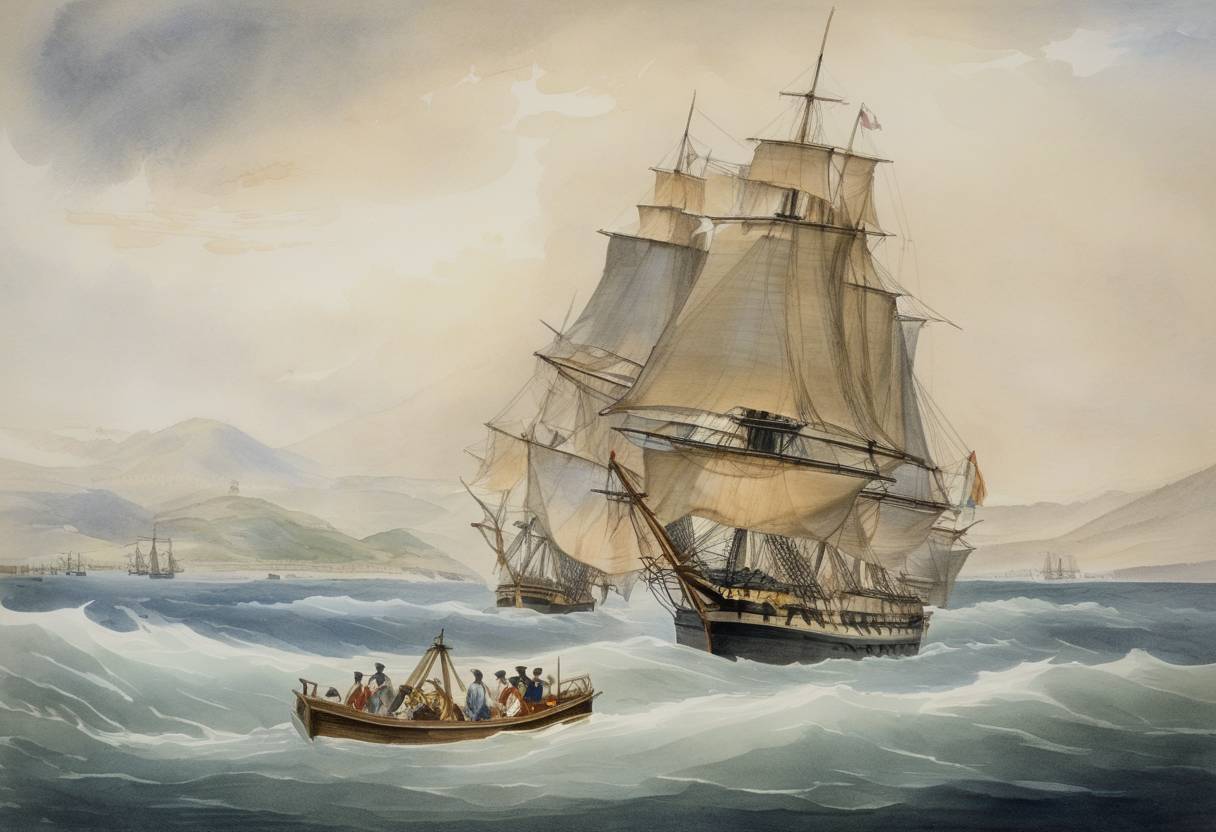
The Action of 18 June 1799
The action of June 18, 1799, was a maritime engagement during the French Revolutionary Wars, wherein the British Royal Navy frigate HMS Sybille successfully captured the French frigate Forte near the island of Mauritius in the Indian Ocean.
Background
HMS Sybille: Originally a French vessel captured by the British in 1794, HMS Sybille was a 38-gun fifth-rate frigate under the command of Captain Edward Cooke. The ship was active in the Indian Ocean, tasked with disrupting French commerce and maintaining British naval dominance in the region.
French Frigate Forte: The Forte was initially a formidable French warship with a strong reputation. It had previously been involved in a significant confrontation in 1799, but after enduring damage, fell into disrepair and was effectively laid up in the harbor at Port Louis, Mauritius.
Events of the Engagement
Approach and Engagement: On June 18, 1799, Captain Cooke of HMS Sybille decided to attempt a daring capture of the Forte. Upon discovering the weakened state of the Forte, Cooke executed a strategic plan to board and seize the French frigate directly. He efficiently organized a boarding party from his crew.
Capture: The British assault was meticulously timed and executed. The French defenders were taken by surprise due to their impaired readiness. After a brief but intense encounter, Captain Cooke’s forces managed to overpower the Forte’s crew. The Forte was virtually defenseless, leading to its swift capture.
Aftermath
Strategic Significance: The capture of the Forte was a strategic success for the Royal Navy. It denied the French use of a potentially powerful warship while simultaneously bolstering British control of the Indian Ocean.
Captain Cooke’s Reward: The successful capture further enhanced Captain Edward Cooke’s reputation as a capable and bold naval officer. His actions contributed to the British naval legacy of dominance during the era.
**Fate of Forte **: Post-capture, the Forte was incorporated into the British Royal Navy. This repurposing of enemy vessels was a common practice, which allowed the British to continually strengthen their maritime power using their adversaries’ resources.
Historical Context
This engagement is set against the broader backdrop of the French Revolutionary Wars (1792–1802), marked by intense naval conflicts between Britain and Revolutionary France. Control over the sea routes around strategic locations, including the Indian Ocean, was crucial for maintaining colonial advantages and economic interests. The capture of the Forte exemplifies British naval superiority and the importance placed on maritime power during this tumultuous period.
The operation highlights the dynamic and often opportunistic nature of naval warfare at the close of the 18th century, where seafaring tactics and the element of surprise were as critical to success as brute force.