1276 · Rome, Papal States
The Pope Innocent V was elected, becoming the 185th pope of the Roman Catholic Church. His pontificate was quite short, lasting only five months.
February 5, 1119
Pope Gelasius II dies. His papacy was marked by conflicts with the emperor, Henry V, concerning the investiture controversy.
Rome, Papal States | Roman Catholic Church
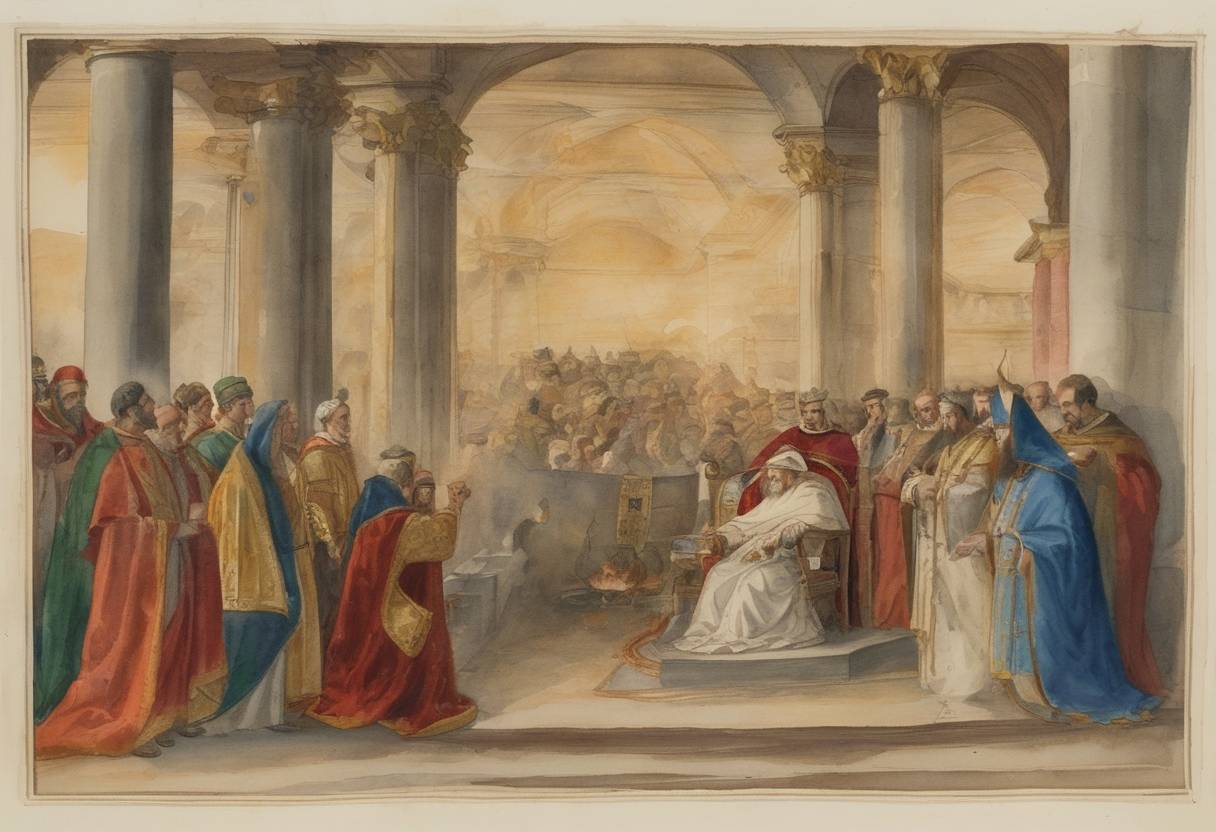
Pope Gelasius II, originally Giovanni Caetani, died on February 5, 1119. He had ascended to the papacy on January 24, 1118, following the death of Pope Paschal II. His tenure as pope lasted just over a year, yet it was fraught with significant challenges, particularly due to the ongoing Investiture Controversy.
This conflict was a major struggle between the papacy and secular European monarchs over the authority to appoint local church officials like bishops and abbots. The dispute had been a source of tension since the late 11th century, primarily between the Holy Roman Empire and the papacy, as monarchs wished to exert influence over ecclesiastical appointments within their realms.
Gelasius II’s papacy was immediately challenged by the Holy Roman Emperor, Henry V. Shortly after Gelasius’ election, Henry V captured and imprisoned him, demanding control over investitures. This act was part of a broader strategy by the emperor to assert his claim over ecclesiastical appointments, underscoring the tension between secular authority and papal primacy.
Despite his capture, Gelasius managed to escape to Gaeta, where he was officially enthroned. However, the tensions with Henry V continued, forcing Gelasius to flee Rome multiple times throughout his short papacy, seeking refuge first in Cluny, France.
Gelasius II’s death occurred in the Abbey of Cluny, a center of monastic reform and papal support in France, providing him some solace in his final days away from the ongoing conflicts in Rome. His papacy, although brief, laid further groundwork for the resolution of the Investiture Controversy under his successors. He was succeeded by Pope Callixtus II, who eventually negotiated the Concordat of Worms in 1122, which resolved many aspects of the controversy by delineating the boundaries between the powers of the emperor and the pope concerning ecclesiastical appointments.
Gelasius II’s legacy is thus intertwined with the broader struggle for authority between church and state that characterized medieval Europe, reflecting the tenacity and challenges faced by the papacy during these turbulent times.
Source: www.britannica.com