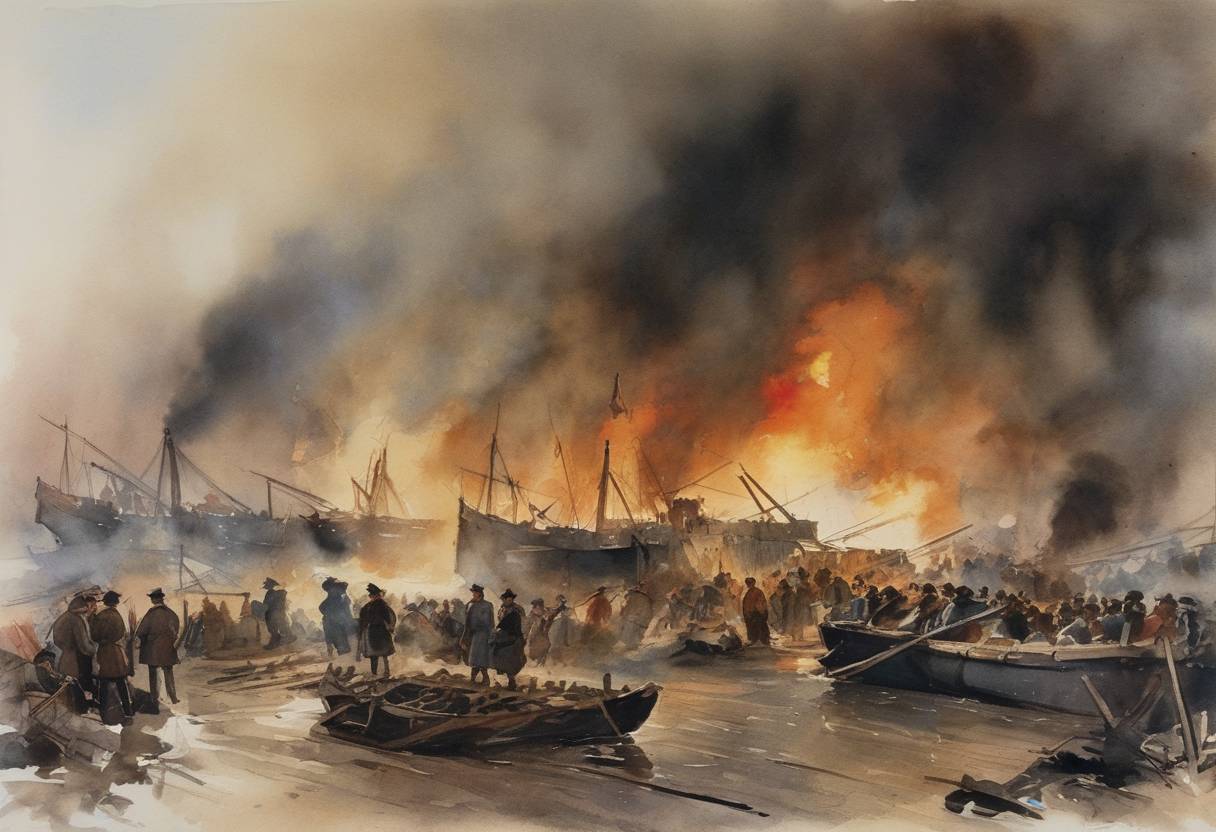
The Kronstadt Rebellion: March 1, 1921
On March 1, 1921, the Kronstadt Rebellion began as a pivotal yet ultimately unsuccessful uprising against the Bolshevik government, during the later stages of the Russian Civil War. This significant event unfolded in the port city of Kronstadt, located on Kotlin Island in the Gulf of Finland, and was initiated by sailors, soldiers, and civilians disillusioned with Bolshevik policies.
Background
The rebellion’s roots can be traced back to widespread dissatisfaction with the harsh living conditions, political repression, and economic hardship following the Russian Civil War and the implementation of War Communism. Kronstadt, a naval base known for its revolutionary fervor and staunch support of the Bolsheviks during the October Revolution, became a center for growing unrest.
Key Events
February 26-28, 1921: Delegates from Kronstadt visit Petrograd (now St. Petersburg) and are alarmed by the unrest and strikes in the city. Upon returning, they spread news about the dire conditions and the dissatisfaction among workers and sailors.
March 1, 1921: A mass meeting convened in Kronstadt’s Anchor Square, attended by approximately 16,000 individuals, including sailors from Battleship Petropavlovsk. The meeting resulted in a 15-point resolution demanding political reforms, including freedom of speech, release of socialist political prisoners, and new elections to the Soviets.
Formation of the Provisional Revolutionary Committee: Following the resolution, a Provisional Revolutionary Committee was established, acquiring control over the area and demanding negotiations with the Bolshevik government.
Bolshevik Response
Under the leadership of Lenin and Trotsky, the Bolshevik government viewed the Kronstadt Rebellion as a severe threat, fearing it could spark further dissension. They swiftly moved to suppress the uprising:
Military Response: Despite initial attempts at negotiation, the Bolsheviks chose to resolve the uprising through military force. On March 7, Red Army units launched assaults on the city across the ice of the frozen Gulf of Finland.
Repression and Aftermath: By March 17, the Bolshevik forces had crushed the rebellion after intense fighting. Severe reprisals followed; many rebels were executed or imprisoned, while others fled to Finland.
Historical Significance
The Kronstadt Rebellion is historically significant for several reasons:
- It exposed underlying discontent with Bolshevik rule and highlighted the tension between revolutionary ideals and the authoritarian practices of the Bolshevik government.
- The event marked a crucial turning point leading to the end of the harsh War Communism policy. In response to the crisis, Lenin introduced the New Economic Policy (NEP), allowing partial restoration of the free market.
- The rebellion underscored the growing divide between the Bolshevik leadership and the proletariat and peasantry they claimed to represent, foreshadowing future challenges to Soviet authority.
Despite its failure, the Kronstadt Rebellion remains a poignant symbol of resistance against authoritarianism within the context of the Russian Revolution.