Discovery of the Venus de Milo
1820 · Milos, Greece
The Venus de Milo, an ancient Greek statue, was discovered on the island of Milos in the Aegean Sea.
May 17, 1902
The Antikythera mechanism, an ancient Greek analog computer, was discovered off the coast of the Greek island Antikythera by a team of Greek sponge divers.
Antikythera, Greece | none
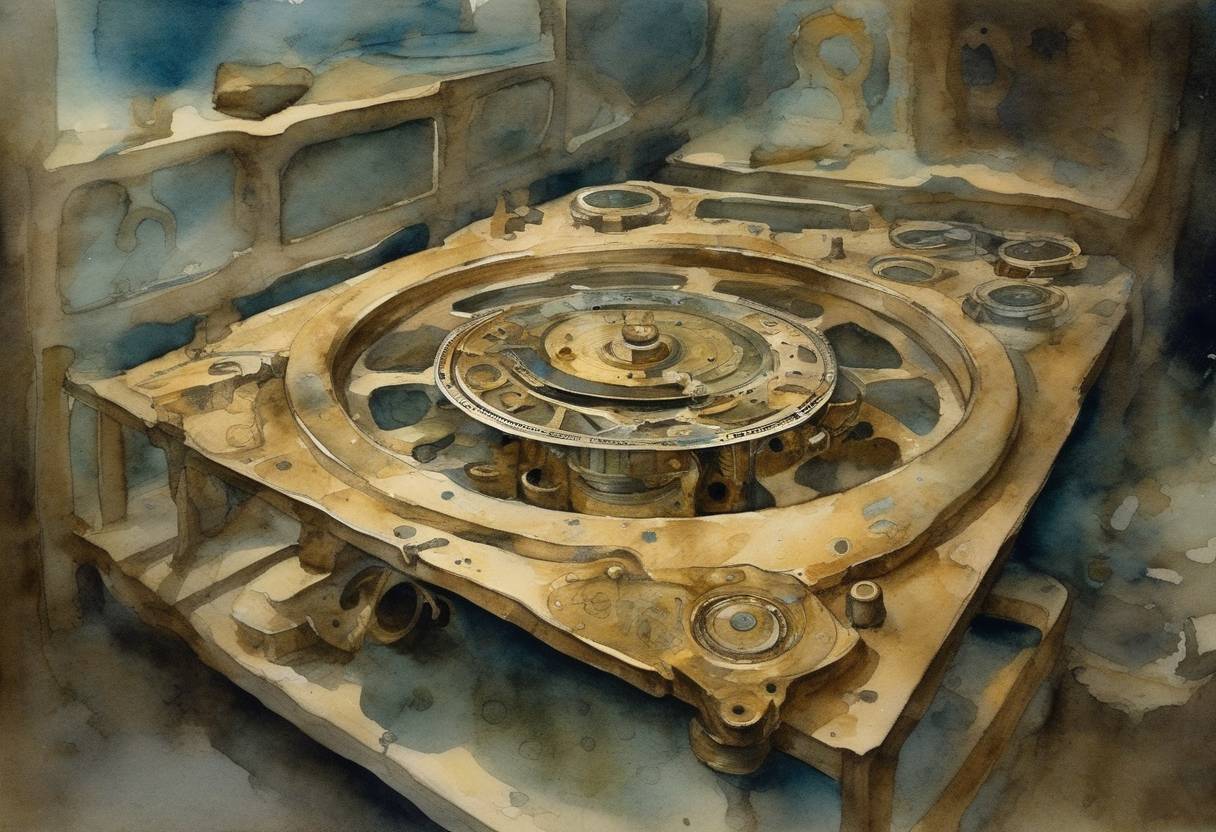
On May 17, 1902, a remarkable discovery was made off the coast of the Greek island of Antikythera. A team of Greek sponge divers, initially searching for sponges under the sea, unearthed what would become one of the most significant archaeological finds of the 20th century: the Antikythera Mechanism.
Earlier in October 1900, the Greek sponge divers had accidentally discovered a large shipwreck dating from the 1st century BCE. The shipwreck contained numerous artifacts, including statues, pottery, and other objects from the ancient world. It wasn’t until later, during attempts to salvage additional items in May 1902, that the divers encountered the corroded remnants of a mysterious mechanism.
The Antikythera Mechanism is an ancient Greek analog device, often regarded as the earliest known example of an analog computer. Housed in a wooden box, the device contains a complex system of bronze gears and was used to predict astronomical positions and eclipses for calendrical and astrological purposes. With its sophisticated design and functional capabilities, the mechanism highlights the advanced technological understanding achieved by the ancient Greeks.
Following its discovery, the mechanism underwent rigorous scholarly investigation, revealing its intricate construction and purpose. Studies indicate that it was designed to calculate astronomical positions, functioning much like a complex mechanical analog computer that charts the cycles of the solar system.
Key features include:
The Antikythera Mechanism has broadened our understanding of ancient Greek engineering and science, demonstrating a level of technological skill that was far ahead of its time.
The discovery of the Antikythera Mechanism has had a profound impact on both archaeology and the history of technology. It has prompted historians to reevaluate the technological capabilities of ancient civilizations. The mechanism underscores the depth of scientific and mechanical knowledge possessed in the Hellenistic period, changing perceptions about the scope of ancient technology.
Preserved today in the National Archaeological Museum of Athens, the Antikythera Mechanism remains a vital cultural and historical artifact, sparking continuous research and fascination more than a century after its discovery.
Source: www.britannica.com