Aurangzeb Proclaimed Mughal Emperor: July 31, 1658
1658 · Delhi, India
Aurangzeb was proclaimed the Mughal Emperor of India, marking the beginning of his reign.
January 22, 1666
Shivaji, a prominent Maratha leader, and Mughal general Jai Singh I signed the Treaty of Purandar, resulting in temporary peace between the Maratha Empire and the Mughal Empire.
Purandar, India | Maratha Empire and Mughal Empire
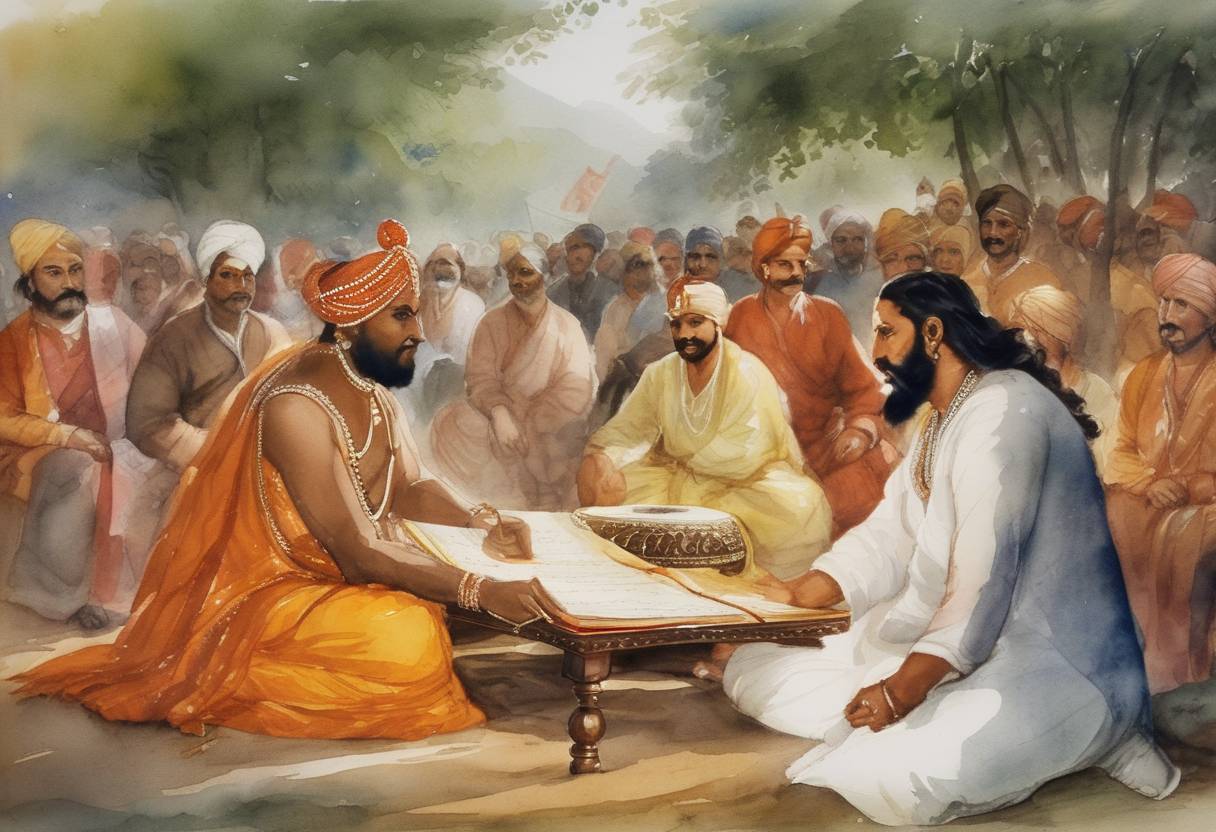
The Treaty of Purandar was a significant accord between the Maratha Empire, led by the formidable leader Shivaji Bhonsle, and the Mughal Empire, represented by General Jai Singh I. It was brokered on January 22, 1666, at the fort of Purandar in present-day Maharashtra, India. The agreement marked a pivotal moment in the complex relations between the two empires.
Prior to the treaty, the Marathas, under Shivaji’s leadership, had become a formidable force in the Deccan region, challenging the dominance of the expansive Mughal Empire. Shivaji’s innovative military tactics and strategic acumen allowed the Marathas to capture several key forts and territories, intensifying hostilities with the Mughals. In 1665, Emperor Aurangzeb dispatched one of his most trusted generals, Jai Singh I, to curb Shivaji’s influence and bring the Marathas to heel.
Jai Singh I launched a military campaign that effectively cornered Shivaji, resulting in the siege of several Maratha forts, including the fortress of Purandar. Realizing the strategic disadvantage and the need to regroup his forces, Shivaji opted for diplomacy, leading to the negotiations that culminated in the Treaty of Purandar.
Territorial Concessions: Shivaji agreed to cede 23 forts and the surrounding territories that generated annual revenues totaling four lakh hons (a currency unit) to the Mughal Empire. This was a significant territorial loss for the Marathas but necessary for Shivaji to retain a portion of his dominions.
Acknowledgment of Mughal Sovereignty: Shivaji acknowledged the overlordship of the Mughal Emperor Aurangzeb, although his agreement was more strategic than submissive, allowing the Marathas a temporary peace to rebuild their strength.
Safe Conduct and Royal Service: The treaty allowed Shivaji’s son, Sambhaji, to join the Mughal service, a common practice intended to integrate potential adversaries into the imperial fold. Additionally, Shivaji himself was promised a noble rank within the Mughal court.
The Treaty of Purandar temporarily halted the conflict between the Marathas and the Mughals, allowing Shivaji to fortify his position without immediate Mughal interference. However, this peace was short-lived. In the following years, Shivaji successfully managed to regain much of the lost territory, becoming a legendary figure in Indian history for his ability to navigate both warfare and diplomacy.
For the Mughals, the treaty was a testament to their coercive diplomacy and military dominance but also highlighted the challenges of effectively governing the Deccan, a region known for its resilient resistance to centralized imperial rule. The events leading to and following the Treaty of Purandar underscored the ongoing struggle for regional autonomy against the backdrop of Mughal imperial ambitions, shaping the subcontinent’s historical trajectory in the late 17th century.
Source: en.wikipedia.org