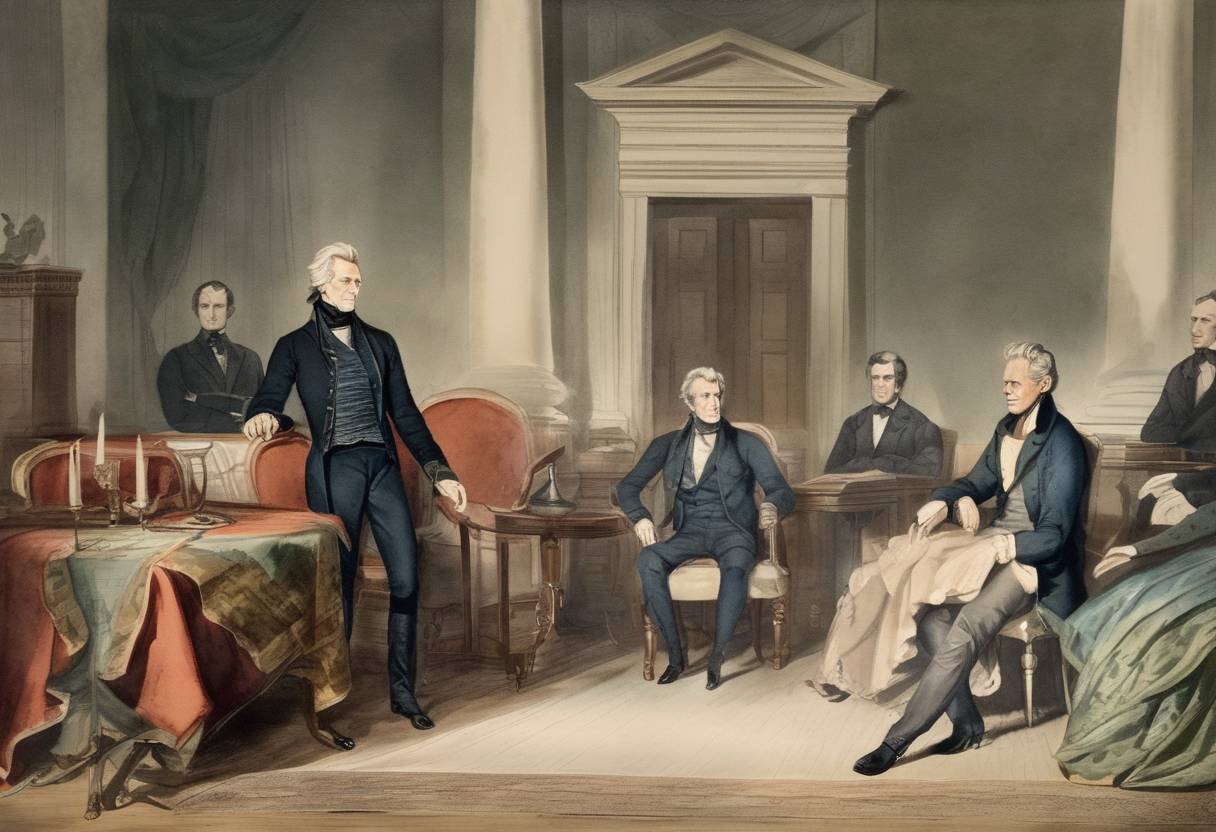
Death of Andrew Jackson
On June 10, 1845, Andrew Jackson, the seventh President of the United States, passed away at his plantation, the Hermitage, located near Nashville, Tennessee. His death marked the end of a significant and controversial political career, characterized by his influential and polarizing leadership style.
Early Life and Presidency
Andrew Jackson was born on March 15, 1767, in the Waxhaws region along the border between North and South Carolina. Rising from humble beginnings, he became a renowned military leader, notably for his victory in the Battle of New Orleans during the War of 1812. Jackson’s popularity as a military hero eventually propelled him into politics, leading to his election as the President of the United States in 1828.
Political Influence and Controversies
Jackson’s presidency was marked by numerous significant and contentious policies:
Nullification Crisis: A critical episode during Jackson’s presidency was the Nullification Crisis, during which South Carolina attempted to nullify the federal tariffs of 1828 and 1832. Jackson firmly opposed this challenge to federal authority, emphasizing the supremacy of the federal government and deploying military force to ensure compliance with national law.
Indian Removal Policies: Another defining aspect of Jackson’s presidency was his aggressive policy towards Native American tribes, notably the Indian Removal Act of 1830. This legislation led to the forced relocation of thousands of Native Americans from their ancestral homelands in the southeastern United States to territories west of the Mississippi River, in a tragic journey known as the Trail of Tears.
Bank Veto: Jackson took a strong stance against the Second Bank of the United States, which he viewed as an institution riddled with corruption and favoritism towards elite interests. His veto of the bank’s recharter and subsequent removal of federal deposits from it further solidified his image as a populist champion of the “common man.”
Legacy
Andrew Jackson’s legacy remains contentious. He is praised for promoting democratic ideals and expanding the powers of the presidency, but criticized for his authoritarian tendencies and policies detrimental to Native American communities. Jackson’s influence on American politics is still subject to debate, as he established the Democratic Party and set a precedent for presidential authority.
Death and Burial
Jackson died at the age of 78 at the Hermitage, his residence of over four decades. He was buried in the Hermitage’s garden, and his death was widely mourned across the nation, reflecting his enduring impact on American politics and society.