Slovenia's Independence Referendum: December 23, 1990
1990 · Ljubljana, Slovenia
Slovenia held a referendum on independence from Yugoslavia, with 88.5% voting in favor of independence.
June 27, 1991
Slovenia and Croatia declared their independence from Yugoslavia, marking the beginning of the Yugoslav Wars.
Ljubljana, Slovenia | Government of Slovenia
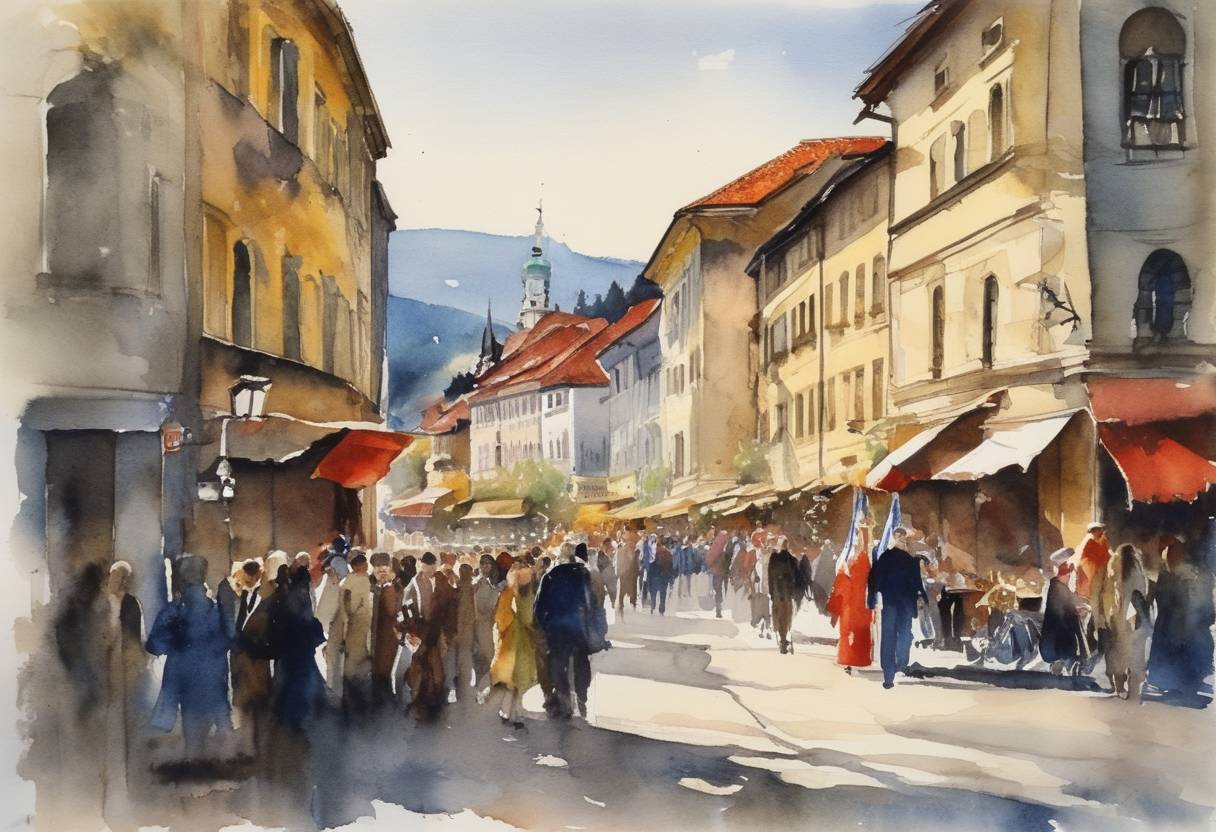
On June 25, 1991, Slovenia and Croatia declared their independence from the Socialist Federal Republic of Yugoslavia, both adopting official acts of secession. This significant move marked a pivotal point in the dissolution of Yugoslavia and set the stage for the conflicts that followed. However, it was on June 27, 1991, that the situation escalated into military confrontation.
The Socialist Federal Republic of Yugoslavia, established in the aftermath of World War II, comprised six republics: Bosnia and Herzegovina, Croatia, Macedonia, Montenegro, Serbia, and Slovenia. By the late 1980s, the nation faced deepening ethnic tensions and economic instability. Nationalist movements began to gain traction, particularly in Croatia and Slovenia, which were economically prosperous and sought greater autonomy.
Yugoslav People’s Army (JNA) Intervention: Following the declaration of independence, the Yugoslav People’s Army (JNA) was deployed by the central Yugoslav government with the aim of maintaining the territorial integrity of the federation. On June 27, the JNA mobilized forces into Slovenia, signaling the start of the Ten-Day War.
Slovenian Territorial Defense: In response, Slovenian Territorial Defense units, bolstered by police forces, resisted the JNA’s advancement. This led to a series of armed clashes that primarily took place at border posts, airports, and communication infrastructure across Slovenia.
Ten-Day War: The conflict lasted until July 7, 1991, concluding with the Brioni Agreement, mediated by the European Community. The agreement temporarily halted the fighting, leading to a three-month moratorium on Slovenia’s independence.
Escalation in Croatia: While Slovenia effectively secured its independence following the short conflict, Croatia’s path was far more tumultuous. The initial declaration led to further escalation and an extended conflict known as the Croatian War of Independence, which continued until 1995.
Impact on Yugoslavia: These events marked the beginning of the Yugoslav Wars, a series of ethnic conflicts resulting in significant human and material losses across the region. The independence declarations also paved the way for Bosnia and Herzegovina, and Macedonia, which declared their independence in the early 1990s.
The independence of Slovenia and Croatia was a fundamental reshaping of the Balkan region’s political landscape. It highlighted the challenges of multi-ethnic federations in maintaining unity amidst rising nationalistic sentiments. The subsequent wars had lasting ramifications on international policy-making, particularly regarding ethnic conflict resolution and humanitarian intervention.
Source: www.britannica.com