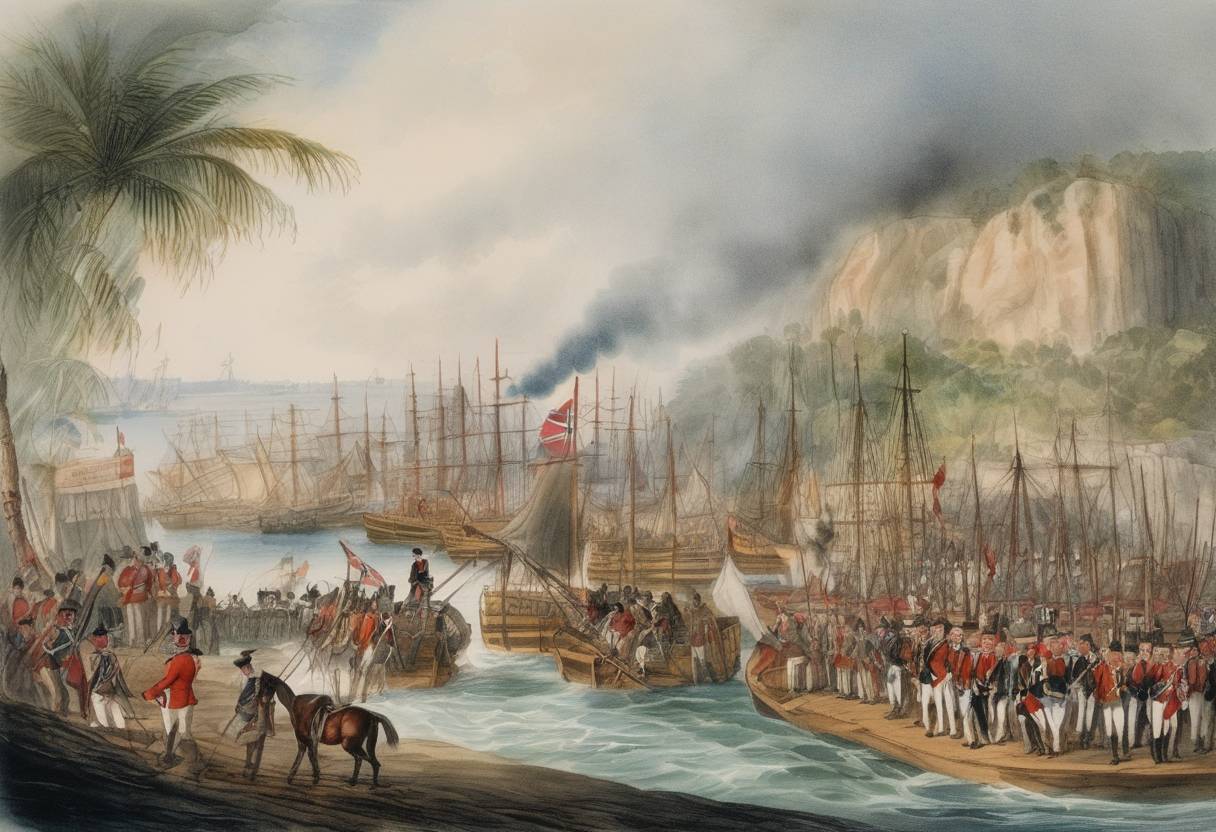
The Arrival of the First Fleet at Port Jackson - January 26, 1788
1788 · Sydney, Australia
The British First Fleet, led by Captain Arthur Phillip, arrived at Port Jackson, marking the founding of the colony of New South Wales, now part of Australia.
January 26, 1808
The Rum Rebellion takes place in Australia when Governor William Bligh is overthrown by the New South Wales Corps.
Sydney, Australia | New South Wales Corps
The Rum Rebellion, which took place on January 26, 1808, was a pivotal event in Australian colonial history. It marked the only successful armed takeover of government authority in Australia’s history. This rebellion was orchestrated by the New South Wales Corps and resulted in the overthrow of Governor William Bligh.
Governor William Bligh, known for his role in the infamous mutiny on HMS Bounty, was appointed the fourth Governor of New South Wales in 1806. Bligh’s tenure was marred by conflict with the New South Wales Corps, also known as the Rum Corps due to their involvement in the rum trade, which they dominated as a form of currency within the colony.
Tensions arose as Bligh attempted to control the Corps’ power and reduce their monopolistic hold on the economy. His reformist strategies, while intended to bring about more governmental control and regulation, were met with resistance from the powerful Corps and prominent local traders who benefited from the existing system.
On January 26, 1808, the 20th anniversary of the foundation of the colony, Lieutenant Colonel George Johnston of the New South Wales Corps orchestrated the coup. He led 400 soldiers to Government House in Sydney to arrest Bligh. Bligh was taken into custody without bloodshed, and the Corps assumed control of the government.
Johnston declared himself the acting Lieutenant-Governor, effectively removing Bligh from office. The rebellion received the backing of local settlers and merchants who were dissatisfied with Bligh’s methods of administration.
Bligh remained under house arrest for over a year before being sent back to England. The British Crown did not formally recognize the legitimacy of Johnston’s rule, and in response to the rebellion, Major-General Lachlan Macquarie was appointed Governor in 1810. Macquarie’s arrival marked the restoration of order and introduced substantial reforms that strengthened the governor’s authority in the colony.
Johnston was court-martialed in England for his role in the rebellion, resulting in a symbolic punishment of being cashiered. The rebellion had lasting impacts on the governance and administrative structures within New South Wales, leading to the eventual end of military rule in the colony.
The Rum Rebellion is significant in the history of New South Wales, symbolizing the tensions between military and civil authorities and highlighting the complexities of colonial governance during the early 19th century.
Source: en.wikipedia.org