The First V-1 Flying Bomb Attack on London: June 13, 1944
1944 · London, United Kingdom
Germany launched the first V-1 flying bomb attack on London during World War II, marking the beginning of a new phase of aerial warfare.
January 3, 1946
William Joyce, often known as Lord Haw-Haw, was hanged for treason in the United Kingdom. Joyce had gained notoriety for broadcasting Nazi propaganda to Britain during World War II.
London, United Kingdom
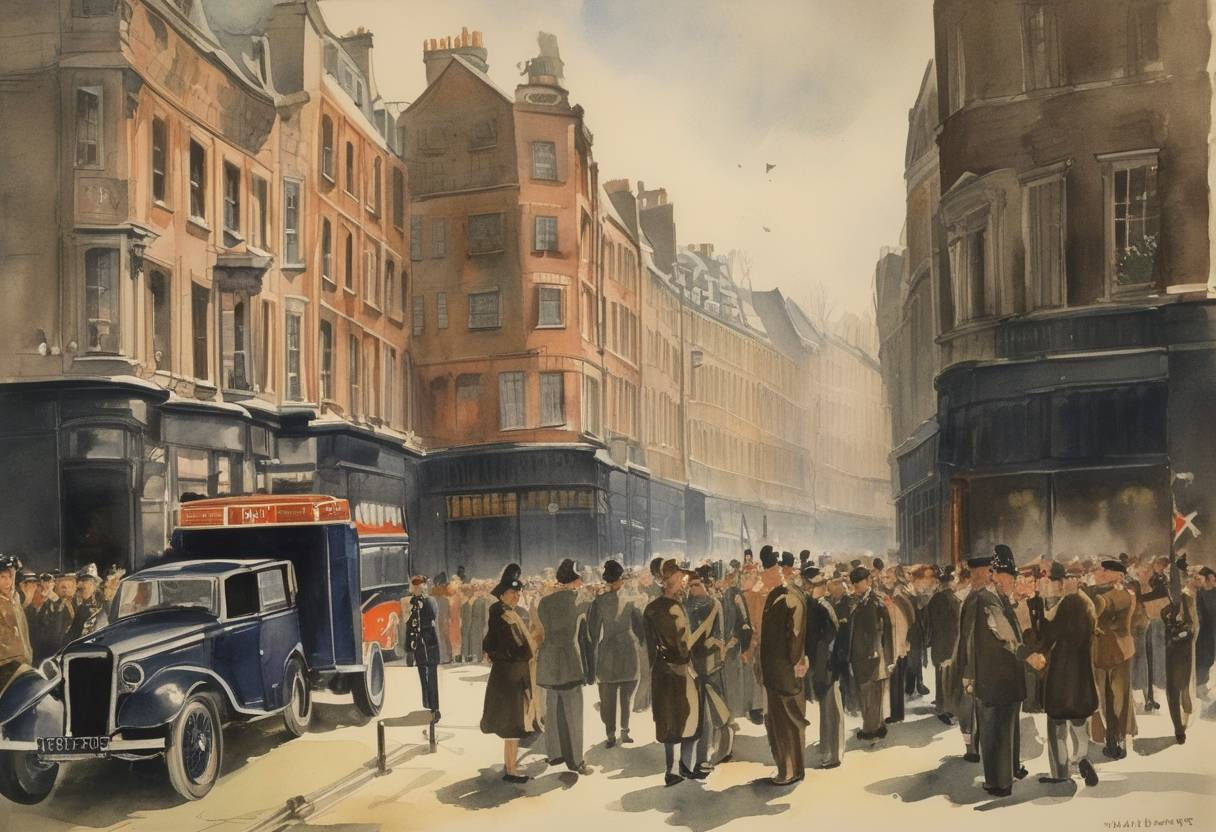
On January 3, 1946, William Joyce, infamously known as “Lord Haw-Haw,” was executed for treason in the United Kingdom. His execution took place at Wandsworth Prison in London, marking the culmination of a highly publicized legal and moral contention regarding national loyalty and wartime conduct.
William Joyce was a naturalized American of Irish descent who adopted British citizenship in the early 1930s. During World War II, he became notorious for his work as a radio broadcaster for Nazi Germany, disseminating propaganda intended to demoralize Allied forces and civilians. His broadcasts, which were aired under the pseudonym “Lord Haw-Haw,” became well-known for their opening phrase, “Germany calling, Germany calling.”
Joyce’s arrest took place on May 28, 1945, in Flensburg, Germany, by British forces. Despite his efforts to conceal his identity, he was recognized and subsequently taken to London to be tried for treason. The legal case against Joyce was complex, hinging largely on the technicality of his British citizenship at the time of his broadcasts.
Joyce’s trial took place at the Old Bailey between September 17 and September 19, 1945. The prosecution argued that Joyce owed allegiance to Britain when he committed acts of treason through his broadcasts. The defense countered that Joyce’s British citizenship had lapsed by the time he began working for Nazi Germany, but the prosecution successfully contended that he had committed acts of treason before renouncing his British passport.
On September 19, 1945, Joyce was found guilty and sentenced to death. His appeals, including to the House of Lords, were all rejected. The execution proceeded amidst significant public attention and debate regarding the definition of treason and the nature of citizenship.
Joyce’s execution is notable not only for its legal implications concerning citizenship and treason but also for its cultural impact. His case highlighted the reach and influence of broadcast media during wartime and underscored the tangible consequences of wartime allegiance. The trial and subsequent execution served as a legal precedent and emphasized the severe repercussions for citizens who actively supported enemy forces during conflict.
Source: www.britannica.com