Founding of The Royal Astronomical Society
1820 · London, United Kingdom
The Royal Astronomical Society was founded in London.
March 18, 1781
An astronomical congress was convened in Gotha, Germany, marking a significant step in international cooperation among astronomers in observation and celestial studies.
Gotha, Germany | Astronomical Congress
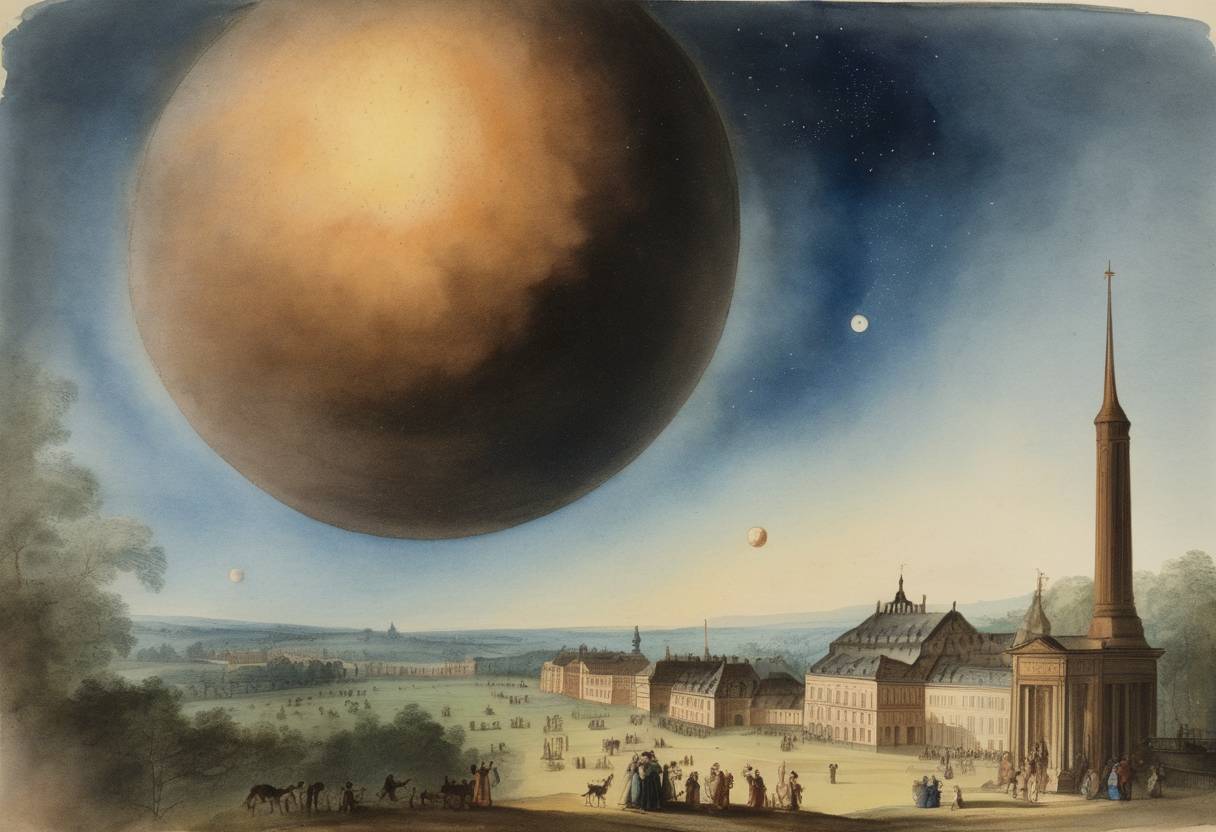
On March 18, 1781, an important astronomical congress was convened in Gotha, Germany. This meeting represented a significant advancement in international cooperation among astronomers for celestial observation and studies, contributing to the unified scientific endeavor across Europe.
The 18th century was a period of burgeoning interest and advancements in astronomical studies. Europe was home to numerous observatories that sought to chart the heavens and understand celestial phenomena. The exchange of knowledge among astronomers from different countries was crucial for progressing in areas such as planetary motion, stellar positioning, and the measurement of celestial events.
The congress gathered leading astronomers across Europe with the aim to foster collaboration, standardize observational techniques, and share findings. It was held under the patronage of Duke Ernst II of Saxe-Gotha-Altenburg, a known patron of the sciences, who provided an enthusiastic environment for scientific inquiry. The event aimed to:
Several renowned astronomers of the time attended the congress, although detailed records of specific participants are limited. The involvement of such figures likely included:
The Gotha congress set a precedent for future international cooperation in astronomy. It underscored the necessity of collaborative research for the advancement of scientific knowledge. Though such gatherings were rare at the time, this event highlighted the interconnected nature of the scientific community, serving as a model for later international scientific collaborations and conventions.
The congress also stimulated further interest in astronomy, leading to sustained efforts in observational improvements and technological advancements, which played a crucial role in the subsequent growth of astronomy as a scientific discipline throughout the 19th century.
The astronomical congress in Gotha, held on March 18, 1781, exemplified a pioneering moment in the history of the international scientific community. By uniting scholars from various regions, it bolstered the collaboration and communication necessary for the advancement of astronomical science, revealing a unity in the universal quest for knowledge.
Source: adsabs.harvard.edu