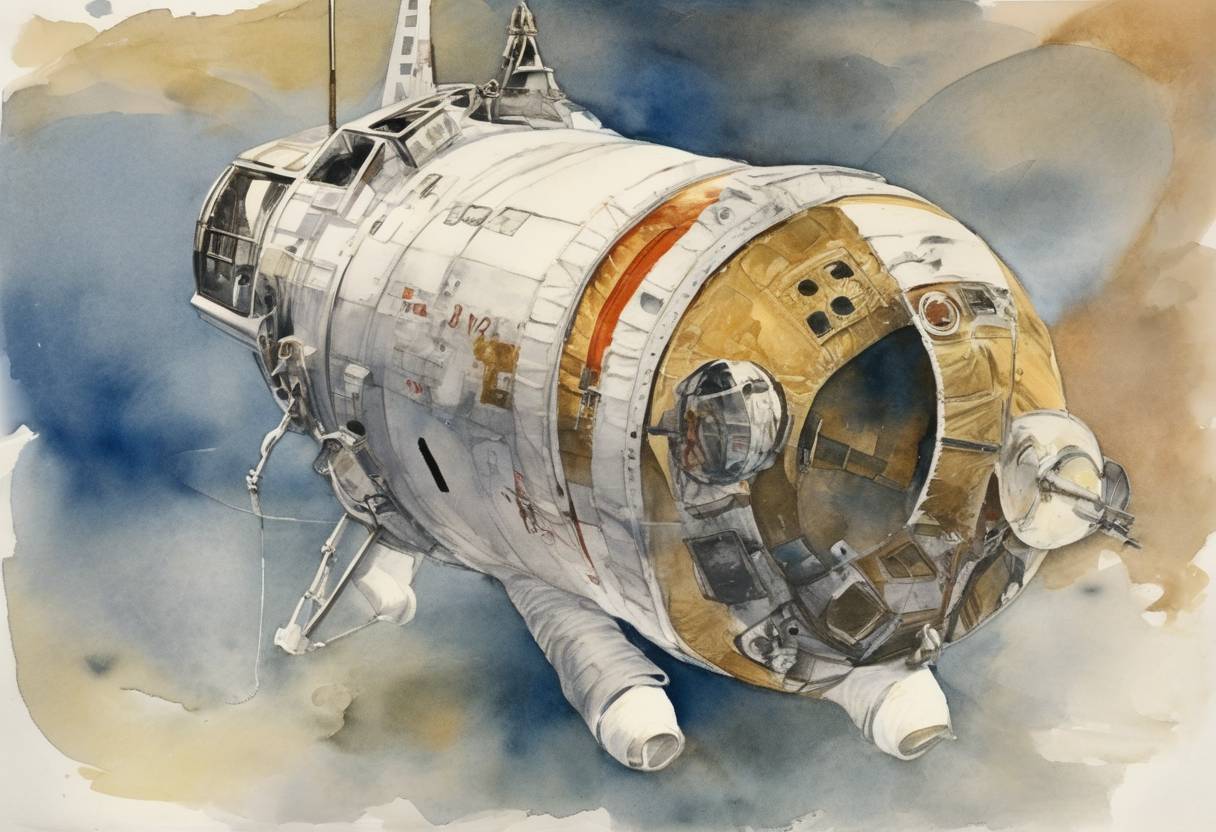
Apollo 13: A Mission of Survival
Overview
Apollo 13 was the seventh crewed mission in NASA’s Apollo space program and the third intended to land on the Moon. The mission launched from Kennedy Space Center on April 11, 1970. However, it became famous not for its lunar landing, but for the dramatic and successful effort to bring its crew safely back to Earth after a critical in-flight emergency.
Key Events Leading Up to the Launch
- Mission Objectives: Apollo 13 aimed to explore the Fra Mauro highlands on the Moon, conduct scientific experiments, and collect lunar samples.
- Crew: The mission was commanded by James A. Lovell, with John L. Swigert as the Command Module Pilot and Fred W. Haise as the Lunar Module Pilot. Swigert replaced Thomas K. Mattingly just days before the launch due to exposure to German measles.
The Launch
- Date and Time: Apollo 13 launched on April 11, 1970, at 2:13 PM EST.
- Location: The launch took place at Kennedy Space Center, Florida.
- Initial Phase: The launch proceeded smoothly, and the spacecraft entered a trajectory toward the Moon.
The Crisis
- Oxygen Tank Explosion: On April 13, 1970, approximately 56 hours into the mission, an oxygen tank in the Service Module exploded. This caused a loss of electrical power and a critical drop in the spacecraft’s life-support capabilities.
- Famous Quote: The incident led to the famous communication from Swigert to Mission Control: “Houston, we’ve had a problem.”
The Response
- Abort of Lunar Landing: The explosion forced the mission to abort its lunar landing plans.
- Use of Lunar Module: The Lunar Module, Aquarius, was used as a “lifeboat” to provide life support and propulsion for the return journey.
- Trajectory Adjustments: The crew and Mission Control worked tirelessly to adjust the spacecraft’s trajectory to ensure a safe return to Earth.
Return to Earth
- Re-entry and Splashdown: After a harrowing journey, Apollo 13 re-entered Earth’s atmosphere and safely splashed down in the Pacific Ocean on April 17, 1970.
- Recovery: The crew was recovered by the USS Iwo Jima, and all three astronauts returned safely, hailed as heroes for their survival and ingenuity.
Aftermath and Significance
- Investigation and Changes: The incident led to a thorough investigation and significant changes in spacecraft design and procedures to enhance safety.
- Legacy: Apollo 13 is often cited as a “successful failure” due to the safe return of the crew despite the mission’s challenges. It highlighted the resilience and problem-solving capabilities of NASA and its astronauts.
Broader Historical Impact
- Public Perception: The mission captured the world’s attention and demonstrated the risks of space exploration.
- Technological and Procedural Improvements: Lessons learned from Apollo 13 contributed to the success of subsequent missions and the overall safety of human spaceflight.
Apollo 13 remains a testament to human ingenuity and the spirit of exploration, illustrating the complexities and dangers of space travel while underscoring the importance of teamwork and perseverance in overcoming adversity.