The Ascension of Caligula: March 18, 37 AD
37 · Rome, Roman Empire
The Roman Senate annuls Tiberius's will and proclaims Caligula as Emperor of Rome.
January 16, 0027
Gaius Julius Caesar Octavianus, known as Augustus, is granted the title of 'Augustus' by the Roman Senate, marking the beginning of the Roman Empire and his reign as its first Emperor.
Rome, Roman Empire | Roman Senate
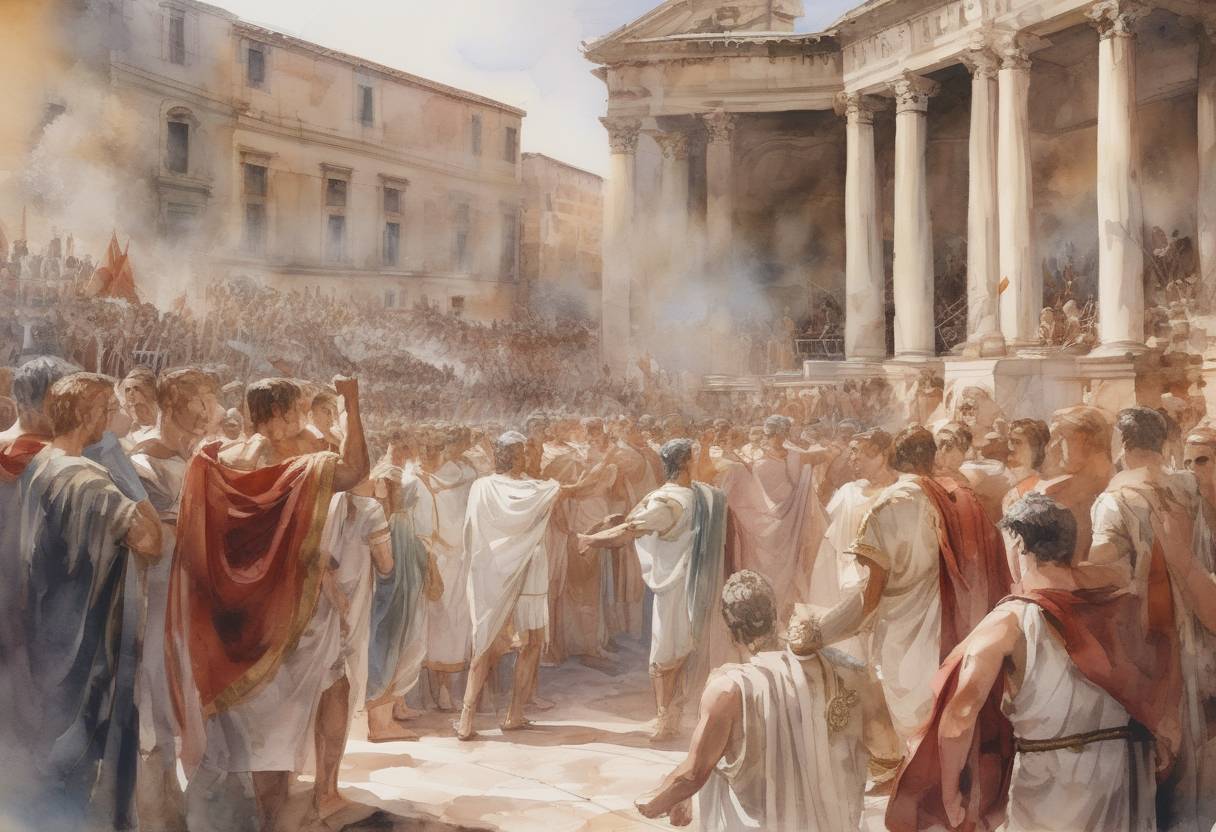
On January 16, 27 BCE, a pivotal moment in Roman history unfolded when Gaius Julius Caesar Octavianus was granted the title “Augustus” by the Roman Senate. This event marked the formal beginning of the Roman Empire and the reign of its first emperor, Augustus, a title that would become synonymous with imperial authority and the ushering in of a new era for Rome.
The Aftermath of Civil War: The period leading up to 27 BCE was characterized by intense civil strife. Following the assassination of Julius Caesar in 44 BCE, Rome was plunged into a series of civil wars. Octavian, Caesar’s adopted heir, emerged victorious over his rivals, including Mark Antony and Cleopatra, at the Battle of Actium in 31 BCE.
Consolidation of Power: After his victory, Octavian returned to Rome and began consolidating power. He was a master of political maneuvering, gradually accumulating authority while maintaining the facade of republican governance. His careful balancing act involved appeasing the Senate and the Roman populace, who were wary of monarchical rule.
Senate’s Decision: On January 16, 27 BCE, the Roman Senate bestowed upon Octavian the honorific title “Augustus,” meaning “the revered one” or “the illustrious one.” This title was significant as it conferred a sense of divine favor and authority, setting him apart from other political figures.
Significance of the Title: The granting of the title “Augustus” symbolized the end of the Roman Republic and the beginning of the Roman Empire. It marked a shift from the chaotic power struggles of the late Republic to a more stable and centralized form of governance under a single ruler.
Reforms and Governance: Augustus implemented a series of reforms that stabilized the empire, including reorganizing the military, establishing a standing army, and creating a network of roads and infrastructure. He also initiated the Pax Romana, a period of relative peace and prosperity that lasted for over two centuries.
Cultural Flourishing: Augustus’ reign saw a flourishing of Roman culture, art, and architecture. He patronized poets like Virgil and Horace and embarked on ambitious building projects, famously claiming that he “found Rome a city of bricks and left it a city of marble.”
Succession and Impact: Augustus’ long reign set the precedent for future emperors. His establishment of a dynastic succession, though fraught with challenges, laid the groundwork for the Julio-Claudian dynasty. His impact on Roman governance and culture was profound, influencing the empire for generations.
The granting of the title “Augustus” to Octavian on January 16, 27 BCE, was a defining moment in Roman history. It marked the transition from republic to empire and the beginning of a new era under the leadership of Rome’s first emperor. Augustus’ reign not only stabilized the empire but also left a lasting legacy that shaped the course of Western civilization.
Source: en.wikipedia.org