April 16, 2019

The Notre-Dame Cathedral fire in Paris was extinguished after burning for over 15 hours, causing significant damage to the historic structure.


Paris, France | Notre-Dame de Paris
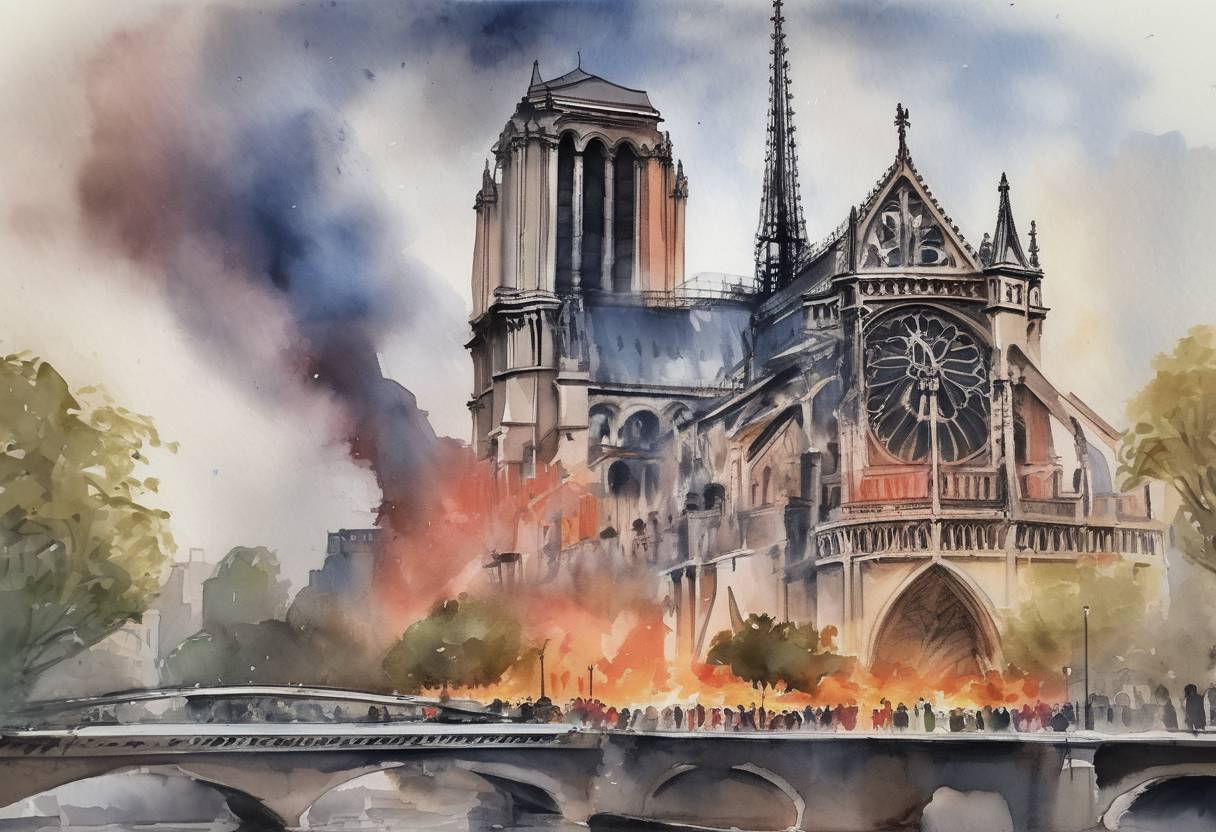
Watercolor painting based depiction of The Notre-Dame Cathedral fire in Paris was extinguished after burning for over 15 hours, causing significant damage to the historic structure. (2019)

The Notre-Dame Cathedral Fire: April 16, 2019

On April 16, 2019, the world watched in shock as the Notre-Dame Cathedral in Paris, a symbol of French heritage and Gothic architecture, suffered a devastating fire. The blaze, which began in the early evening of April 15, raged for over 15 hours before being fully extinguished the following day.

Background

Notre-Dame de Paris, whose construction began in 1163 and was largely completed by 1345, is one of the most famous cathedrals in the world. It is renowned for its architectural innovations, including its flying buttresses, ribbed vaults, and stunning stained-glass windows. The cathedral has been a witness to centuries of history, including the coronation of Napoleon Bonaparte and the beatification of Joan of Arc.

The Fire

Timeline of Events

  • April 15, 2019, Evening: The fire was first reported at approximately 6:20 PM local time. It quickly spread, engulfing the wooden roof structure known as “the forest” due to its dense network of timber beams.
  • Collapse of the Spire: As the fire intensified, the iconic spire, a 19th-century addition by architect Eugène Viollet-le-Duc, collapsed, a moment captured and broadcasted worldwide.
  • Efforts to Contain the Blaze: Over 400 firefighters battled the flames, employing water hoses and aerial ladders. Their efforts were complicated by the cathedral’s height and the risk of further structural collapse.
  • April 16, 2019, Morning: By approximately 9:45 AM, the fire was declared extinguished, though firefighters continued to monitor the site for hotspots.

Damage and Impact

The fire caused significant damage to the cathedral:

  • Roof and Spire: The wooden roof and spire were completely destroyed.
  • Interior: While the stone vaults largely protected the interior, some sections collapsed, causing damage to the choir and transept.
  • Artifacts and Relics: Many of the cathedral’s treasures, including the Crown of Thorns and the Tunic of Saint Louis, were saved thanks to the efforts of emergency responders and clergy.

Aftermath and Restoration

Immediate Response

  • Global Reaction: The fire prompted an outpouring of grief and solidarity from around the world. French President Emmanuel Macron vowed to rebuild the cathedral, stating, “We will rebuild Notre-Dame even more beautifully, and I want it to be completed within five years.”
  • Fundraising Efforts: Within days, over €1 billion was pledged by individuals, corporations, and governments for the restoration of Notre-Dame.

Restoration Efforts

  • Stabilization: Initial efforts focused on stabilizing the structure to prevent further damage. This included installing temporary supports and protective coverings.
  • Reconstruction Plans: The restoration aims to faithfully restore the cathedral to its former glory, with debates about whether to replicate the original spire or introduce a modern design.

Historical Significance

The Notre-Dame fire underscored the vulnerability of cultural heritage sites and sparked discussions on preservation and restoration. It also highlighted the cathedral’s enduring significance as a symbol of French identity and its role in the collective memory of people worldwide.

The event remains a poignant reminder of the fragility of historical monuments and the importance of safeguarding them for future generations.