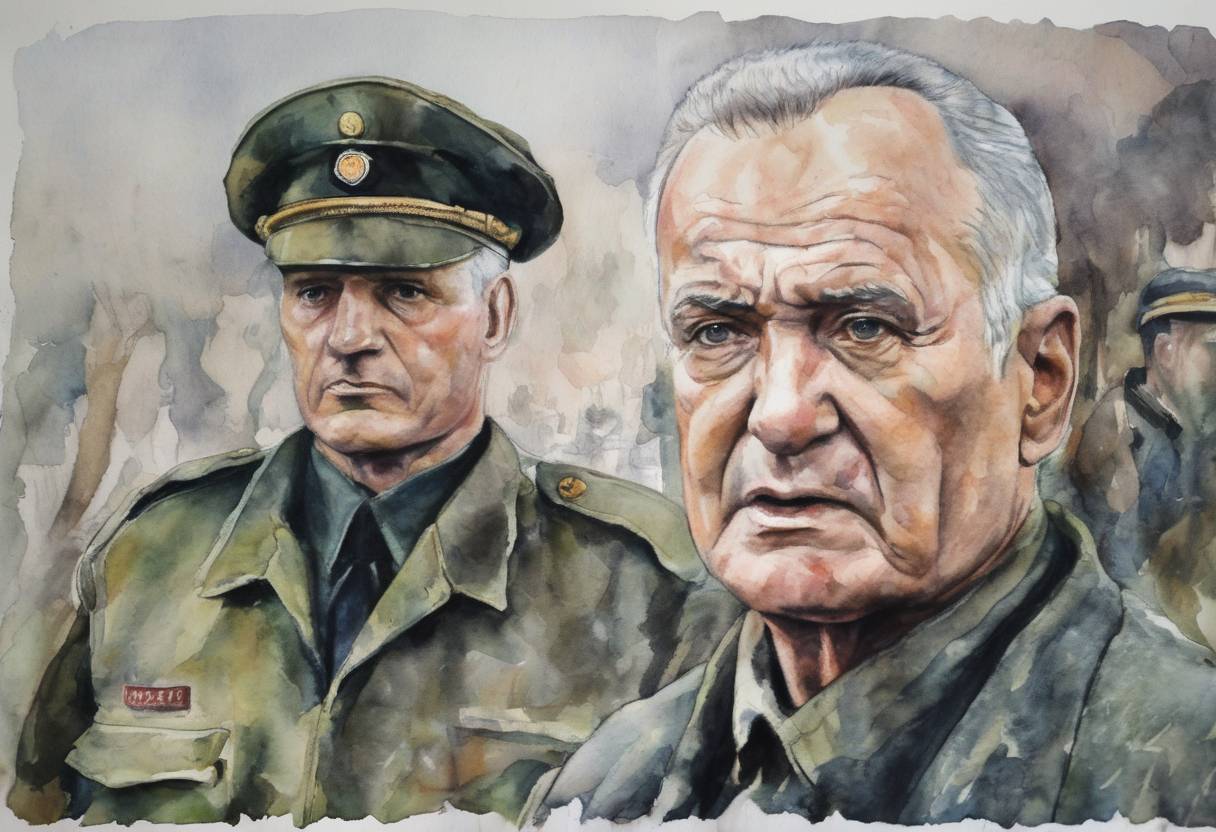
Arrest of Ratko Mladić on May 26, 2011
On May 26, 2011, Ratko Mladić, the former Bosnian Serb military leader, was arrested in Serbia after evading capture for 16 years. His arrest marked a significant moment in the pursuit of justice for war crimes committed during the Bosnian War (1992-1995).
Background
Ratko Mladić was a key military figure during the Bosnian War, serving as the Chief of Staff of the Army of Republika Srpska, the Bosnian Serb Army. He played a central role in several major military operations, including the Siege of Sarajevo and the Srebrenica massacre. The latter, which occurred in July 1995, resulted in the killing of more than 8,000 Bosniak men and boys and was later classified as genocide by international courts.
Charges
Mladić was indicted by the International Criminal Tribunal for the former Yugoslavia (ICTY) in 1995. The charges against him included:
- Genocide: Particularly for his role in the Srebrenica massacre.
- Crimes against humanity: Including persecution, extermination, and deportation of Bosniak and Croat civilians.
- War crimes: Such as unlawful attacks on civilians and taking UN peacekeepers hostage.
Arrest and Extradition
Mladić’s arrest in 2011 was the result of a concerted effort by Serbian authorities, who were under increasing international pressure to apprehend him. His capture was seen as a crucial step for Serbia’s aspirations to join the European Union, as cooperation with the ICTY was a key requirement.
Following his arrest, Mladić was extradited to The Hague, where he stood trial at the ICTY. His trial began in May 2012 and concluded in November 2017, when he was found guilty on 10 of the 11 charges, including genocide, and sentenced to life imprisonment.
Historical Significance
The arrest and subsequent conviction of Ratko Mladić were pivotal in the broader context of post-war justice and reconciliation in the Balkans. It underscored the international community’s commitment to holding individuals accountable for war crimes and set a precedent for future prosecutions of similar crimes worldwide.
Mladić’s arrest also highlighted the challenges and complexities involved in capturing high-profile fugitives accused of war crimes, as well as the political and diplomatic efforts required to bring them to justice.