J. Robert Oppenheimer's Meeting with President Harry Truman: December 8, 1945
1945 · Washington, D.C., United States
J. Robert Oppenheimer meets with US President Harry Truman to brief him on the atomic bomb project.
February 5, 1937
President Franklin D. Roosevelt proposes a plan to expand the Supreme Court, known as the 'court-packing plan'.
Washington, D.C., United States | United States government
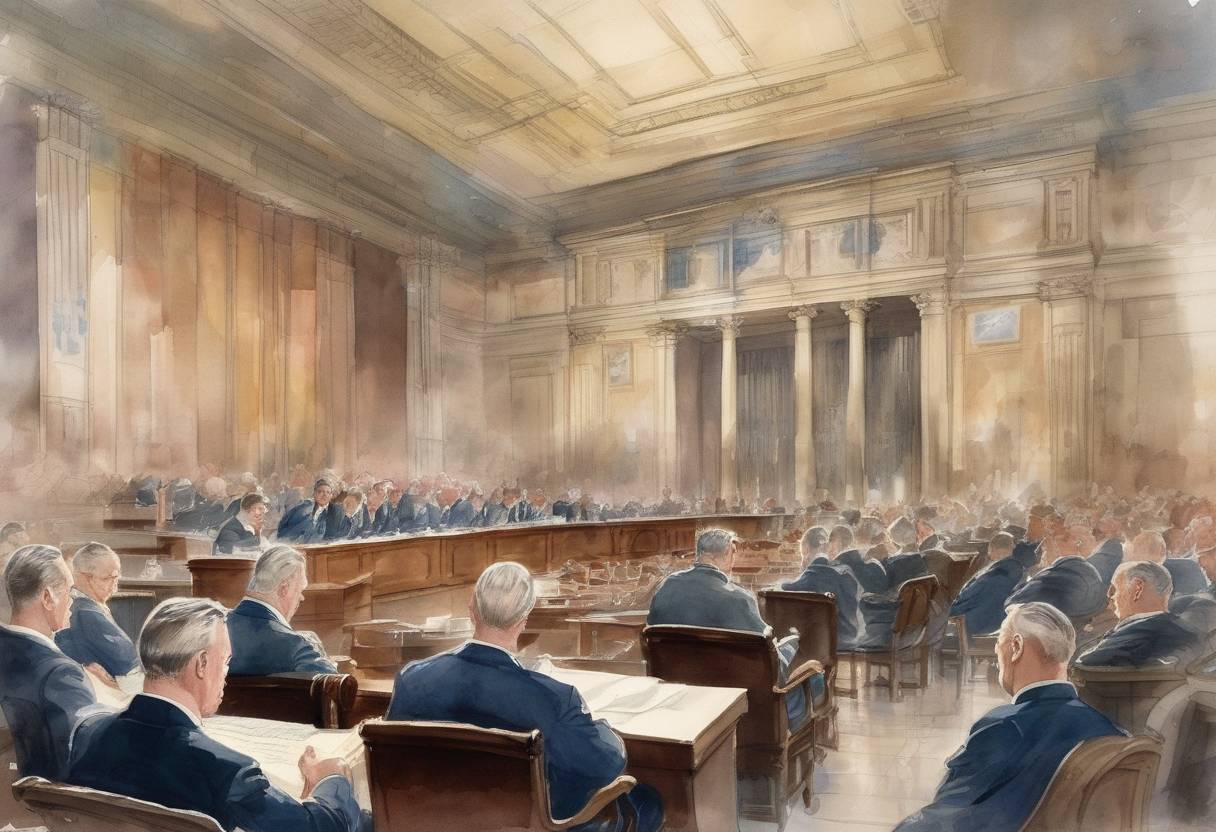
On February 5, 1937, President Franklin D. Roosevelt introduced a controversial proposal to reform the United States Supreme Court, commonly referred to as the “court-packing plan.” This initiative was officially known as the Judicial Procedures Reform Bill of 1937. The proposal aimed to expand the number of justices on the Supreme Court, allowing the President to appoint an additional justice for every sitting justice over the age of 70 who chose not to retire, up to a maximum of six additional justices.
The backdrop to this proposal was the New Deal, a series of programs and reforms initiated by Roosevelt in response to the Great Depression. Many of these New Deal measures faced significant legal challenges and were struck down by the Supreme Court, which at the time had a conservative majority. Notably, the Court invalidated key pieces of New Deal legislation, such as the National Industrial Recovery Act and the Agricultural Adjustment Act, which Roosevelt believed were essential for economic recovery.
Roosevelt’s court-packing plan is often cited in discussions about the balance of power within the U.S. government and the potential risks of altering the structure of the judiciary for political gain.
Source: en.wikipedia.org