Election of Pope Damasus I - October 1, 366
366 · Rome, Roman Empire
Pope Damasus I was elected as the 37th pope of the Catholic Church, marking the beginning of his papacy.
May 17, 0352
Pope Liberius is elected as the 36th pope of the Catholic Church, succeeding Pope Julius I. His papacy is marked by the Arian controversy, a significant theological dispute in early Christianity.
Rome, Roman Empire | Catholic Church
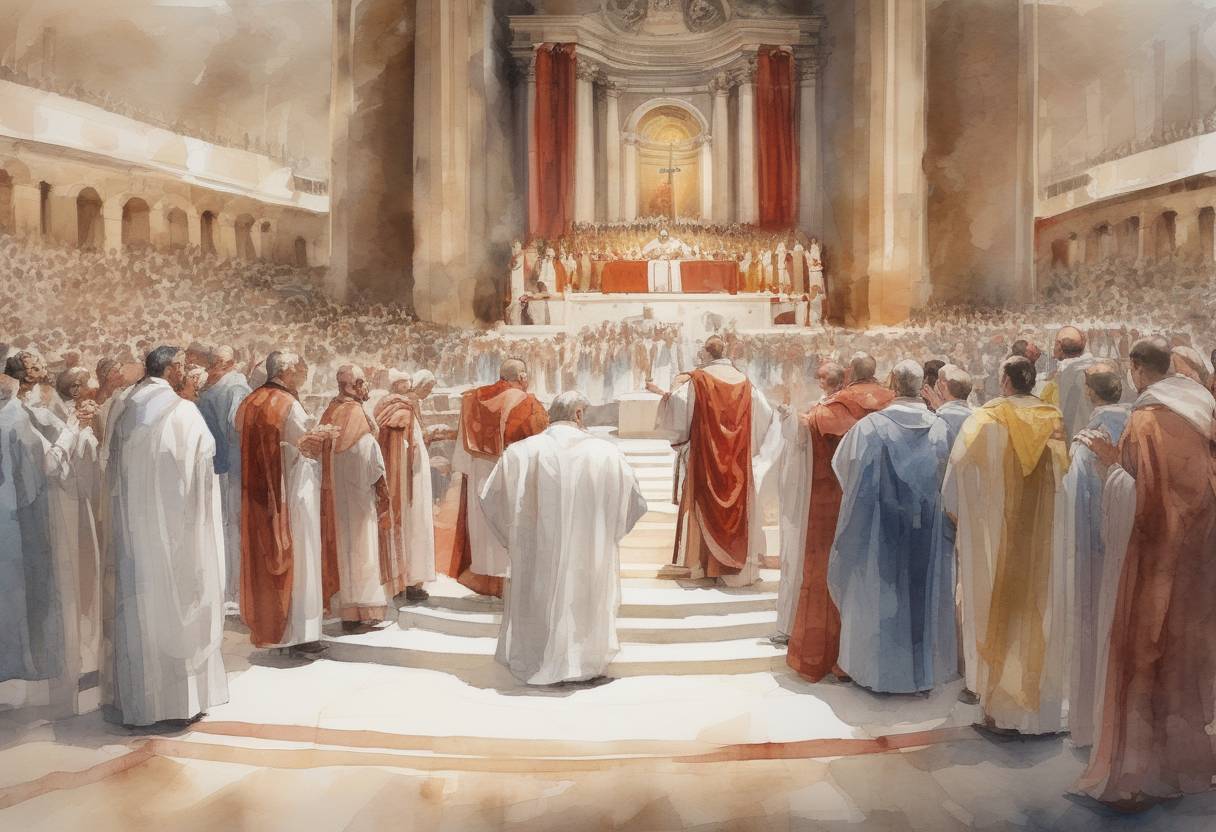
On May 17, 352, Pope Liberius was elected as the 36th pope of the Catholic Church, succeeding Pope Julius I. His papacy is notably marked by the Arian controversy, a significant theological dispute that had profound implications for early Christianity.
The Arian controversy was a major theological conflict in the early Christian Church, centered around the teachings of Arius, a priest from Alexandria. Arius argued that Jesus Christ, the Son of God, was not co-eternal with God the Father and was instead a subordinate entity. This view challenged the traditional understanding of the Holy Trinity and sparked widespread debate.
The First Council of Nicaea in 325, convened by Emperor Constantine, aimed to address this controversy. The council condemned Arianism and affirmed the consubstantiality of the Son with the Father, leading to the formulation of the Nicene Creed. Despite this, Arianism persisted, particularly in the Eastern Roman Empire, creating ongoing theological and political tensions.
Pope Liberius’s election came at a time when the Arian controversy was still a divisive issue within the Church. His papacy was characterized by efforts to navigate the complex political and theological landscape shaped by this dispute.
Exile and Return: Pope Liberius initially resisted pressure from the Arian-supporting Emperor Constantius II to condemn Athanasius of Alexandria, a staunch opponent of Arianism. As a result, Liberius was exiled in 355. During his exile, the papal seat was occupied by the antipope Felix II. Liberius’s eventual return to Rome in 358 was marked by controversy, as he was perceived to have made concessions to the Arians to secure his reinstatement.
Council of Sirmium: In 357, during his exile, Liberius was coerced into signing the Second Sirmian Formula, which was ambiguous regarding the nature of Christ and was seen as a concession to Arianism. This act was a point of contention and damaged his reputation among staunch Nicene supporters.
Efforts for Unity: Despite the challenges, Liberius sought to restore unity within the Church. After his return to Rome, he worked towards reconciling different factions and reaffirming the Nicene Creed, although his earlier concessions remained a contentious issue.
Pope Liberius’s papacy is a reflection of the complex interplay between theology and politics in the early Church. His tenure highlights the challenges faced by Church leaders in maintaining doctrinal purity while navigating imperial pressures.
The Arian controversy continued to influence Christian theology and ecclesiastical politics for decades, eventually leading to the reaffirmation of Nicene orthodoxy at the First Council of Constantinople in 381. Pope Liberius’s papacy, despite its controversies, played a role in the ongoing struggle to define and defend the core tenets of Christian belief.
Liberius’s legacy is a testament to the turbulent times in which he led the Church, and his papacy remains a significant chapter in the history of early Christianity.
Source: en.wikipedia.org