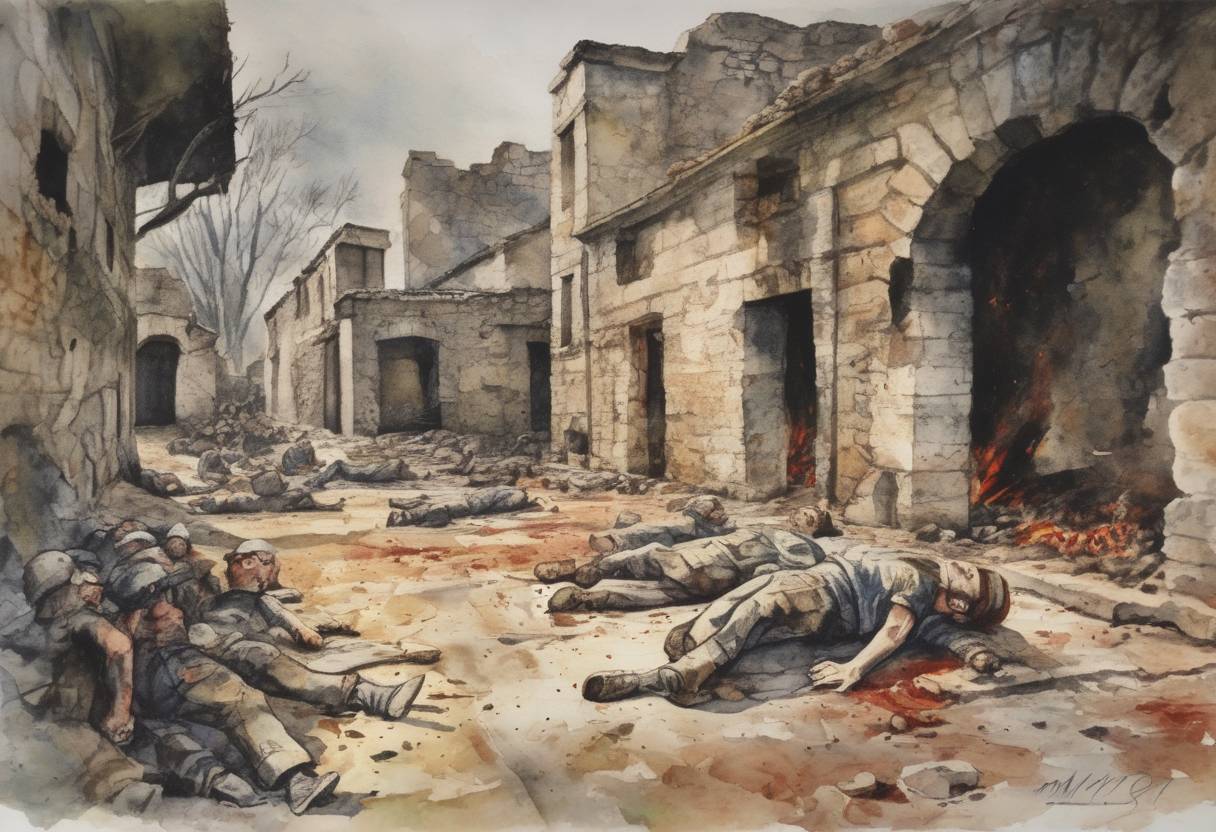
The Oradour-sur-Glane Massacre: June 10, 1944
On June 10, 1944, one of the most harrowing atrocities of World War II occurred in the small French village of Oradour-sur-Glane. This tragic event involved the massacre of 642 residents by a German Waffen-SS company, specifically the 2nd SS Panzer Division “Das Reich.”
Context and Background
- World War II Setting: By June 1944, the Allied forces had launched the D-Day invasion, landing in Normandy on June 6. This intensified the German military’s efforts to suppress resistance movements in occupied territories, particularly in France.
- The SS Division: The “Das Reich” division was moving north from southern France to reinforce German positions in Normandy. Along the way, they were tasked with countering the growing French Resistance, which had been emboldened by the Allied invasion.
The Massacre
- Arrival in Oradour-sur-Glane: On June 10, the SS troops entered the village of Oradour-sur-Glane, located in the Limousin region of France. The reasons for targeting this specific village remain unclear, though it was possibly mistaken for Oradour-sur-Vayres, a nearby village known for resistance activity.
- Rounding Up the Villagers: The SS soldiers gathered the residents in the village square under the pretense of checking identity papers. Men were separated from women and children.
- Execution of the Men: The men were taken to barns and garages where they were shot. The buildings were then set on fire to ensure no survivors.
- Killing of Women and Children: The women and children were locked in the village church, which was set ablaze. Those attempting to escape were shot.
Aftermath and Consequences
- Destruction: The village was left in ruins, with only a few survivors who managed to escape or were away at the time of the massacre.
- Post-War Trials: After the war, trials were held to bring those responsible to justice. However, the trials were controversial, with many perpetrators escaping punishment due to the complexities of post-war politics and the integration of some former SS members into the French Foreign Legion.
- Memorialization: The original village has been preserved as a memorial and museum, serving as a poignant reminder of the horrors of war and the impact on civilian populations.
Historical Significance
The Oradour-sur-Glane massacre stands as a stark example of the brutal tactics employed by Nazi forces during World War II. It highlights the indiscriminate violence faced by civilians and the tragic consequences of war. The site remains a powerful symbol of remembrance and a call for peace and reconciliation.
The massacre is a significant event in French history, representing the suffering endured during the German occupation and the resilience of the French people in the face of such atrocities.