Coronation of Philip, Son of King Louis VI of France, as Co-King
1131 · Reims, France
Philip, the son of King Louis VI of France, is crowned as co-king at Reims, securing the Capetian dynasty's continuation.
June 1, 0987
Hugh Capet is elected King of France, marking the beginning of the Capetian dynasty.
Noyon, France | French nobility
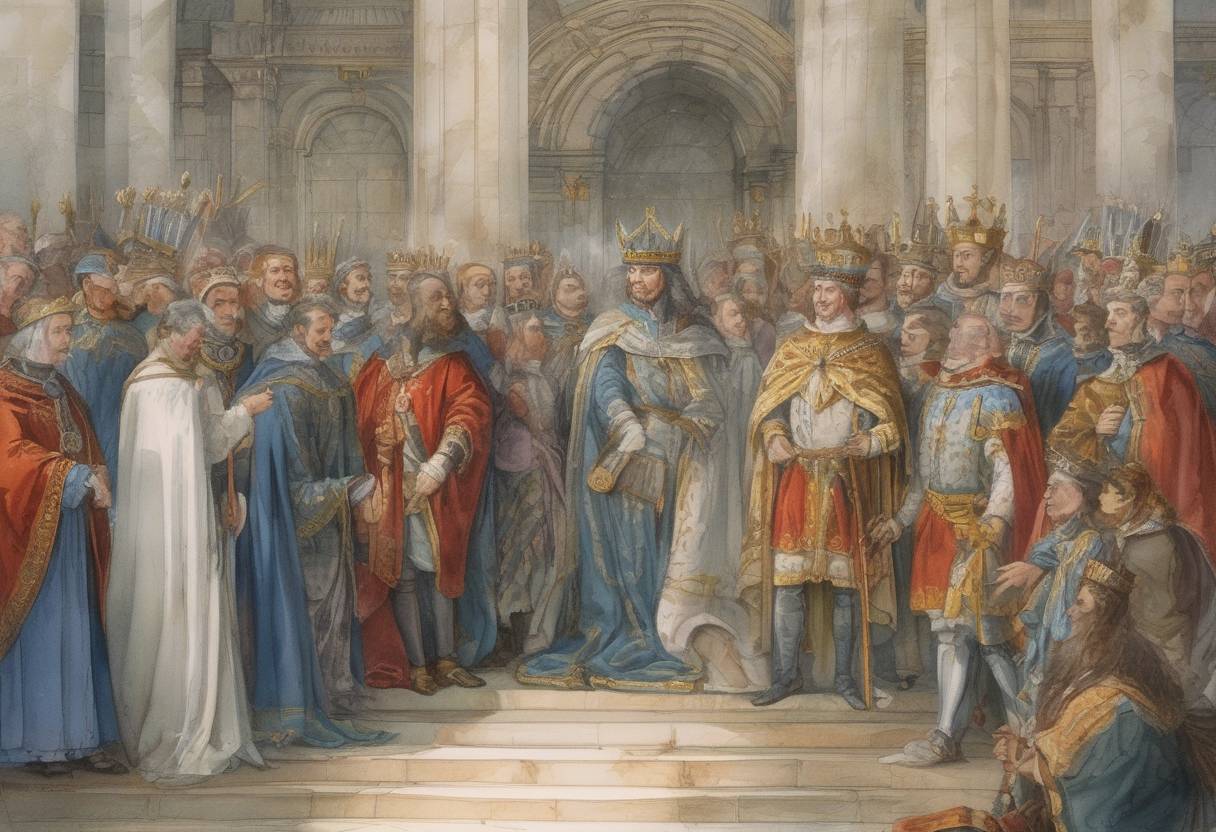
On June 1, 987, Hugh Capet was elected King of France, marking the beginning of the Capetian dynasty, which would become one of the most enduring royal dynasties in European history. This event was a pivotal moment in the medieval history of France, setting the stage for the development of the French nation-state.
Carolingian Decline: By the late 10th century, the Carolingian dynasty, which had ruled over the Frankish realms, was in decline. The power of the Carolingian kings had waned significantly, with local lords and nobles gaining more control over their territories.
Rise of the Robertians: Hugh Capet belonged to the Robertian family, a powerful noble house that had been influential in the politics of West Francia. His father, Hugh the Great, had been a prominent nobleman and a key player in the kingdom.
Vacant Throne: The death of the last Carolingian king, Louis V, in 987, left the throne vacant. The lack of a strong Carolingian heir opened the door for a new dynasty to take control.
Assembly at Senlis: A council of nobles and clergy convened at Senlis to elect a new king. Hugh Capet was chosen due to his strong connections, his reputation, and the support of influential church leaders, including Adalberon, the Archbishop of Reims.
Coronation: Hugh Capet was crowned at Noyon on July 3, 987. His election and coronation were significant as they marked a shift from the Carolingian line to a new dynasty.
Dynastic Stability: The Capetian dynasty would rule France for over 300 years, providing a period of relative stability and continuity. The dynasty’s ability to maintain power was partly due to their strategy of securing the succession through primogeniture, where the eldest son inherited the throne.
Centralization of Power: Under the Capetians, the French monarchy gradually increased its power and influence, laying the groundwork for the centralized state that France would become.
Cultural and Political Influence: The Capetian kings played a crucial role in the cultural and political development of medieval Europe. They were instrumental in the expansion of French territories and the strengthening of the monarchy.
Expansion of Royal Authority: Over time, the Capetian kings expanded their control beyond the Île-de-France region, incorporating more territories into the royal domain.
Foundation for Future Dynasties: The Capetian dynasty eventually branched into several cadet lines, including the Valois and Bourbon dynasties, which continued to rule France until the French Revolution.
Hugh Capet’s election as king was a turning point that not only established a new ruling dynasty but also set France on a path towards becoming a centralized and powerful kingdom in Europe. The Capetian legacy is a testament to the enduring influence of this pivotal moment in French history.
Source: en.wikipedia.org