The Panama Canal Expansion: Third Set of Locks Project
2016 · Panama City, Panama
The Panama Canal expansion project, known as the 'Third Set of Locks Project,' was completed, allowing larger ships to pass through the canal.
August 15, 1914
The Panama Canal officially opened to traffic with the transit of the cargo ship SS Ancon.
Panama City, Panama | Panama Canal Authority
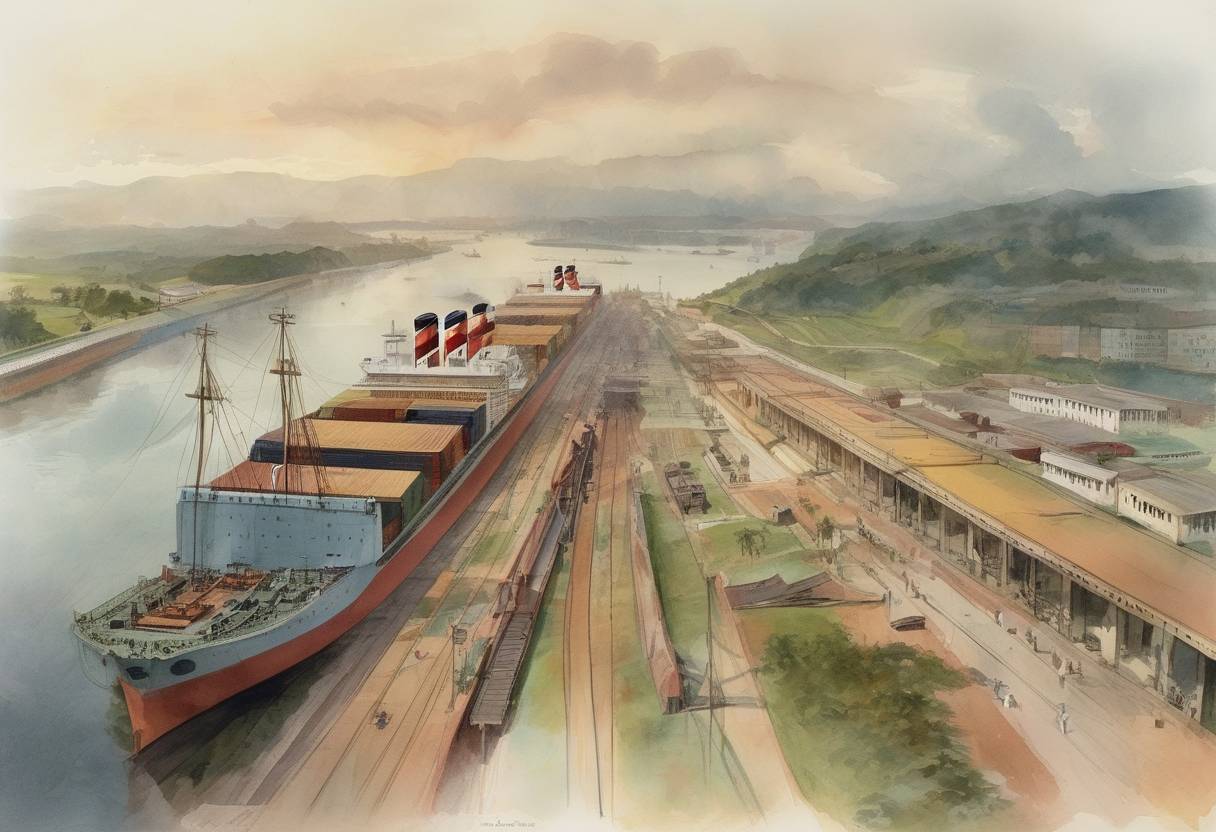
On August 15, 1914, the Panama Canal officially opened to maritime traffic with the historic transit of the cargo ship SS Ancon. This monumental event marked the culmination of one of the most ambitious engineering projects of the early 20th century, fundamentally altering global trade routes and significantly impacting international maritime commerce.
The idea of a canal across the Isthmus of Panama dates back to the early 16th century, but it wasn’t until the late 19th century that serious efforts were made to construct it. The French initially attempted to build the canal under the leadership of Ferdinand de Lesseps, the engineer behind the Suez Canal. However, due to engineering challenges, tropical diseases, and financial difficulties, the French project was abandoned in the 1890s.
In 1904, the United States took over the project after negotiating the Hay-Bunau-Varilla Treaty with Panama, which granted the U.S. control over the Canal Zone. Under the direction of President Theodore Roosevelt, the U.S. embarked on the construction of the canal, implementing significant advancements in engineering and public health, particularly in combating malaria and yellow fever.
Engineering Innovations: The U.S. project involved the construction of a lock-based canal system, which was a departure from the sea-level canal initially attempted by the French. This system allowed ships to be lifted and lowered over the mountainous terrain of the isthmus.
Health Measures: Under the leadership of Dr. William Gorgas, the U.S. implemented extensive sanitation and mosquito control measures, drastically reducing the incidence of tropical diseases that had plagued the French efforts.
Completion: After a decade of construction, the canal was completed in 1914, just as World War I was beginning in Europe.
The SS Ancon, a cargo and passenger ship, had the honor of being the first vessel to officially transit the Panama Canal. This inaugural journey symbolized the canal’s readiness to facilitate international shipping, providing a shortcut between the Atlantic and Pacific Oceans and eliminating the lengthy and perilous voyage around the southern tip of South America via the Strait of Magellan.
Impact on Global Trade: The Panama Canal significantly shortened travel times for ships, boosting trade efficiency and reducing costs. It became a critical conduit for global maritime trade, enhancing the strategic and economic importance of the United States in international affairs.
Geopolitical Influence: The canal’s opening bolstered U.S. influence in Latin America and the Caribbean, aligning with the broader objectives of the Monroe Doctrine and Roosevelt Corollary.
Technological Achievement: The successful completion of the canal was hailed as a triumph of modern engineering and a testament to human ingenuity and perseverance.
The Panama Canal remains a vital artery of global commerce to this day, continuing to facilitate the movement of goods and contributing to the interconnectedness of the global economy. Its opening on August 15, 1914, stands as a landmark moment in the history of engineering and international trade.
Source: en.wikipedia.org