The Proclamation of the Second French Republic
1848 · Paris, France
The Second French Republic was proclaimed following the abdication of King Louis-Philippe, marking the end of the July Monarchy.
June 5, 1832
The June Rebellion, an anti-monarchist insurrection of Parisian republicans, began in Paris, France.
Paris, France | French Republicans
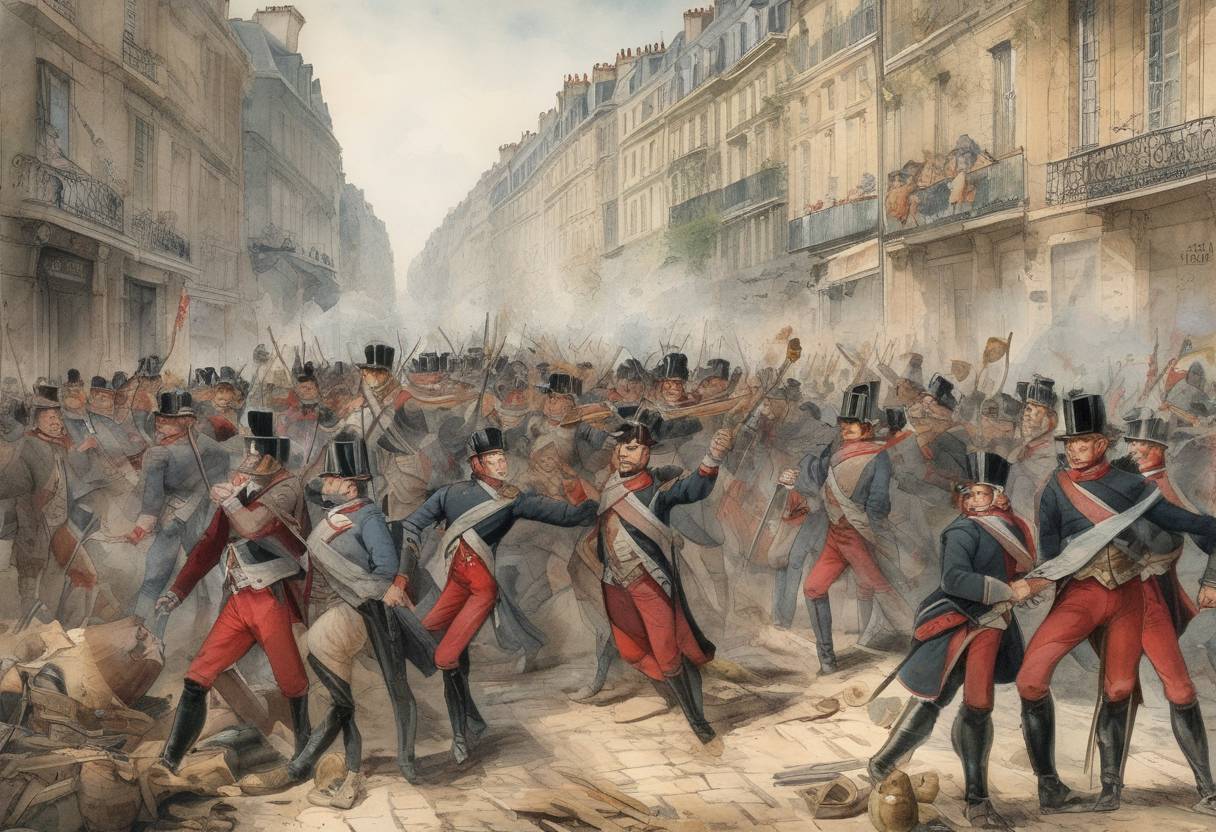
The June Rebellion, also known as the Paris Uprising of 1832, was a significant anti-monarchist insurrection that took place in Paris, France, on June 5-6, 1832. This event was a pivotal moment in French history, reflecting the deep social and political unrest that characterized the period following the July Revolution of 1830.
The July Revolution of 1830 had resulted in the overthrow of King Charles X and the establishment of the July Monarchy under King Louis-Philippe. Despite initial hopes for a more liberal and representative government, many republicans and working-class citizens were disillusioned by the new regime, which they perceived as favoring the bourgeoisie and failing to address the needs of the poor.
The early 1830s in France were marked by economic hardship, including a cholera epidemic in 1832 that exacerbated public discontent. The death of General Jean Maximilien Lamarque, a popular military leader and critic of the monarchy, on June 1, 1832, served as a catalyst for the uprising. Lamarque was seen as a champion of the people, and his funeral became a rallying point for republicans and other disaffected groups.
On June 5, 1832, as Lamarque’s funeral procession moved through the streets of Paris, tensions escalated. A large crowd, including students, workers, and republicans, gathered to pay their respects. The atmosphere quickly turned volatile as calls for revolution spread among the mourners.
The insurrectionists erected barricades in the streets of Paris, particularly in the working-class neighborhoods. The rebels aimed to overthrow the July Monarchy and establish a republic. However, the uprising was poorly organized and lacked widespread support.
The June Rebellion was short-lived, lasting only two days, but it resulted in significant casualties, with estimates of around 800 people killed or wounded. The swift suppression of the uprising demonstrated the strength of the July Monarchy and its determination to maintain order.
Despite its failure, the rebellion highlighted the persistent social and political tensions in France. It also inspired future revolutionary movements and became a symbol of resistance against oppression. The events of the June Rebellion were later immortalized in Victor Hugo’s novel “Les Misérables,” which brought international attention to the struggles of the Parisian poor and the quest for justice.
The June Rebellion of 1832 is an important episode in the broader context of 19th-century French history. It underscored the ongoing conflict between republican ideals and monarchical authority, a theme that would continue to shape French politics throughout the century. The rebellion also reflected the broader European trend of revolutionary activity during this period, as people across the continent sought to challenge traditional power structures and advocate for democratic reforms.
Source: en.wikipedia.org