The Treaty on the Final Settlement with Respect to Germany
1991 · Berlin, Germany
The Treaty on the Final Settlement with Respect to Germany comes into effect, leading to the reunification of Germany.
June 20, 1991
The German Bundestag votes to move the seat of government from Bonn to Berlin, a significant step in the reunification of Germany.
Bonn, Germany | German Bundestag
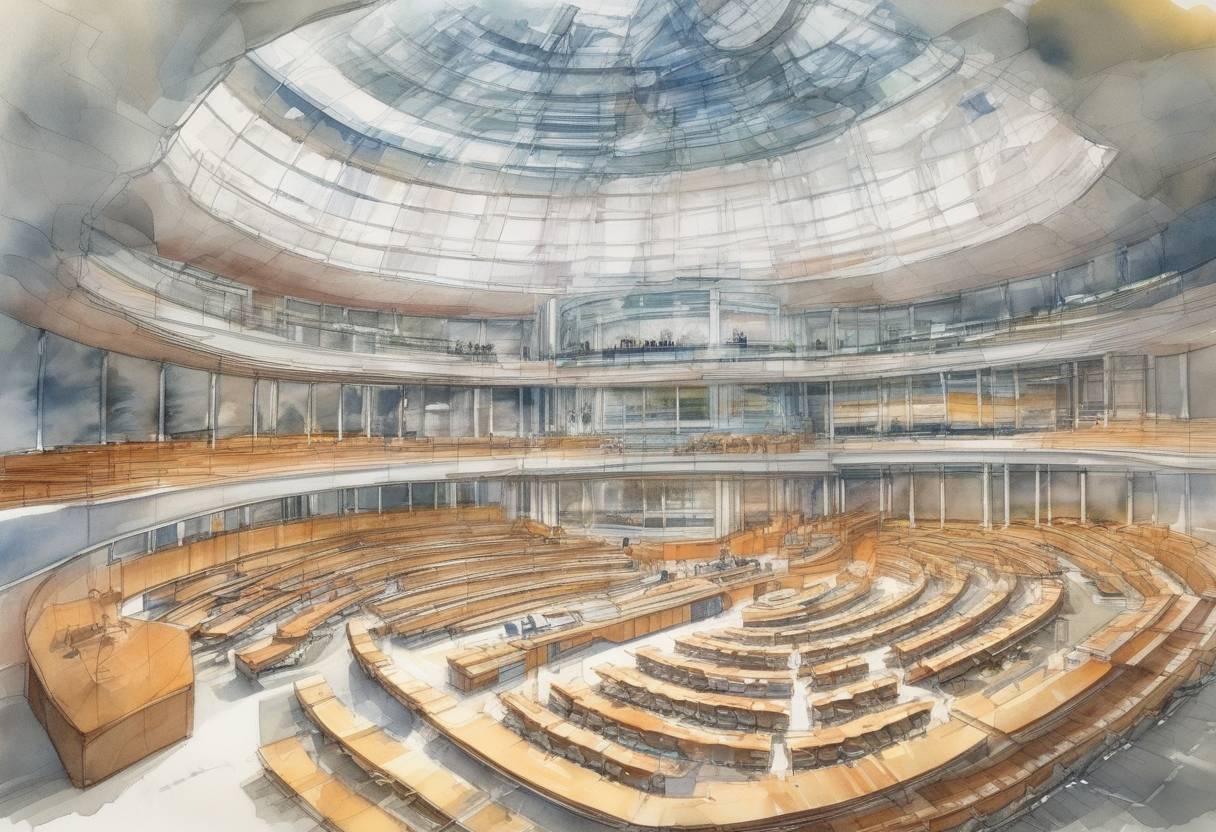
On June 20, 1991, the German Bundestag made a historic decision to relocate the seat of government from Bonn to Berlin. This vote was a pivotal moment in the process of German reunification, symbolizing the country’s commitment to overcoming its Cold War division and restoring Berlin as the capital of a unified Germany.
Post-War Division: After World War II, Germany was divided into East and West, with East Germany (the German Democratic Republic) under Soviet influence and West Germany (the Federal Republic of Germany) aligned with the Western bloc. Berlin, located in East Germany, was also divided into East and West.
Bonn as the Capital: In 1949, Bonn was chosen as the provisional capital of West Germany. This decision was partly due to its location in the British occupation zone and its relatively small size, which was seen as a temporary solution until reunification could be achieved.
Fall of the Berlin Wall: The Berlin Wall, a symbol of the Cold War division, fell on November 9, 1989. This event set in motion the process of German reunification, which was formally completed on October 3, 1990.
Debate and Deliberation: The decision to move the government was hotly debated. Proponents argued that Berlin, as the historical capital, was the rightful seat of government for a unified Germany. Opponents cited the costs and the potential disruption to the civil service and political life established in Bonn.
The Vote: The Bundestag’s vote was narrowly decided, with 338 members voting in favor of the move and 320 against. This close margin reflected the contentious nature of the decision.
Symbolic Reunification: Moving the capital to Berlin was a powerful symbol of reunification, representing a new chapter in German history where the country was no longer divided by Cold War politics.
Economic and Political Impact: The move had significant economic implications, requiring substantial investment in Berlin’s infrastructure and the relocation of government ministries and personnel. It also reinforced Berlin’s status as a major European political center.
Cultural and Historical Resonance: Berlin’s restoration as the capital reconnected Germany with its pre-war history and cultural heritage, while also serving as a reminder of the challenges and triumphs of the reunification process.
The decision to relocate the German government from Bonn to Berlin was more than a logistical change; it was a profound statement of national unity and a step towards healing the divisions of the past.
Source: en.wikipedia.org