The Battle of Soissons - June 12, 918
918 · Soissons, France
The Battle of Soissons took place, where King Charles III of France was defeated by the forces of Robert I of France, leading to significant political changes in the West Frankish Kingdom.
June 15, 0923
The Battle of Soissons took place, where King Robert I of France was killed, and Charles the Simple was captured, marking a significant power shift in the West Frankish Kingdom.
Soissons, France | West Frankish Kingdom
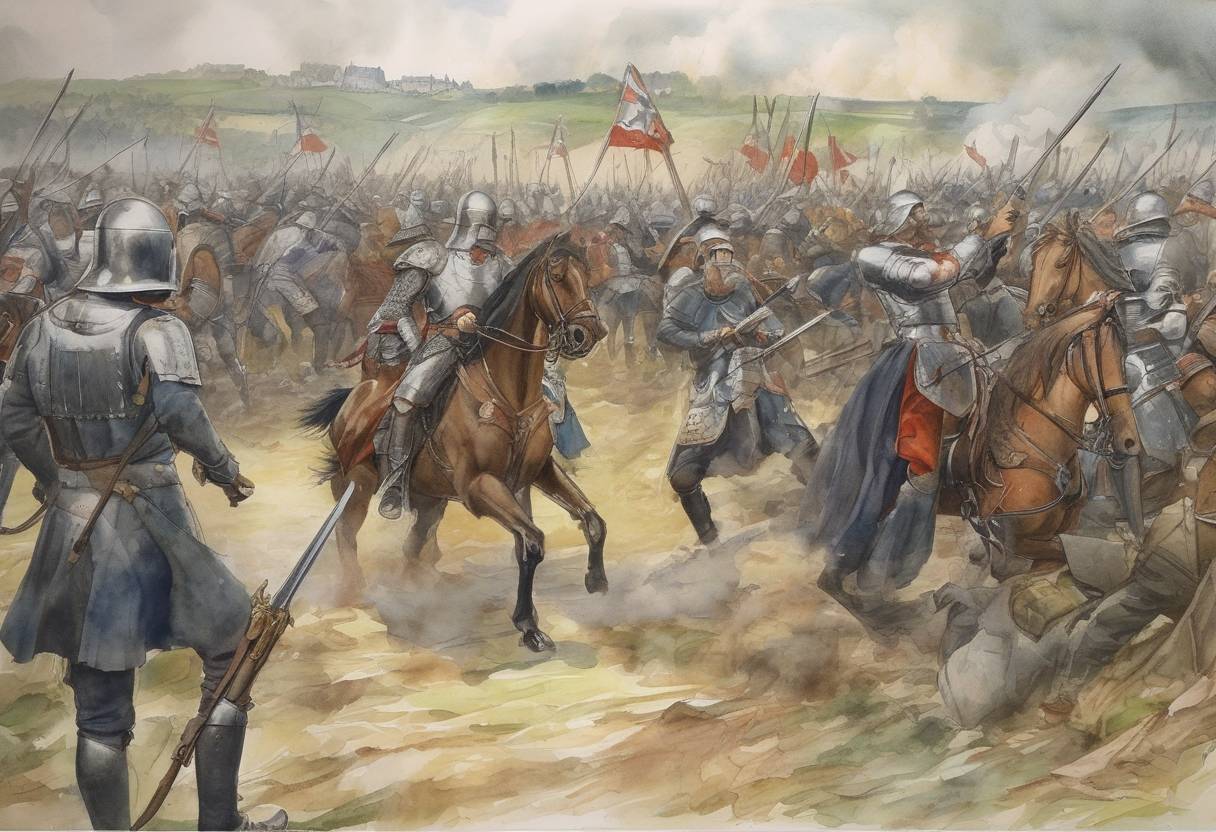
The Battle of Soissons, fought on June 15, 923, was a pivotal conflict in the history of the West Frankish Kingdom, marking a significant shift in power dynamics. This battle was part of the broader struggles for control over the Frankish territories following the fragmentation of the Carolingian Empire.
In the early 10th century, the West Frankish Kingdom, a precursor to modern-day France, was embroiled in internal conflicts and external threats. The Carolingian dynasty, which had ruled since the time of Charlemagne, was weakening. Charles the Simple, a Carolingian king, faced opposition from powerful nobles who were dissatisfied with his rule.
Robert I, a member of the Robertian dynasty and the brother of the former king Odo, was one of the most influential nobles. He was elected king by a faction of nobles in 922, challenging Charles the Simple’s authority. This division led to a series of confrontations between the supporters of Robert I and those loyal to Charles.
The Battle of Soissons was the culmination of this power struggle. The forces of Robert I clashed with those of Charles the Simple near the town of Soissons. The battle was fierce and decisive. During the conflict, King Robert I was killed, a significant blow to his faction.
Despite Robert’s death, his forces managed to capture Charles the Simple, effectively ending his reign. The capture of Charles marked a turning point, as it allowed the Robertians to consolidate power and influence over the West Frankish Kingdom.
Following the battle, Rudolph of Burgundy, Robert I’s son-in-law, was elected king by the nobles, further solidifying the Robertian hold on power. Charles the Simple was imprisoned and spent the remainder of his life in captivity, dying in 929.
The Battle of Soissons had lasting implications for the future of France. It marked the decline of Carolingian power and the rise of the Robertian dynasty, which would eventually lead to the Capetian dynasty’s establishment. This shift laid the groundwork for the development of a more centralized French state.
The battle also highlighted the ongoing fragmentation and regionalism within the Frankish territories, a theme that would continue to shape European politics throughout the Middle Ages. The events at Soissons were a testament to the complex interplay of dynastic ambitions, noble alliances, and the shifting landscape of medieval European power.
Source: en.wikipedia.org