The First Performance of Tchaikovsky's Ballet 'The Nutcracker'
1892 · St. Petersburg, Russia
The first performance of Tchaikovsky's ballet 'The Nutcracker' takes place at the Mariinsky Theatre in St. Petersburg, Russia.
March 16, 1872
The Wanderers, a group of Russian realist artists, held their first exhibition in St. Petersburg, leading to influential changes in Russian art by advocating for a realistic approach and focusing on the country's social issues.
St. Petersburg, Russia | The Wanderers (Peredvizhniki)
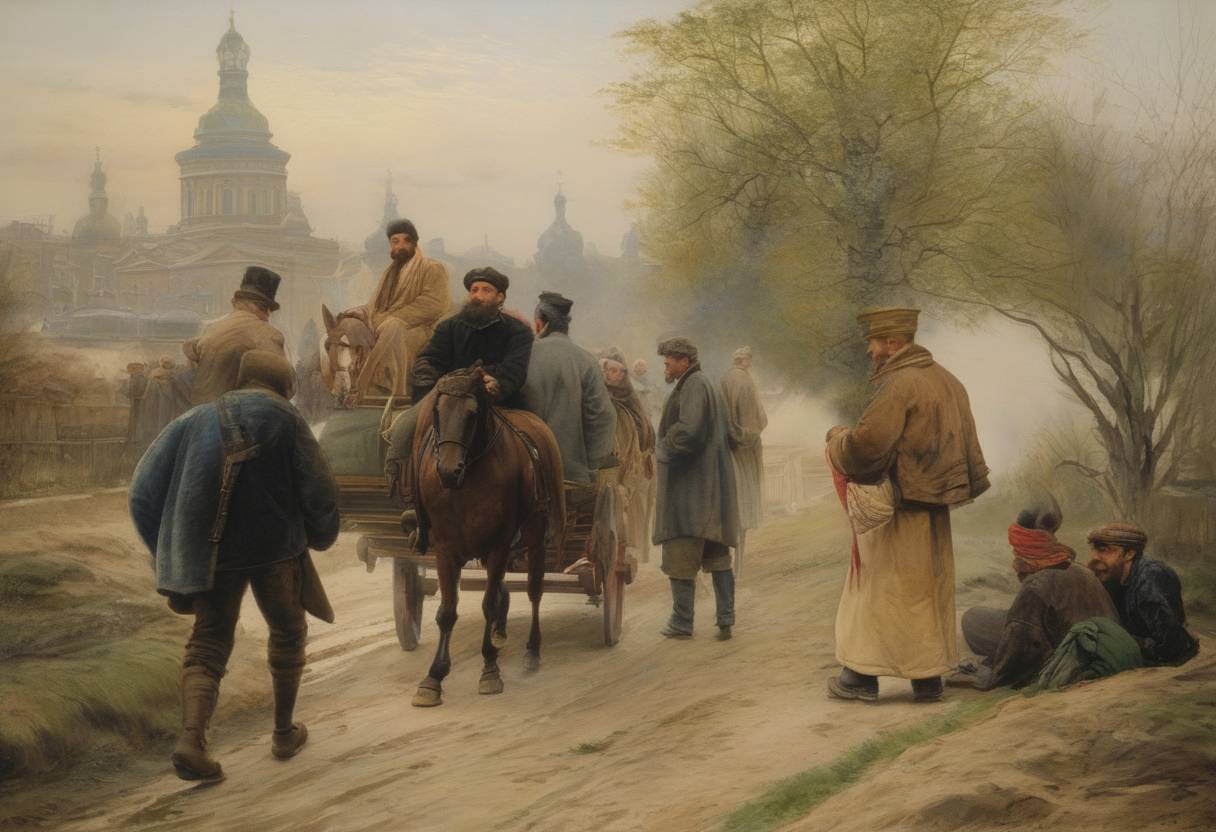
Introduction to The Wanderers (Peredvizhniki):
The Wanderers, also known as the “Peredvizhniki,” were a group of Russian realist artists who sought to break away from the rigid academic traditions of the Imperial Academy of Arts in St. Petersburg. Formed in 1870, this collective aimed to establish an art form that was accessible to the wider public and that addressed the pressing social issues of the day through realistic portrayals.
The First Exhibition - March 16, 1872:
On March 16, 1872, The Wanderers organized their first exhibition in St. Petersburg. This landmark event showcased artworks that diverged from the romanticized subjects popular at the time, instead presenting realistic depictions of Russian life and landscapes. Their work was characterized by a focus on peasants, workers, and the socio-economic conditions facing the majority of the Russian populace.
Significant Impact on Russian Art:
The first exhibition by The Wanderers marked a significant shift in Russian art, both stylistically and thematically. By choosing to travel with their exhibitions to different cities, they dramatically expanded the reach of art beyond the upper-class audience in St. Petersburg and Moscow, democratizing access to art for the Russian people across various social strata.
Themes and Ideals:
The artworks displayed often critiqued societal injustices, depicting the stark realities of serfdom, rural hardship, and the struggles of the lower classes. Artists like Ilya Repin, Vasily Perov, and Ivan Shishkin became renowned for their poignant and evocative portrayals, imbuing their works with a narrative that inspired introspection and reformist discourse.
Legacy and Influence:
The success of this first exhibition spurred the Peredvizhniki to organize numerous other exhibitions across Russia over the subsequent decades, continually pushing the boundaries of Russian art towards realism. The group played a pivotal role in altering the trajectory of Russian art by insisting on its role as a mirror to society, laying the groundwork for later Russian art movements. Their legacy persisted well into the 20th century, influencing Soviet Realism and continuing to affect Russian artistic discourse.
Conclusion:
The Wanderers’ inaugural exhibition on March 16, 1872, was more than just an art event; it was a cultural moment that galvanized Russian art towards a focus on realism and social commentary. It set a precedent for art as a vehicle for social awareness and change, embedding itself as a cornerstone of Russian cultural history.
Source: en.wikipedia.org