Renaming of Yerba Buena to San Francisco on January 30, 1847
1847 · San Francisco, United States
The town of Yerba Buena was re-named San Francisco, following the United States' capture of the Californian territory during the Mexican-American War.
November 15, 1849
A public meeting is held in San Francisco to address lawlessness in the city and organize the first Committee of Vigilance.
San Francisco, United States | Committee of Vigilance
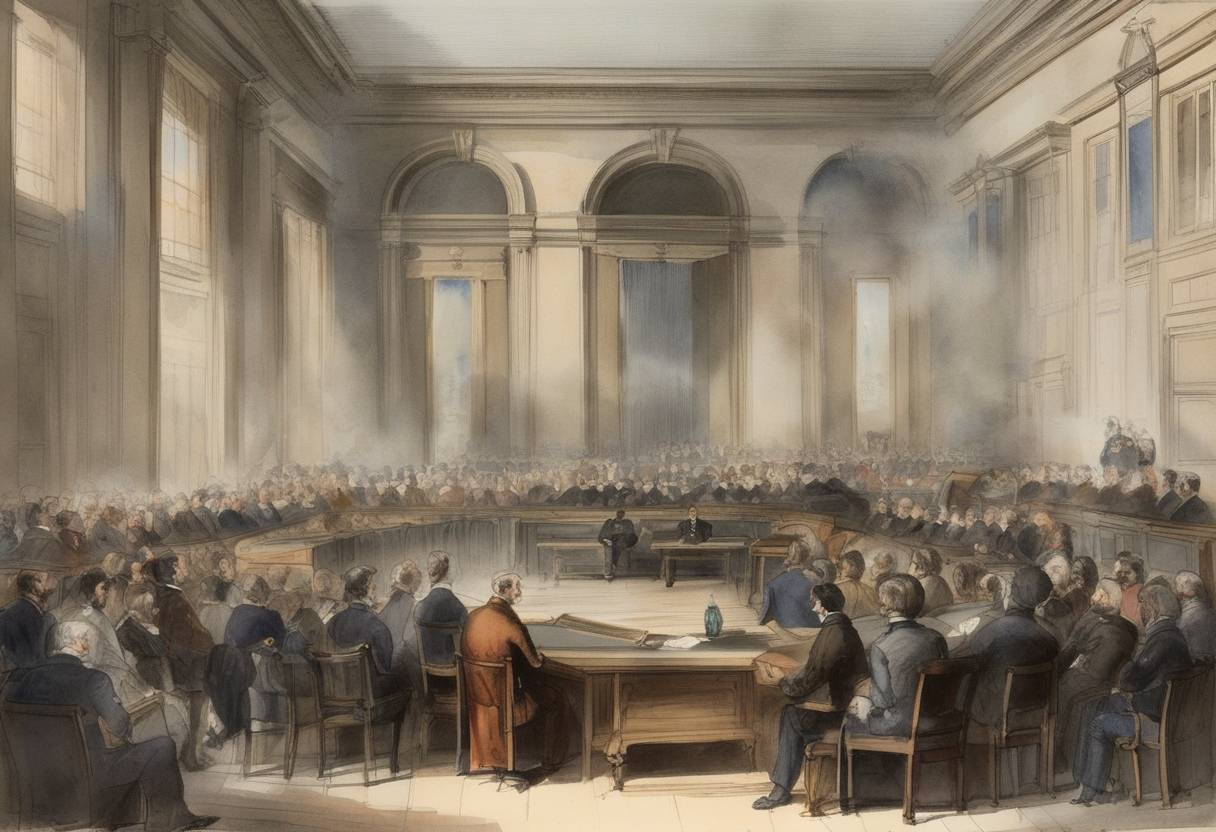
On November 15, 1849, in response to the rampant lawlessness and lack of effective law enforcement in the rapidly growing city of San Francisco, a public meeting was held, leading to the organization of the first Committee of Vigilance. This meeting arose from the frustration of citizens who observed that the existing legal and judicial systems struggled to maintain order amidst the chaos brought about by the California Gold Rush, which began in 1848.
California Gold Rush: By 1849, the Gold Rush had attracted a massive influx of people to California, especially San Francisco, which grew from a small settlement to a bustling city almost overnight. This rapid expansion taxed the inadequate infrastructure, including its nascent law enforcement capabilities.
Lawlessness: The city experienced high levels of crime, including theft and violence. The formal justice system, newly established and overwhelmed, was unable to cope with the burgeoning criminal activity.
Purpose: The committee aimed to restore order through extralegal means. It reflected the citizens’ desire to impose swift justice where they felt the official judicial process had failed due to corruption or incompetence.
Structure and Operations: The Committee of Vigilance operated with its own set of rules and procedures. It was primarily composed of local businessmen and concerned residents who took it upon themselves to patrol the streets, conduct mock trials, and execute judgments, which sometimes included flogging, banishment, or even execution.
Immediate Effects: The committee’s actions were controversial but temporarily effective in curtailing the crime wave. It filled a critical void in law enforcement during a precarious period in San Francisco’s early development.
Long-Term Consequences: The formation of the Committee of Vigilance set a precedent for vigilantism in other American frontier towns. It highlighted the complexities of frontier justice and the tensions between established law and order and citizen-driven initiatives.
Historical Legacy: This event is remembered as a symbolic moment in San Francisco’s history, reflecting both the anarchic environment of the Gold Rush era and the often-controversial measures communities resorted to in establishing a semblance of justice and order.
The November 15 meeting played a crucial role in shaping San Francisco’s approach to law and order during its transformative years, underlining the sometimes blurred lines between justice and vigilantism in American history.
Source: www.pbs.org