Amerigo Vespucci's Alleged Departure for the New World on May 10, 1497
1497 · Cádiz, Spain
Amerigo Vespucci allegedly leaves Cádiz for his first voyage to the New World.
March 10, 1496
Christopher Columbus concludes his second voyage to the New World, sailing into Cádiz, Spain.
Cádiz, Spain | Kingdom of Spain
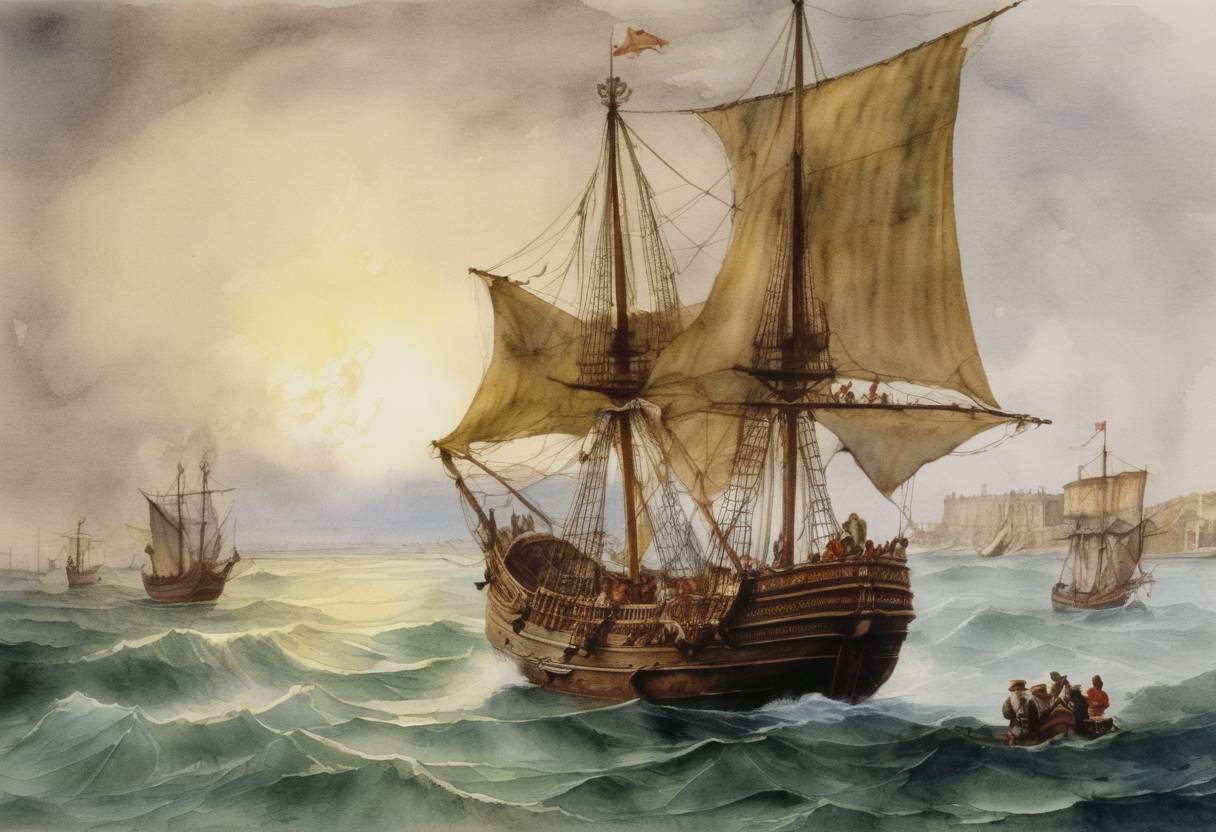
On March 10, 1496, Christopher Columbus concluded his second voyage to the New World by arriving back in Cádiz, Spain. This return marked the end of a journey that began on September 25, 1493, when Columbus, under the patronage of the Catholic Monarchs of Spain, embarked on an expedition with a fleet of 17 ships. The primary goal was to continue exploring territories west of the Atlantic, initially encountered during his first voyage in 1492, and to establish Spanish presence in the Americas.
Exploration and Colonization: Columbus’s second voyage was significantly larger than the first and was tasked with both exploration and the founding of Spanish colonies. The fleet aimed to establish permanent settlements and administer new territories.
Settlement of Hispaniola: One of the major actions undertaken during this voyage was the establishment of the colony of La Isabella on the northern coast of Hispaniola (present-day Dominican Republic). However, poor planning, inadequate supplies, and the tropical environment led to hardships and tension among settlers.
Interactions with Indigenous Peoples: Columbus and his expedition engaged with indigenous populations throughout the Caribbean. These interactions were marked by conflict and coercion, as Columbus sought to consolidate Spanish control and exploit the resources and labor of the native peoples.
Search for Gold: Columbus’s reports back to Spain highlighted the potential for gold and wealth in these new lands, though the reality of gold acquisition fell short of the expectations set by Columbus’s optimistic claims.
Navigation and Cartography: Columbus continued to map parts of the Caribbean, adding to European understanding of the geography of the New World. His voyages laid the groundwork for future exploration by identifying key islands and coastal regions.
Internal Strife and Governance Issues: Within the colonies, Columbus faced significant challenges related to governance. Discontent among Spanish settlers due to mismanagement and Columbus’s leadership style foreshadowed future conflicts and rebellions.
Report to the Spanish Crown: Upon returning to Spain, Columbus presented his findings and experiences to the Spanish monarchy. While his expeditions were considered a success in terms of territorial claims, the practical outcomes and the human toll led to scrutiny from Spanish authorities.
Impact on Indigenous Populations: The colonization efforts initiated by Columbus’s voyages began a period of profound change and upheaval for indigenous communities, marked by European domination, cultural disruption, and the beginning of the transatlantic slave trade.
Promotion of Further Exploration: Columbus’s voyages encouraged Spain to pursue further exploration and expansion in the Americas, directly leading to future expeditions by other explorers seeking riches and new territories.
The conclusion of Columbus’s second voyage was a pivotal moment in the early history of European exploration and colonization of the Americas, setting the stage for the eventual establishment of large Spanish territories in the New World.
Source: en.wikipedia.org